Introduction: Spreadshirt and the Democratization of Custom Apparel
The custom apparel landscape has undergone a profound transformation in the digital age. No longer must one navigate the minimum order quantities, setup fees, and opaque pricing structures of traditional screen printers. Platforms such as Spreadshirt have erected a new paradigm—one predicated on print-on-demand, the absence of inventory, and the radical accessibility of single-piece production. The custom hoodie, a garment of singular versatility, stands at the center of this transformation. This treatise examines the Spreadshirt proposition in its manifold dimensions.
The Spreadshirt Proposition: Print-on-Demand as a Business Model
The Absence of Minimum Order Quantities
The most conspicuous feature of the Spreadshirt model is the abolition of minimum order quantities. A single hoodie may be ordered at the same per-unit price as a thousand . This policy dismantles a barrier that has historically excluded individuals, small businesses, and nascent brands from the custom apparel market. The company explicitly states that there is no minimum order value, even for embroidery . The implication is profound: the economics of customization have been decoupled from scale.
The Architecture of Product, Print, and Design Pricing
The final price of a Spreadshirt hoodie is a composite of discrete elements. First, there is the cost of the garment itself—the blank hoodie, whether a classic pullover or an oversized heavyweight . Second, there are printing costs, which are applied as a flat fee per print area utilized . A design on the front and another on the back incurs two printing fees. Third, there may be a design price if the user selects a motif created by an independent designer from the community marketplace. Text, user-uploaded designs, and designs marked as “free” incur no design price . This transparency permits the prospective buyer to calculate costs with precision.
The Hoodie Substrate: A Survey of Available Silhouettes
The Classic Pullover: Midweight Cotton-Polyester Blends
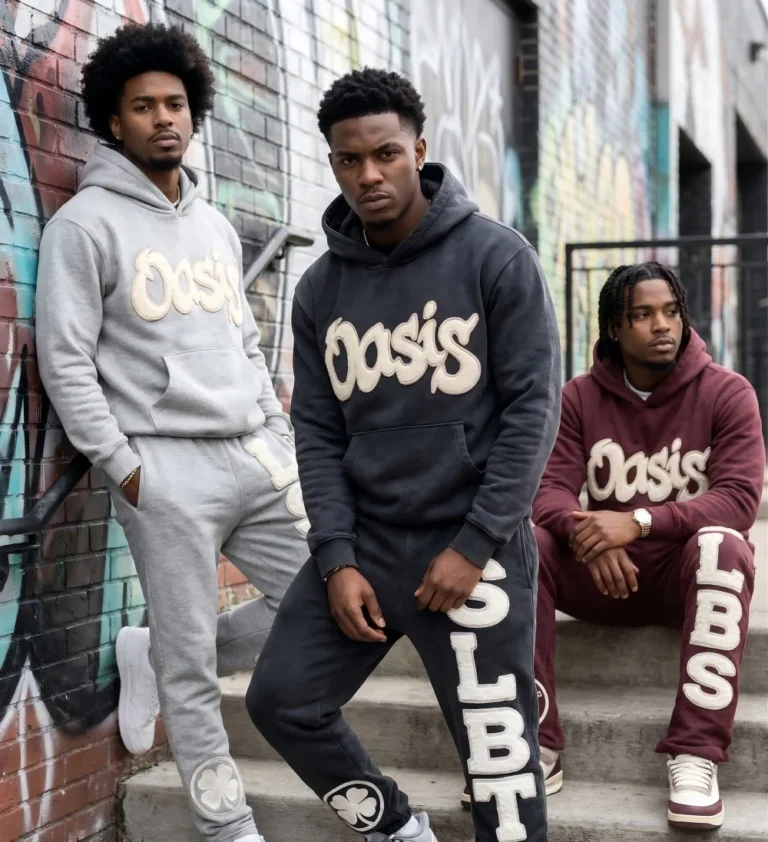
The foundational Spreadshirt hoodie is the classic pullover, typically constructed from a 50% cotton, 50% polyester blend at approximately 8 ounces per square yard . This midweight fabric balances warmth, breathability, and dimensional stability. The garment features an adjustable drawstring hood, ribbed cuffs and waist, and a kangaroo-style front pocket. Customer reviews describe it as “plush” and “comfortable,” though some note that the fabric is thinner than expected . The fit is generally described as running large, with one review advising ordering a size down .
The Premium and Oversized Options
Beyond the standard pullover, Spreadshirt offers premium and oversized variants. The Men’s Premium Hoodie is constructed from an 80% cotton, 20% polyester blend at 8.3 ounces, featuring a contrasting drawstring, a stitched slit inside the kangaroo pocket, and a headphone loop . The Oversized Heavyweight Unisex Zip Hoodie represents the more substantial end of the spectrum, weighing 400 GSM with a 70% cotton, 30% polyester composition . These garments command a higher price point but offer a more substantial hand-feel and a more contemporary, voluminous silhouette.
The Zip Hoodie: Functionality and Fit
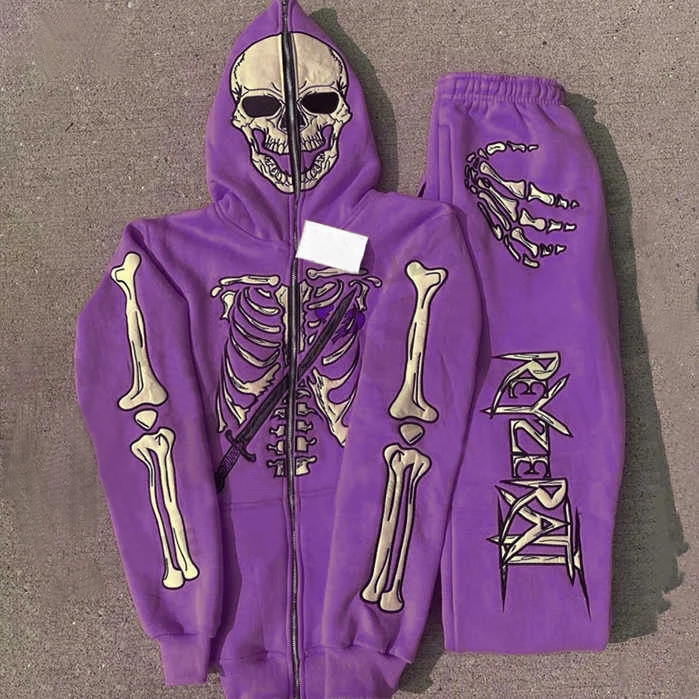
The Men’s Zip Hoodie offers the convenience of a full-length zipper alongside the kangaroo pocket—a split-by-zipper design that allows access to the pocket from either side . It shares the 50/50 cotton-polyester blend and 8-ounce weight of the classic pullover. The double-stitched hood, shoulders, pocket, and waist suggest a construction designed for durability. Customer reviews praise the fit and the quality of the embroidery on this style .
The Organic and Sustainable Range
Spreadshirt’s organic offerings cater to the environmentally conscious consumer. The Organic Fitted Hoodie is made in the European Union and priced at a premium—approximately £52.99 to £66.99 depending on the design . The organic range signals a commitment to sustainability that aligns with the values of a growing segment of the apparel market.
The Decoration Arsenal: Printing and Embroidery Methods
Digital Direct Printing: The Default for Complex Graphics
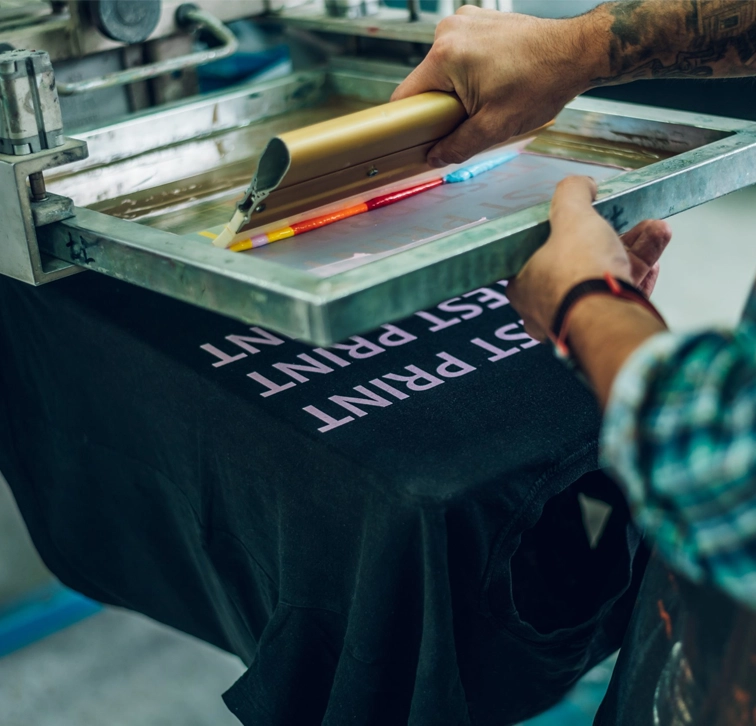
Digital Direct printing is the predominant decoration method for Spreadshirt hoodies . This process—also known as direct-to-garment or DTG—applies ink directly to the fabric, accommodating full-color artwork, gradients, and photographic detail without the setup costs associated with screen printing. It is the appropriate method for designs of any complexity, from simple text to intricate illustrations.
Embroidery: Premium Texture and Durability
Embroidery is available on select Spreadshirt products, including hoodies . The process stitches the design into the fabric with thread, producing a raised, tactile finish that reads as premium and professional. Spreadshirt notes that embroidery “looks classier and is simultaneously more durable” than printing . The company optimizes embroidery files at no additional cost, though the preparation of a “punch file” may extend production timelines . Embroidery is subject to specific design requirements: vector files in .svg or .ai format, a maximum of three colors, minimum line thickness of 1.5 mm, and text height of at least 7 mm .
The Design Interface: Tools for the Virtual Creator
The Design Tool and Its Native Capabilities
The Spreadshirt design tool provides an accessible interface for creating and previewing designs on hoodies and other garments . Users may upload their own artwork, select from a library of fonts and graphics, or incorporate designs from the community marketplace. The tool allows manipulation of design position and scale on individual products, with the printable area clearly demarcated . For those requiring assistance, Spreadshirt’s design experts are available to help realize the user’s vision .
Template Functionality for Efficiency
For users creating multiple products or managing a catalog, Spreadshirt offers a template function . Templates automate recurring steps: product and color selection, design positioning, and scaling. Users may create and save up to twenty templates, which can then be applied to new designs with a single click . Spreadshirt provides two preset templates for light and dark designs, ensuring adequate contrast between the design and the product color . This functionality is particularly valuable for independent designers managing a growing product line.
Logistical and Economic Considerations
Production Timelines and Print-on-Demand Fulfillment
Spreadshirt operates on a print-on-demand model. The company states that hoodies are typically ready for dispatch within 24 hours of order completion . This rapid turnaround is facilitated by the on-demand nature of production: garments are printed only after the order is placed, eliminating inventory waste. The European production facilities are located in Legnica, Poland, and Krupka, Czech Republic . For embroidery, the additional step of punch file creation may introduce delays, and Spreadshirt therefore offers only standard shipping for embroidered products .
Volume Discounts and the Economics of Scale
Despite the absence of minimum order quantities, Spreadshirt rewards volume. The company offers an automatic 10% discount on orders of five or more items, with discounts escalating to as much as 60% for very large orders . The discount applies to mixed baskets—the buyer may combine hoodies, t-shirts, and accessories in a single order to reach the threshold . This structure accommodates both the individual seeking a single hoodie and the organization ordering dozens for an event.
Shipping and Returns
Spreadshirt offers worldwide shipping and a fair return policy. The company’s Trustpilot rating of 4.2 out of 5 reflects generally positive customer experiences with delivery and service . Returns are accepted within 30 days for embroidered products, subject to the standard conditions .
Quality Considerations: Testimonials and Realities
Fabric Weight and Hand-Feel
Customer reviews present a nuanced picture of Spreadshirt hoodie quality. The classic pullover receives mixed assessments. Some customers describe the fabric as “soft” and “plush”; others find it “a bit thin” or note that the material “is thinner than expected” . The midweight 8-ounce fabric is serviceable for layering but may not satisfy those accustomed to heavyweight fleece. The premium and oversized options, with their higher cotton content and heavier fabric, generally receive more favorable assessments .
Print Longevity and Customer Feedback
The durability of the print is a recurring theme in customer feedback. Some reviews describe the print as “faded and blended,” suggesting that Digital Direct printing may lose vibrancy over time or after washing . The quality of the print is not uniformly praised. This is a consideration for those seeking a garment intended for frequent wear and repeated washing. Embroidery, by contrast, is inherently more durable, as the thread is stitched into the fabric rather than applied to its surface.
The Designer Marketplace: Selling Through Spreadshirt
The Independent Designer Ecosystem
Spreadshirt operates not merely as a production service but as a marketplace. Independent designers may upload their artwork, which is then made available for purchase by consumers. When a customer selects a design from the community, the designer receives a royalty—the “design price” referenced in the pricing structure . This ecosystem allows designers to monetize their work without holding inventory or managing production. The model is a form of creative commerce that aligns with the broader trend toward the creator economy.
The Design Price and Royalty Structure
The design price is a fixed amount set by the designer for each use of their motif . If a customer uses the same community design multiple times on the same product, the design price is charged only once . This structure incentivizes the use of community designs while ensuring that designers are compensated for their creative labor. The design price is distinct from the printing cost and the product cost, and it is transparently displayed before purchase.
Conclusion: Spreadshirt as a Nexus of Access and Scale
Spreadshirt occupies a distinctive position in the custom apparel ecosystem. It is not a traditional screen printer, with its setup fees and minimum orders. It is not a cut-and-sew manufacturer, capable of producing proprietary silhouettes. It is, rather, a platform—a nexus of access and scale. It grants the individual the power to order a single hoodie with a bespoke design. It grants the independent designer a marketplace for their work. It grants the organization a means of producing event merchandise without inventory risk. The quality is variable, the fabric midweight, the production method digital. But the proposition is compelling. For those who require a custom hoodie—one piece, or one hundred—Spreadshirt offers a pathway that is immediate, transparent, and without barrier.