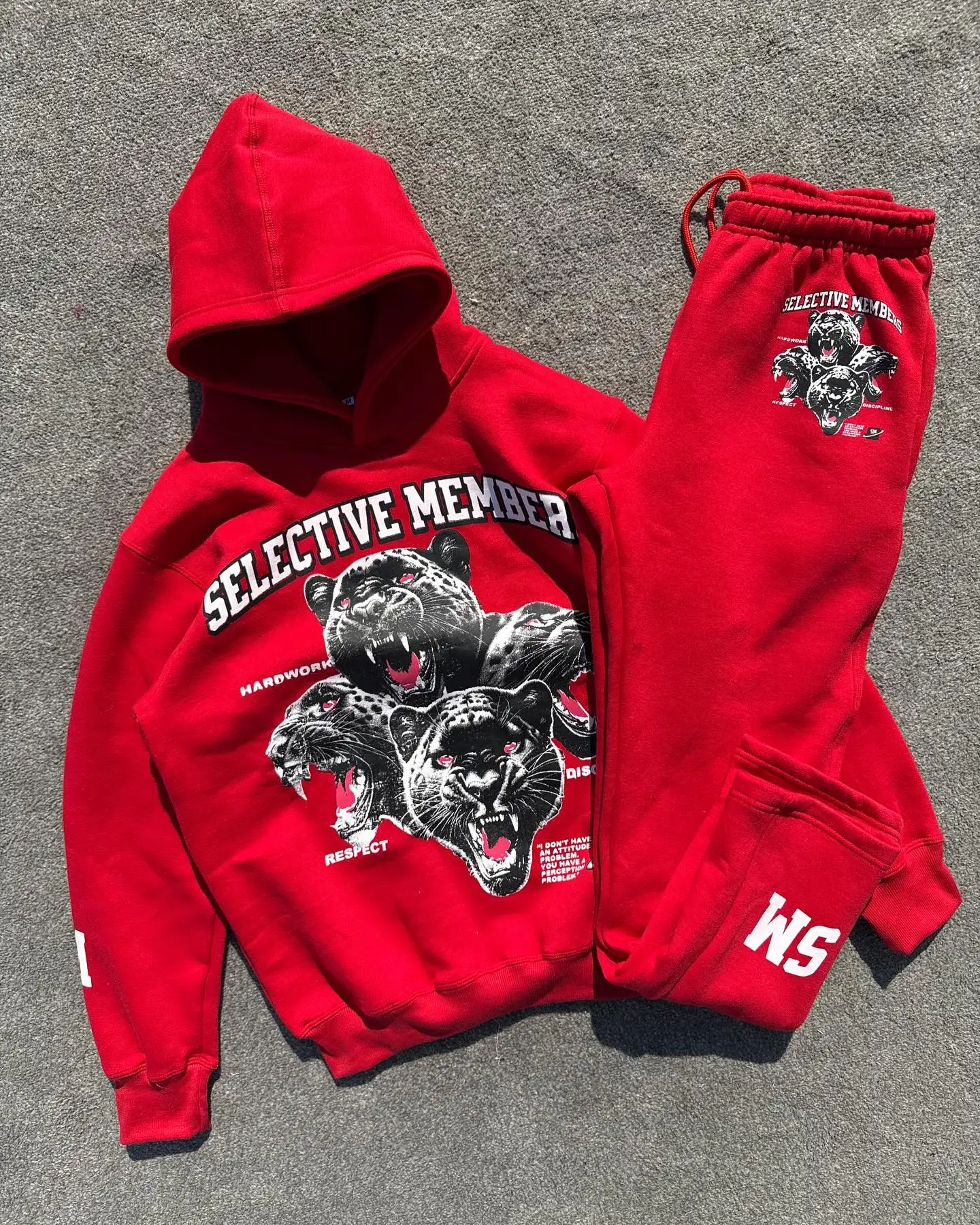
The question of where to source custom hoodies is fundamentally a matter of scale. The answer diverges sharply depending on whether one requires a single piece, a modest batch for a startup, or a substantial order for an established brand. The contemporary manufacturing landscape has evolved to accommodate a spectrum of needs, from ultra-low minimums to full-scale OEM production.
The Ultra-Low Minimum Pathway
For individuals, small teams, or brands testing a concept, several suppliers now operate with minimums that were previously unimaginable in garment manufacturing.
Yiwu Youziyi Clothing, a knitwear factory with nearly two decades of industry experience, offers digital direct-to-garment (DTG) printing from as few as 2 pieces, and digital thermal sublimation from 25 pieces. This allows for genuine small-batch experimentation without the burden of excess inventory. The factory maintains its own digital printing workshop, giving it direct control over quality for these small runs.
A similar model is offered by Guangzhou Suyuchun Clothing, which explicitly positions itself to serve “startup brands, cultural creative shops, and online sellers” with both small-batch trial orders and large-scale production. Their in-house embroidery line means this decoration method does not need to be outsourced, which can reduce lead times.
The Low-Batch Manufacturing Pathway
For brands building a proprietary product with a distinct identity, the sweet spot lies with manufacturers offering minimum order quantities (MOQs) in the 50 to 100 piece range.
Ninghow, a manufacturer that works with startup brands, sets its MOQ as low as 80 pieces for custom hoodies. The company provides a structured pathway for new brands, covering sampling, branding (embroidery, heat transfer, woven tags), and global shipping. Their emphasis on “start small and build trust” reflects an understanding of the financial constraints facing new labels.
Zhongshan Huisen Garment Factory is another option, offering 100-piece minimums for mass production of hoodies. The factory is described as having a skilled production line that strictly controls key processes such as neckline, cuffs, and hem to prevent issues like pilling, deformation, and loose collars that are common in low-quality hoodies. They support full-package production, processing with supplied materials, and brand labeling.
For smaller quantities, Dongguan Humen Meihao Garment Factory accepts domestic orders of 300 pieces and above, noting that smaller orders carry relatively higher operating costs. Their sampling takes 3 to 7 days, with a sample fee of 150 to 300 yuan, which is refunded for bulk orders of 300 pieces or more.
The Established Production Pathway
For brands with proven demand and the capital to invest in larger runs, the economics shift significantly. At this scale, per-unit costs decrease and manufacturers become more accommodating of complex customization.
Dongguan Shijin Clothing, located in the garment hub of Humen, operates a 7,000-square-meter facility with over 200 employees and more than 10 production lines, producing over 3,000 pieces daily. The company supports small-batch rapid response orders and OEM/ODM customization, exporting to Europe, the Americas, Australia, and the Middle East. Their scale allows them to serve as a stable supplier for brands requiring consistent volume.
Zhongshan Hailong Garment offers a useful case study in efficiency at scale. For a Hangzhou e-commerce brand, they produced 2,000 pieces of 320g heavyweight pure cotton hoodies across six colorways and four sizes, from pattern confirmation to warehouse delivery, in 18 days. Their bulk production starts at 500 pieces per style, with a monthly capacity of 80,000 pieces.
For those seeking the flexibility of low minimums combined with in-house embroidery and diverse printing capabilities, Guangzhou Suyuchun Clothing offers a comprehensive menu of decoration options including computer flat embroidery, 3D embroidery, water-based screen printing, special effect heat transfers (silicone, luminous, laser, reflective), and imported digital direct printing.
Key Considerations Before Committing
Regardless of the chosen pathway, several practical matters warrant attention. The sampling phase is non-negotiable. A physical prototype reveals the actual hand-feel of the fabric, the accuracy of the fit, and the quality of the decoration in a way that no digital mockup can. Sample fees are standard, typically ranging from 150 to 300 yuan for simple styles, and are often refunded on bulk orders.
Fabric weight and composition should be confirmed in grams per square meter (GSM). For hoodies, mid-weight options around 280–350 GSM offer a balance of comfort and durability, while heavier weights of 400 GSM and above provide a more structured, premium feel.
Communication clarity is perhaps the most reliable predictor of a successful partnership. Manufacturers that respond promptly, provide clear pricing and timelines, and are willing to engage in the sampling process before demanding a bulk commitment tend to deliver better outcomes. The minimum order quantity is no longer the barrier it once was; the true differentiator is finding a partner whose capabilities align with the specific demands of the product and the market.