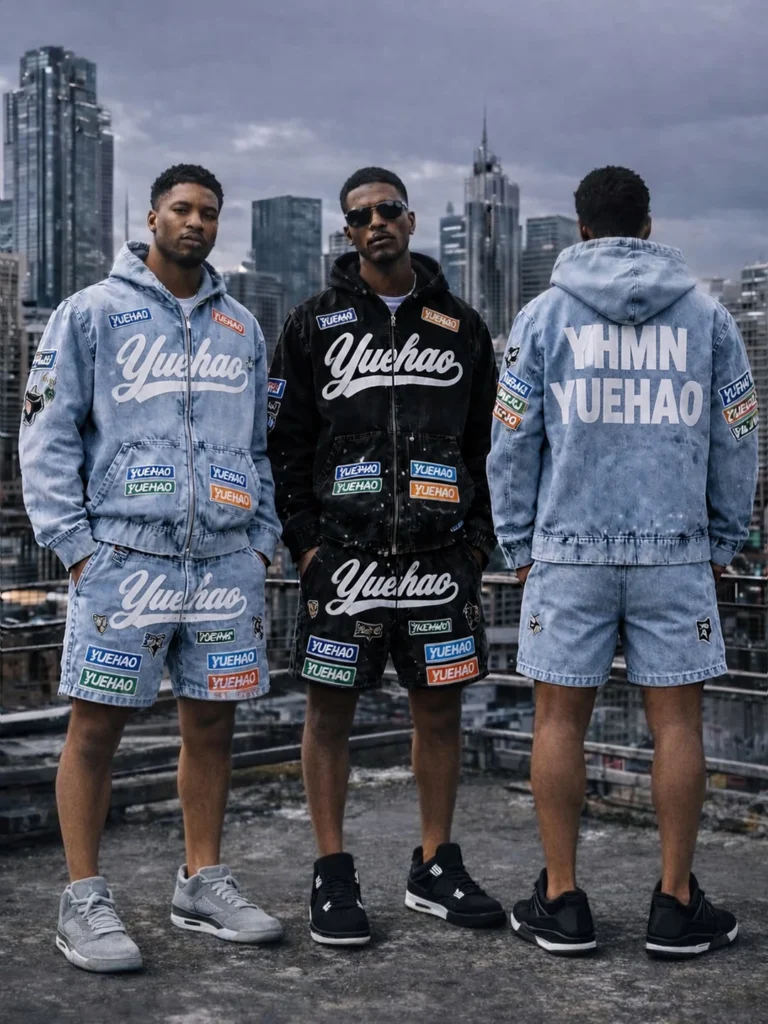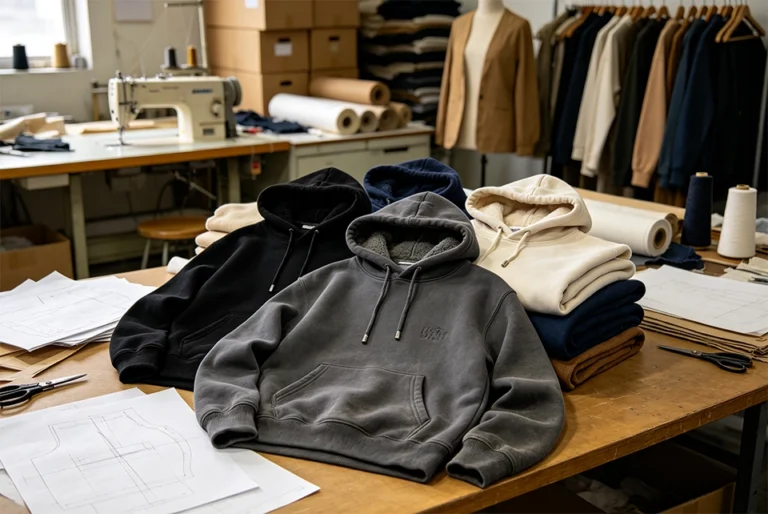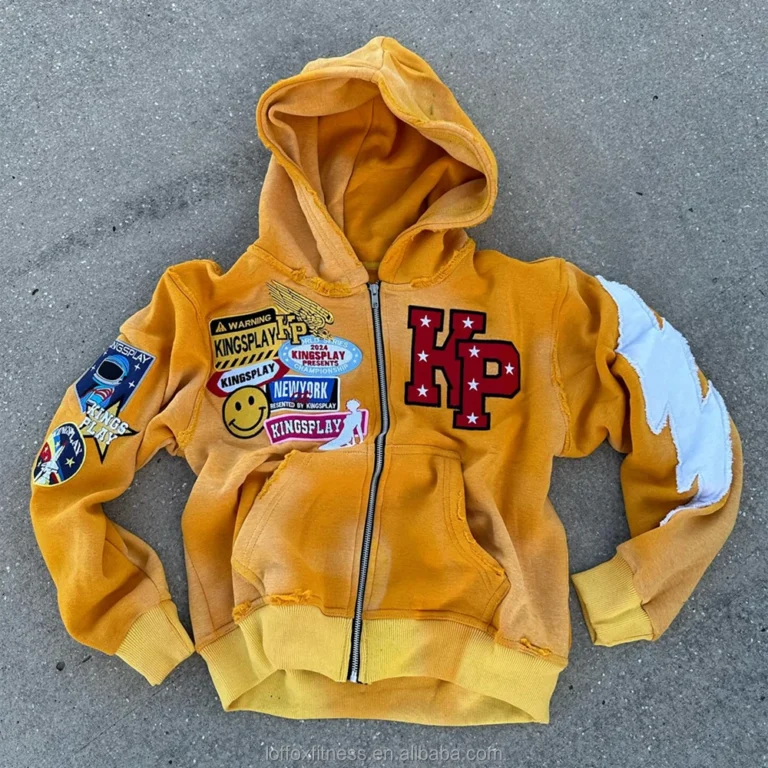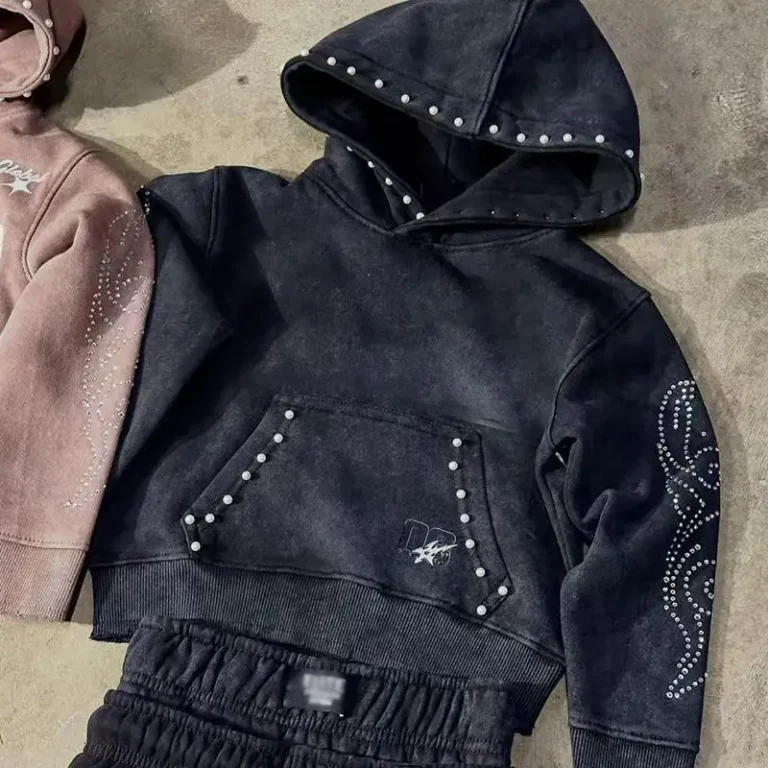
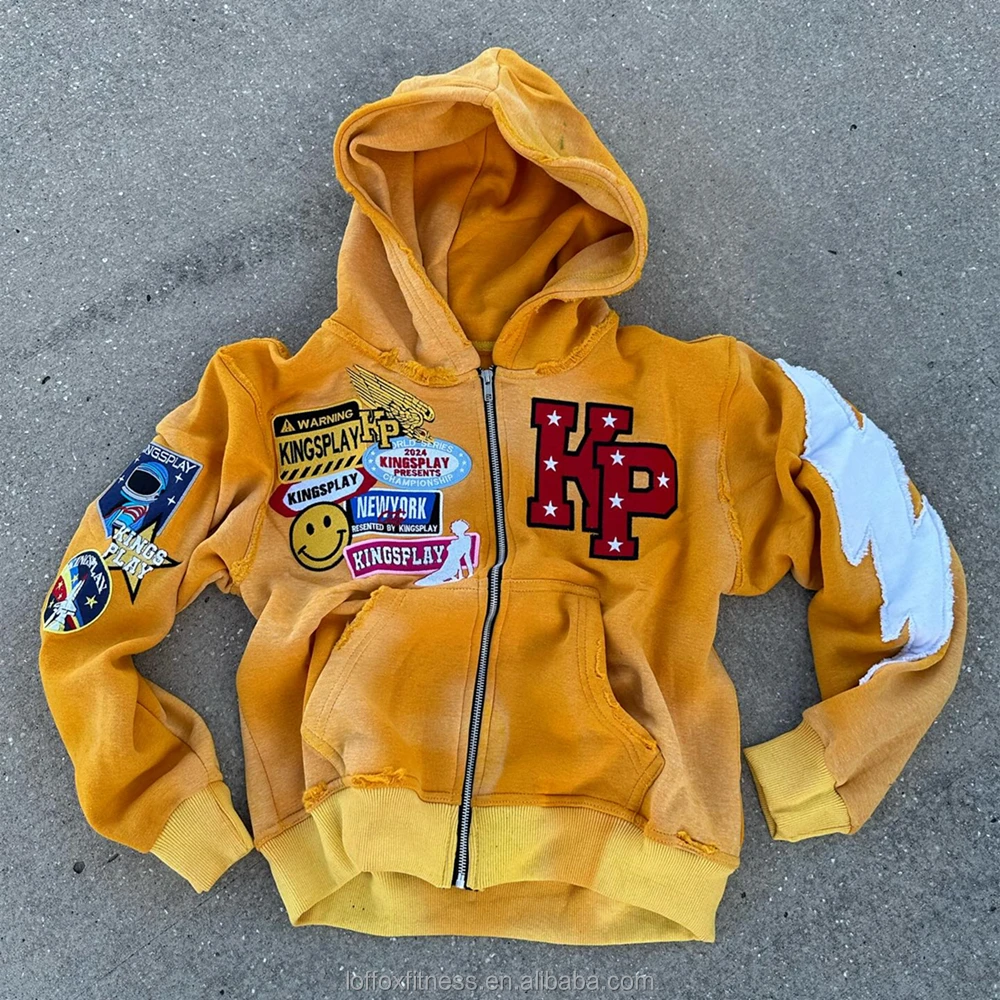
The creation of a custom hoodie is an exercise in applied decision-making. Every choice—from the weight of the fabric to the placement of a hem tag—reverberates through the final product’s cost, durability, and market reception. This guide delineates the principal pathways for bringing a custom hoodie into existence, whether for a single personal piece, a small brand capsule, or a bulk fundraising campaign.
Defining the Scope: What “Custom” Actually Means
The term “custom hoodie” encompasses a spectrum of interventions. At its most modest, it denotes a stock garment adorned with a printed or embroidered graphic. At its most ambitious, it signifies a garment built from the ground up: proprietary fabric, engineered pattern, bespoke hardware, and a wash developed exclusively for the brand.
Clarity on scope is the first decision. A one-off personal hoodie and a 500-piece retail collection share certain steps—design, sampling, decoration—but diverge radically in cost structure, minimum order quantities, and the degree of control available over the base garment.
Pathway One: Print-on-Demand for Single Pieces
For individuals and for brands testing a concept, print-on-demand (POD) platforms offer the lowest-friction entry. The model requires no inventory investment; the platform prints and ships each order as it arrives.
The trade-off is control. You select from the platform’s catalog, so fabric weight and construction are predetermined. Decoration is typically restricted to DTG or heat transfer. For a personal gift or a first market test, this suffices. For a brand seeking a distinctive hand-feel or silhouette, it is a constraint.
Pathway Two: Decorating a Blank Hoodie
A more hands-on approach involves sourcing a blank hoodie and applying the decoration independently. This is the domain of heat transfer vinyl (HTV), fabric paint, screen printing kits, and embroidery services.
The blank hoodie accounts for 40–60% of total cost in any decorated garment. Fabric weight is the primary variable: midweight fleece (8–9 oz) offers a balance of comfort and durability, while heavyweight fleece (10 oz and above) provides a structured, retail-quality feel. Cotton-rich blends accept screen printing and DTG ink more readily than polyester-heavy fabrics.
Preparation matters. Washing and drying the blank before decoration pre-shrinks the fabric and stabilizes dimensions. For HTV, a craft cutter produces the design, which is then heat-pressed. For paint, the design is applied by hand, stencil, or splatter, then heat-set with an iron to render it permanent.
Pathway Three: Working with a Low-MOQ Manufacturer
For brands seeking a proprietary product, engaging a manufacturer directly is the superior path. The market has responded to demand from emerging labels by offering flexible minimums. MOQs now routinely start at 50–100 pieces per style and color.
The process follows a defined sequence. A tech pack or reference sample is submitted. The manufacturer produces a pre-production sample—typically in 5–10 days—for evaluation of fit, fabric, and decoration. Upon approval, bulk production commences, with lead times of 20–35 days depending on wash complexity and order volume.
Key decisions at this stage include fabric weight and composition, silhouette (pullover, zip-up, cropped, oversized), decoration method (screen print, DTG, DTF, embroidery, puff print), hardware (zipper type, drawcord aglets, eyelets), and branding (woven labels, leather patches, hang tags, packaging).
The Decoration Method Decision
Decoration method selection is dictated by order volume, design complexity, and fabric composition.
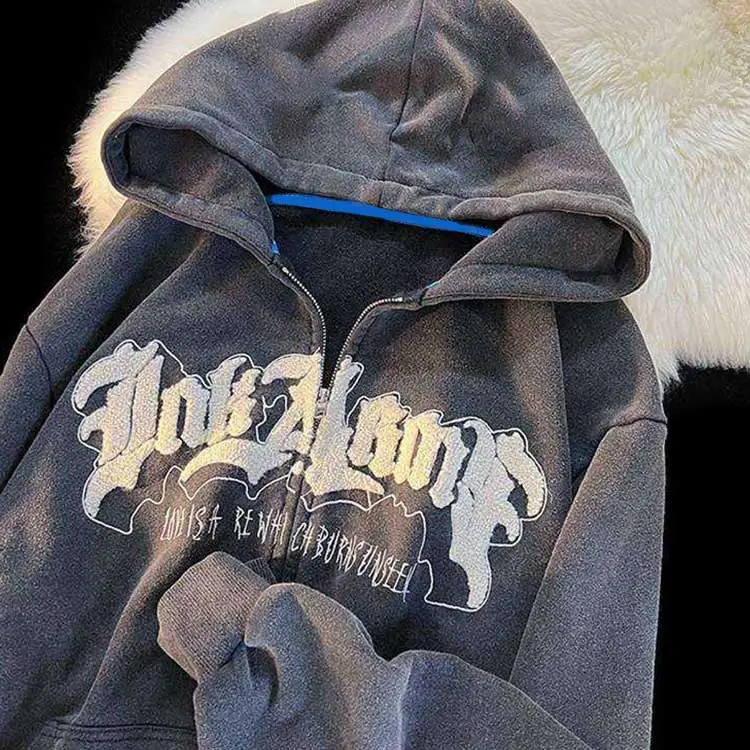
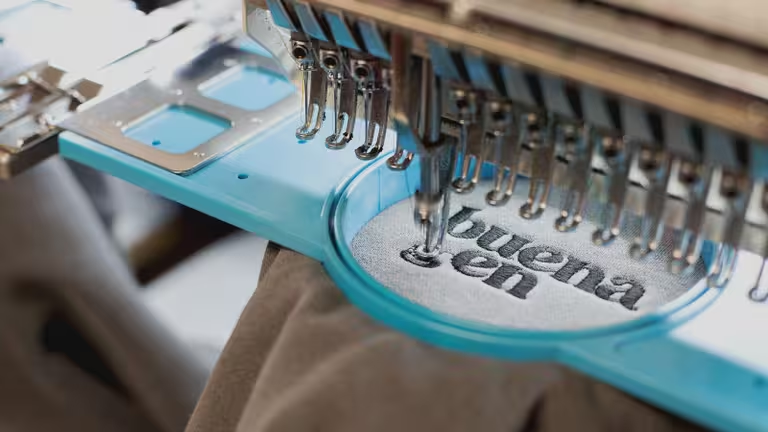
Screen printing is the most cost-effective for larger runs with simple, bold designs. Each color requires a separate screen, making multi-color designs expensive at low volumes. DTG excels for photorealistic, full-color artwork on high-cotton substrates but requires pre-treatment on dark garments. DTF transfers are fabric-agnostic and work well on dark fleece, with a slightly stiffer hand-feel. Embroidery provides a premium, textured finish for logos and small text, with excellent durability.
A hybrid approach is common: an embroidered logo on the chest paired with a screen-printed design on the back. This combines the perceived value of embroidery with the graphic impact of printing.
Sampling: The Crucible of Quality
The sample is not a formality. It is the contractual benchmark. A physical prototype reveals what a digital mockup cannot: the actual hand-feel of the fabric after washing, the accuracy of the fit, the placement of the decoration, and the security of the stitching.
For low-batch orders, manufacturers often treat a 100-piece run with the same quality protocols as a larger order, implementing in-line inspections and final audits to flag any deviation. Requesting a wash test on the sample—washing it multiple times to check for fading, cracking, or shrinkage—is the most reliable way to validate decoration durability.
Cost Structure and Pricing Logic
The unit cost of a custom hoodie is determined by fabric quality, decoration complexity, hardware selection, and order volume. As quantity increases, per-unit cost decreases, reflecting economies of scale in setup, cutting, and decoration.
A small-batch run of 100 hoodies with a two-color front print might carry a per-unit cost in the range of $16–$20, inclusive of blanks, printing, and shipping. At retail prices of $40–$55, the margin supports both the brand and the channel. For fundraising campaigns, the pre-sale model—collecting orders before production—eliminates inventory risk entirely.
The Pre-Sale Model for Risk Mitigation
For first-time projects and fundraising campaigns, the pre-sale model is the recommended approach. Orders and payment are collected during a defined window—typically two to three weeks. Once the window closes, the final size and quantity breakdown is submitted to the manufacturer. Only what has been sold is produced.
This eliminates the two principal risks of custom apparel: unsold inventory and upfront capital expenditure. It also provides accurate size distribution data, preventing the common problem of excess medium and large sizes with insufficient small and extra-large.
Timeline Planning
A realistic timeline works backward from the desired delivery date. Design and artwork approval should be finalized at least six weeks before delivery. Sampling requires one to two weeks. Bulk production adds three to five weeks depending on volume and wash complexity. Shipping and fulfillment require an additional week for domestic orders, longer for international.
Rush production is often available for a premium of 25–50%, but it should not be relied upon as a planning assumption. The most common failure in custom hoodie projects is an underestimated timeline.
Quality Control Checklist
Upon receiving a bulk order, inspection should cover: stitching integrity at stress points (shoulders, armholes, pocket corners), decoration placement and adhesion, color consistency across all units, hardware function (zippers, drawcords), and dimensional accuracy against the approved sample.
Reputable manufacturers provide pre-shipment inspection reports and cooperate with third-party inspection agencies. This is particularly important for orders destined for retail, where a defect rate above 2.5% is generally considered unacceptable.
Conclusion: From Concept to Garment
The creation of a custom hoodie is a sequence of informed decisions. Whether the path chosen is a single print-on-demand piece or a 500-unit production run, the principles remain constant: define the purpose, select the substrate with intention, choose the decoration method that serves the design, sample rigorously, and plan the timeline with margin. The result is not merely a garment but a tangible artifact of a vision—one that carries the wearer’s identity and the maker’s intent in equal measure.