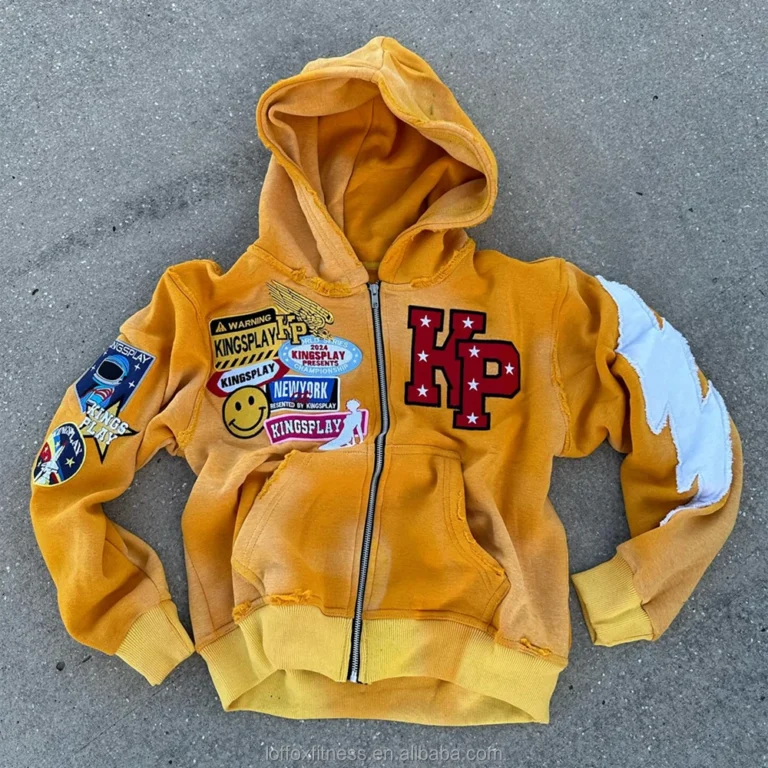
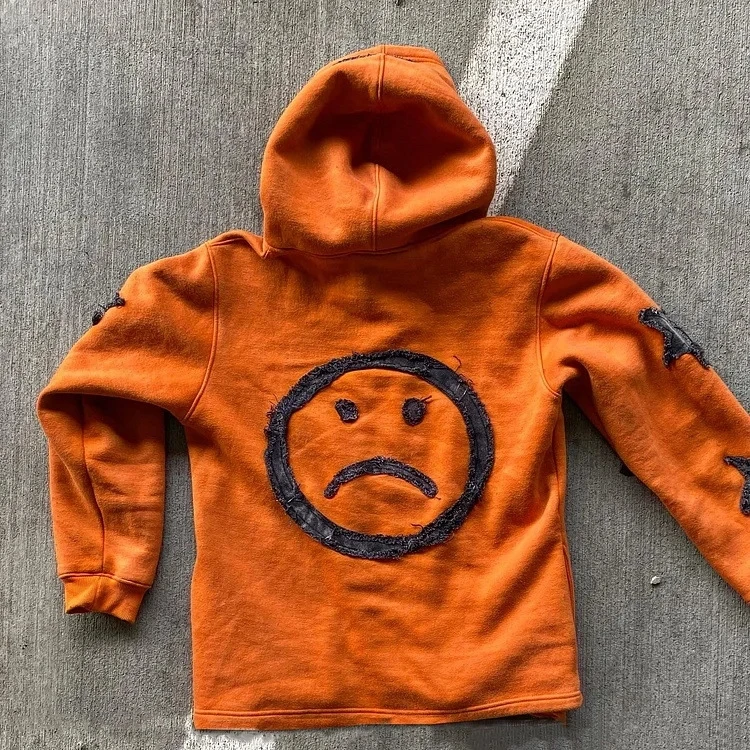
Introduction: The Economic Anatomy of a Hooded Garment
The custom hoodie is a garment of paradox. It is simultaneously a utilitarian staple and a canvas for personal or corporate expression, a product whose cost can range from a modest fifteen dollars to a staggering one hundred fifty dollars depending on the configuration of its constituent elements. To understand the cost of a custom hoodie is to understand the entire manufacturing ecosystem—the price of cotton on the global market, the labor rates of distant factories, the fixed costs of decoration setup, and the economies of scale that govern production. This analysis delineates the constituent elements of that cost, providing a granular framework for budgeting and procurement in the 2026 landscape.
The Foundational Cost: The Blank Garment as Primary Expense
The base hoodie—the undecorated blank—constitutes the single largest line item in the cost structure, accounting for forty to fifty percent of the total unit cost according to factory-level breakdowns . This foundational expense sets the floor for the entire budget, and its selection reverberates through every subsequent decision.
The Fabric as Cost Driver
The fabric alone can cost between two and twelve dollars per yard, and a standard adult hoodie requires approximately one-point-three to one-point-eight linear meters of material depending on silhouette width and pocket construction . A standard cotton-poly blend in the 280 to 320 GSM range might cost three to six dollars per yard, while organic cotton or heavy fleece of 350 to 400 GSM escalates to seven to twelve dollars per yard . Higher GSM fleece inherently increases raw material costs, and this is before accounting for the five to eight percent scrap loss inherent in the cutting process, which can rise to twelve to fifteen percent for designs requiring pattern matching .
The Composition Premium
The fiber composition further modulates the expense. Organic cotton and recycled blends carry premiums of thirty to sixty percent over conventional fibers, reflecting both the cost of sustainable sourcing and the consumer’s willingness to pay for environmental responsibility. A standard blank might begin at approximately fifteen dollars, while a heavyweight fleece or a branded style from a premium label can command thirty-five dollars or more before any decoration is applied.
The Global Cotton Context: A Rising Input Cost
The cost of cotton itself is not static, and 2026 marks a period of projected increases. The USDA forecasts that global cotton ending stocks are expected to decline by over five million bales to the lowest level since 2011/12, as mill use exceeds production for the first time in three years . Consequently, the 2026/27 average U.S. upland cotton farm price is projected at seventy-three cents per pound, up from sixty-three cents in the previous season . The Cotlook A-Index is expected to average approximately ten cents per pound above the 2025/26 level of eighty cents per pound . This upward pressure on raw material costs will inevitably propagate through the supply chain, making any cost analysis a snapshot rather than a fixture.
The Labor Ledger: Geography as Cost Determinant
The geography of production exerts a profound influence on the labor component of the cost. Factories in Asia—including China, Vietnam, and Bangladesh—charge between one and eight dollars in labor per hoodie for cutting, sewing, and finishing. Turkey and Eastern Europe range from five to ten dollars, while the United States and Western Europe can exceed ten to twenty dollars per unit . This differential reflects not merely wage scales but the depth of skill, the efficiency of the production line, and the proximity to the end market. The CMT (Cut, Make, Trim) labor component accounts for twenty to thirty percent of the unit cost in a factory-level breakdown, a significant share that is often underestimated by buyers focused solely on fabric .
The Alchemy of Decoration: Methods and Their Costs
The application of a design is a distinct cost center with its own internal logic. The method selected must align with the order quantity, the complexity of the artwork, and the desired durability.
Screen Printing: The Economics of Volume
Screen printing is the most cost-effective decoration method at scale, but its economics are governed by setup fees that penalize small orders. The ink application itself costs between fifty cents and three dollars per design per piece . The screen setup fee—which must be amortized across the production run—is a fixed cost that renders small quantities disproportionately expensive. At volumes exceeding one hundred units, this method becomes the most economical choice for bold, solid-color designs.
Embroidery: The Premium Stitched Signature
Embroidery is the gold standard for premium branding, offering a tactile, three-dimensional finish that resists fading and peeling. The cost is determined by stitch count and thread colors, typically adding five to twelve dollars per hoodie . A one-time digitizing fee of approximately six dollars and fifty cents converts artwork into a machine-readable stitch file, and this fee is reused on every future order . The premium that embroidery commands over printing is not uniform: across identical blanks, it ranges from as little as three dollars to as much as thirty-seven dollars, depending on how cleanly the fabric stitches . The practical consequence is that the lowest-priced printed blank is often not the lowest-priced embroidered one.
DTG and DTF: The Digital Alternatives
Direct-to-Garment (DTG) printing offers an accessible entry point for small orders with no setup fees, typically adding eight to fifteen dollars per hoodie depending on design size. Direct-to-Film (DTF) transfers add six to twelve dollars per piece and offer superior durability on dark fleece. Both methods are fabric-agnostic to varying degrees, though DTG performs best on high-cotton substrates.
The Tyranny of Scale: How Order Quantity Governs Unit Cost
The relationship between order quantity and per-unit cost is the most powerful lever in custom hoodie economics. Fixed costs—pattern making, sampling, screen preparation, and quality control protocols—are amortized across the production run. At low volumes, each garment absorbs a disproportionate share of these expenses.
The following table synthesizes data from multiple manufacturing sources to illustrate the pricing ladder for a custom hoodie :
| Order Size | Estimated Cost Per Hoodie |
|---|---|
| Sample (1-10 pcs) | $50 – $150 |
| 50–100 pcs | $20 – $40 |
| 300–500 pcs | $12 – $25 |
| 1000+ pcs | $8 – $16 |
The data reveals a stark reality: a fifty-piece order can carry a unit cost two to three times higher than a thousand-piece run of the identical garment. This premium is not a function of the garment itself but of the setup costs that cannot be divided below a certain threshold. The minimum order quantity exists not to frustrate small buyers but because the setup cost for screen printing or embroidery remains constant whether the run is five pieces or five hundred .
Real-World Cost Scenarios
The theoretical framework can be illustrated through practical scenarios that reflect the range of production configurations.
The Print-on-Demand Single Piece
For an individual or a brand testing a design, print-on-demand offers the lowest-friction entry. A single custom hoodie with a basic print typically lands between twenty-five and thirty-five dollars once shipping is included . The trade-off is limited control over the base garment and a per-unit cost that remains elevated because the setup costs are entirely absorbed by the single order.
The Bulk Screen-Printed Run
A basic single-color screen-printed hoodie ordered in a bulk run of fifty units averages around eighteen to twenty-two dollars per piece all-inclusive . At this scale, the setup costs are beginning to amortize, and the per-unit price reflects a balance between accessibility and economy. A small order of fifty hoodies with embroidery, by contrast, might see setup costs of approximately forty-five pounds spread across the run, yielding a per-unit cost of roughly nineteen pounds—nearly double what the same garment would cost at a volume of five hundred .
The Premium Embroidered Collection
A premium embroidered hoodie on a heavyweight blank costs closer to thirty-five to fifty dollars per piece regardless of order size . For a corporate program where embroidery is the expectation, the realistic band sits in the middle-to-upper part of the ladder, roughly forty-six to sixty-five dollars per piece . A Gildan embroidered hoodie for a twenty-person team, for example, might cost forty-six dollars per piece, totaling nine hundred twenty dollars, while a Champion version for the same team would reach nearly sixteen hundred dollars .
The Custom Ink Benchmark: All-Inclusive Pricing
Custom Ink, a major player in the custom apparel space, offers a useful benchmark because its pricing is all-inclusive—the quote covers the garment, the decoration, and standard shipping. Their product pages reveal the per-unit cost at the highest volume tier shown, which is the lowest possible unit price. Across their hoodie catalog, prices for five hundred items range from approximately twenty-six dollars to over ninety dollars depending on the brand and style . Sustainable hoodies from brands like Stanley/Stella and Patagonia command a premium, with prices ranging from forty-six to over seventy dollars per piece at the five-hundred-unit tier . Custom Ink does not require a business license or wholesale account; the per-piece pricing decreases automatically with quantity, and sizes can be mixed within the same style without breaking the discount .
The Hidden Ledger: Costs Beyond the Quote
The unit price quoted by a manufacturer is rarely the final cost. Several ancillary expenses accrue throughout the production and delivery cycle.
Sampling and Development Fees
The sampling phase is an indispensable investment in quality assurance. A first prototype tests whether the pattern, fabric, and construction can express the design intent. Sampling costs range from thirty to one hundred fifty dollars per sample, and two or three rounds of revisions are normal for a new design . These costs are sometimes credited against a qualifying bulk order, but this must be negotiated explicitly.
Freight, Duties, and Logistics
The physical movement of goods introduces a significant cost layer. Packaging, shipping, and import duties add approximately fifty cents to two dollars per unit, and a five to ten percent cost buffer is recommended for emergencies . For overseas production, the logistics and import duties can add fifty cents to two dollars or more per hoodie, and these costs are frequently omitted from initial budget calculations.
Conclusion: The True Cost Equation
The cost to make a custom hoodie is not a number to be discovered but a variable to be engineered. It is the product of the fabric’s weight and provenance, the geography of its assembly, the sophistication of its decoration, and the scale of its production. A single piece may carry a cost of forty dollars, while a thousand identical pieces might achieve a unit cost of twelve. The difference is not in the garment but in the amortization of effort and the exploitation of scale. With cotton prices projected to rise through 2026 and 2027, the disciplined buyer must treat any cost analysis as a living document, one that is reviewed regularly against the shifting currents of the global textile market. The task is not to find the lowest price but to identify the production configuration that aligns cost with purpose, ensuring that every dollar spent contributes to the integrity of the final artifact.