1. Introduction to DIY Custom Hoodie Crafting
1.1 The Rise of Independent Bespoke Apparel Creation
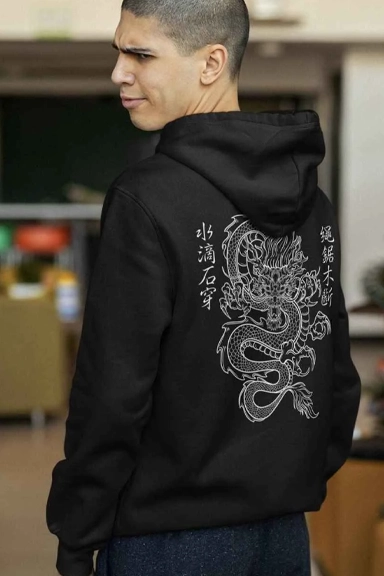
Independent DIY apparel crafting has proliferated exponentially within contemporary creative ecosystems, evolving from a niche hobby into a mainstream modality for bespoke garment production. Mass-market custom apparel services often impose creative limitations, standardized design templates, and elevated retail markups that dilute individual artistic vision. At-home hoodie customization empowers creators to exercise unbridled aesthetic autonomy, producing sartorial pieces reflective of personal ethos, subcultural affiliation, or brand identity. This grassroots garment creation movement prioritizes artisanal individuality over industrial uniformity, fostering a sustainable alternative to commodified fast-fashion customization. Every DIY custom hoodie functions as a wearable artifact of iterative creative experimentation and personalized design curation.
1.2 Core Advantages of DIY Custom Hoodie Fabrication Over Commercial Services
DIY hoodie manufacturing delivers a trifecta of creative, financial, and qualitative benefits absent from commercial customization pipelines. Financially, at-home production eliminates third-party labor overhead, retail markup, and administrative service fees, reducing total project expenditure by 30–70% relative to professional vendor pricing. Creatively, DIY workflows enable real-time design iteration, on-demand modification, and hyper-specific aesthetic tailoring that rigid commercial production protocols prohibit. Qualitatively, hands-on creation allows for granular texture control, intentional imperfection, and artisanal character that machine-produced garments cannot replicate. Additionally, DIY customization supports circular fashion principles by enabling upcycling of existing garments, minimizing textile waste and environmental footprint.
1.3 Skill and Resource Prerequisites for Beginner DIY Hoodie Customization
Contrary to common misconception, professional-caliber DIY hoodie customization requires no formal textile or graphic design credentials. Novice creators only require baseline dexterity, fundamental spatial awareness, and adherence to standardized procedural workflows. Basic beginner projects demand minimal capital investment, utilizing affordable consumer-grade tools and readily accessible consumables. Advanced artisanal techniques require incremental skill development and modest equipment upgrades. Patience and precision supersede innate talent in producing polished results. This low barrier to entry democratizes bespoke hoodie creation, allowing hobbyists, students, and independent creators to produce gallery-worthy custom apparel from residential workspaces.
2. Pre-Project Planning & Conceptual Development
2.1 Defining Aesthetic Intent and Functional Design Parameters
Rigorous pre-project conceptualization is the foundational precursor to cohesive DIY custom hoodie creation. Creators must delineate core aesthetic intent, whether prioritizing minimalist minimalism, maximalist graphic intensity, vintage distressing, or modern avant-garde styling. Functional parameters equally guide design decisions; everyday casual wear demands durable, wash-resistant finishes, while novelty artistic pieces may prioritize visual uniqueness over long-term resilience. Establishing definitive creative boundaries eliminates arbitrary design revisions and ensures stylistic consistency throughout production. This preliminary ideation phase transforms abstract creative vision into actionable, executable garment modification protocols.
2.2 Selecting Hoodie Base Garments: Blank vs. Upcycled Substrates
Substrate selection directly dictates the final tactile and visual quality of any DIY custom hoodie. Premium blank hoodies feature consistent GSM fleece density, pre-shrunk textile composition, and uniform surface tension ideal for crisp graphic application and embroidery work. Lightweight 280–320 GSM blanks suit delicate designs, while heavyweight 360+ GSM fleece supports robust embellishment and structural modification. Upcycled vintage or thrifted hoodies offer unique textile patina, faded wash characteristics, and retro silhouettes unavailable in modern retail blanks. Upcycled substrates require preliminary fabric condition assessment to identify wear, pilling, or shrinkage inconsistencies that may impact customization efficacy.
2.3 Curating Print-Ready Artwork and Vector Graphic Assets
High-fidelity DIY customization hinges on print-optimized graphic asset preparation. Raster images sourced from web platforms often exhibit insufficient resolution, resulting in pixelated, degraded post-application visuals. Vectorized artwork, characterized by mathematical geometric rendering, delivers infinite scalability and crisp edge definition critical for vinyl cutting and stencil creation. Novice creators can utilize vector conversion software to refine hand-drawn illustrations, typography, and custom logos. Asset curation should also account for textile color theory, ensuring graphic hues contrast effectively with base garment tones and maintain vibrancy post-thermal curing. Well-optimized artwork eliminates the majority of amateur DIY customization imperfections.
2.4 Scaling Design Proportions for Ergonomic Garment Placement
Precision spatial scaling is an often-overlooked determinant of professional-grade DIY hoodie aesthetics. Oversized chest graphics can overwhelm garment proportions, while undersized designs appear underdeveloped and visually insignificant. Standard industry ergonomic guidelines dictate proportional design dimensions aligned with hoodie size classification, ranging from youth to adult oversized silhouettes. Creators should utilize digital mockup overlays or physical paper templates to validate design scale and centering prior to permanent application. Strategic placement consideration extends to sleeve artwork, neck labels, and hem detailing, ensuring holistic visual balance across the entire garment topography.
3. Essential DIY Customization Tools and Material Inventory
3.1 Fundamental Handcrafting Implements for Beginner Customization
Entry-level DIY hoodie customization relies on low-cost, ubiquitous handcrafting tools accessible to all creators. Precision craft knives and self-healing cutting mats enable clean vinyl and stencil fabrication without substrate damage. Flexible measuring tapes and acrylic ruler guides facilitate accurate design centering and proportional scaling. Fabric marking chalk and water-soluble pens deliver temporary, non-permanent garment annotation for alignment precision. Embroidery hoops, blunt-tip textile needles, and assorted thread spools support hand-stitch embellishment. These foundational implements require minimal financial investment yet drastically elevate the precision and polish of beginner DIY customization projects.
3.2 Intermediate Mechanical Tools: Heat Presses and Precision Cutters
Creators seeking elevated consistency transition to intermediate mechanical tools that mitigate manual application variability. Consumer-grade vinyl cutters automate vector design rendering, producing intricate graphic contours unattainable by hand cutting. Compact residential heat presses deliver uniform thermal pressure and temperature calibration, eliminating the uneven bonding common to household iron application. Rotary cutters and fabric trimmers enable precise textile modification for upcycling and patchwork projects. These tools streamline production workflows, reduce human error, and enable repeatable results ideal for small-batch DIY hoodie creation.
3.3 Specialty Consumables: Vinyl, Inks, Threads, and Textile Treatments
Premium consumable selection differentiates amateur DIY results from artisanal professional finishes. Heat transfer vinyl variants include matte, glossy, metallic, and puff substrates for diversified tactile outcomes. Water-based textile inks offer breathable, soft-hand prints ideal for stenciling, while plastisol inks deliver opaque, durable coverage for high-contrast graphics. Polyester and cotton embroidery threads provide colorfast stitching resistant to laundering degradation. Specialty consumables such as bleach activators, fabric dyes, and textile adhesive enable distressed, marbled, and patched custom hoodie modifications. Curated consumable inventory ensures design durability, visual vibrancy, and tactile sophistication in every DIY project.
4. Pre-Production Garment Preparation Protocols
4.1 Textile Sanitization and Pre-Wash Fabric Treatment
Systematic pre-production garment preparation is non-negotiable for durable DIY custom hoodie finishes. Factory-manufactured blank hoodies contain residual sizing chemicals, dust particulates, and textile lubricants that inhibit ink and vinyl adhesion. A preliminary cold-water, detergent-free wash eliminates surface contaminants without inducing excessive shrinkage. Upcycled garments require sanitizing cycles to remove residual wear debris and restore textile integrity. Post-wash tumble drying or air drying ensures complete moisture dissipation, as residual humidity compromises thermal bonding and ink curing. This preparatory step drastically reduces post-customization peeling, fading, and print degradation.
4.2 Wrinkle Mitigation and Surface Plane Calibration
Textile surface irregularities including wrinkles, creases, and fabric bunching create inconsistent application planes that ruin graphic uniformity. Pre-application thermal pressing flattens fleece fibers, standardizing the garment surface plane for precise design transfer. Creators must apply uniform heat across the entire customization zone, eliminating micro-creases that cause vinyl bubbling or ink streaking. For oversized and relaxed-fit hoodies, strategic tensioning ensures taut fabric alignment during preparation. A calibrated, wrinkle-free surface is a prerequisite for crisp, professional-grade DIY customization results.
4.3 Temporary Design Marking and Spatial Alignment Mapping
Precision spatial mapping eliminates asymmetric design placement, a prevalent flaw in amateur DIY hoodie creation. Creators utilize water-soluble markers and tailor’s chalk to plot central alignment axes, horizontal baselines, and design perimeter boundaries. Paper template tracing enables physical visualization of design scale prior to permanent application. Cross-reference alignment points ensure symmetrical placement for dual-side and multi-panel graphics. This meticulous mapping process transforms subjective visual estimation into objective spatial precision, yielding balanced, industry-standard garment composition.
5. Beginner-Friendly DIY Custom Hoodie Techniques
5.1 Heat Transfer Vinyl (HTV) Application Methodology
Heat transfer vinyl customization is the most accessible beginner DIY technique, offering clean, durable results with minimal technical expertise. The workflow begins with vector design cutting and excess vinyl weeding to isolate intended graphics. Pre-heated garment surfaces receive precise vinyl placement aligned with pre-marked spatial guides. Controlled thermal pressure, calibrated to vinyl substrate specifications, activates adhesive bonding with fleece fibers. Post-press cold or warm peeling eliminates residual carrier sheet material, revealing crisp, opaque graphics. HTV customization excels for typography, logos, and minimalist designs, delivering consistent, long-wearing results ideal for novice creators.
5.2 Hand Stenciling and Pigment Ink Block Printing
Hand stenciling facilitates low-cost, high-creativity DIY hoodie customization for organic, artisanal aesthetics. Custom stencils fabricated from vinyl or cardstock create reusable graphic templates for multi-layer ink application. Water-based textile ink is thinly and evenly distributed across stencil surfaces using foam daubers or soft-bristle brushes to prevent ink bleeding. Controlled layer thickness maintains fine-detail definition while ensuring adequate pigment saturation. Air-drying and thermal curing lock ink molecules into fleece fibers, establishing wash-resistant color fastness. This technique embraces subtle handcrafted imperfections that enhance bespoke artistic character.
5.3 Basic Hand Embroidery and Textile Stitch Embellishment
Hand embroidery adds tactile dimensionality to DIY custom hoodies, elevating flat graphics with textured stitchwork. Beginner-friendly stitches including running stitches, satin stitches, and back stitches enable simple typography, border detailing, and miniature motif creation. Embroidery hoops stabilize fabric tension, preventing stitch puckering and textile distortion. Color-coordinated thread selection complements base garment tones to create subtle or prominent embellishment. Hand-embroidered details deliver superior durability compared to printed graphics, resisting fading and degradation through repeated laundering. This technique infuses DIY hoodies with handcrafted, artisanal exclusivity.
6. Intermediate DIY Customization Modalities
6.1 At-Home Direct-to-Garment Modified Printing Workflows
Modified at-home DTG workflows enable multicolored photorealistic customization without professional industrial machinery. Consumer-grade inkjet printers, paired with specialized textile transfer paper, facilitate high-resolution graphic reproduction on hoodie substrates. Pre-treatment textile sprays enhance ink absorption and color vibrancy on fleece surfaces. Post-print thermal curing stabilizes pigment placement, mitigating wash-out and color distortion. This intermediate technique bridges the gap between simple vinyl application and professional digital printing, enabling complex gradient artwork and photographic imagery in residential DIY settings.
6.2 DIY Screen Printing for Reusable Graphic Application
Homemade screen printing setups enable scalable, consistent DIY hoodie customization for repeated graphic designs. Creators fabricate custom mesh screens using photo-emulsion coating or stencil masking techniques to create precise graphic negative space. Water-based or plastisol inks are squeegeed across mesh screens, transferring uniform pigment layers onto hoodie fleece. Screen printing delivers superior layer consistency compared to hand stenciling and supports small-batch production with identical graphic fidelity. Post-print curing ensures long-term durability, making this technique ideal for custom team hoodies, limited-edition releases, and branded apparel lines.
6.3 Custom Tie-Dye, Bleach Distressing, and Textile Patination
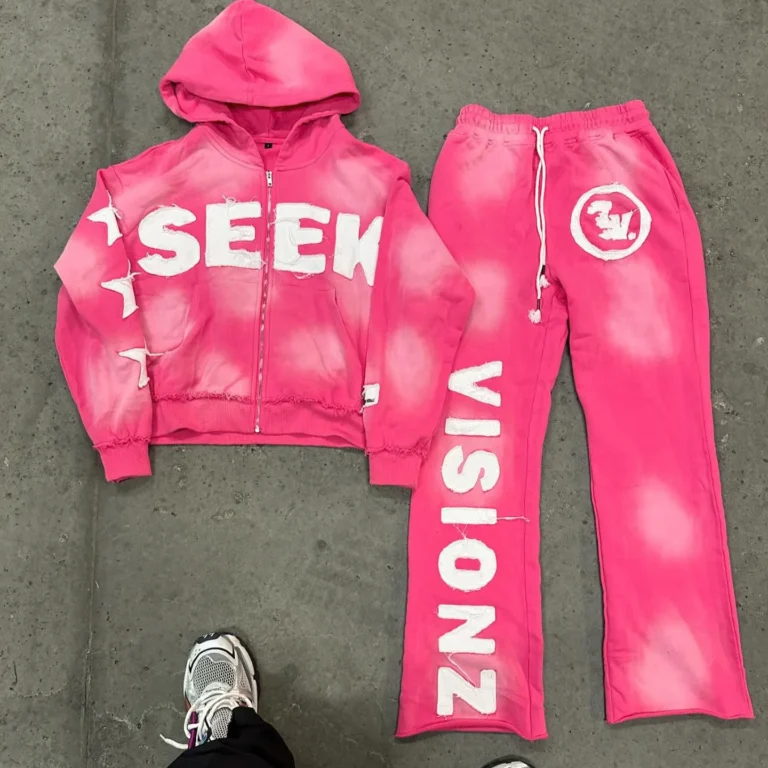
Textile patination techniques including custom tie-dye and selective bleach distressing transform standard hoodie substrates into unique vintage-inspired bespoke pieces. Strategic fabric folding, binding, and compression create asymmetric dye diffusion patterns exclusive to handcrafted execution. Concentrated bleach solutions selectively remove garment pigment, generating faded, retro tonal gradients and distressed detailing. Fiber-reactive fabric dyes bond permanently with cotton fleece fibers, producing colorfast, vivid marbled effects. These modification techniques prioritize organic, unreplicable aesthetic variation, defining the core appeal of artisanal DIY hoodie customization.
7. Advanced Artisanal DIY Hoodie Customization
7.1 Appliqué Patchwork and Fabric Inlay Construction
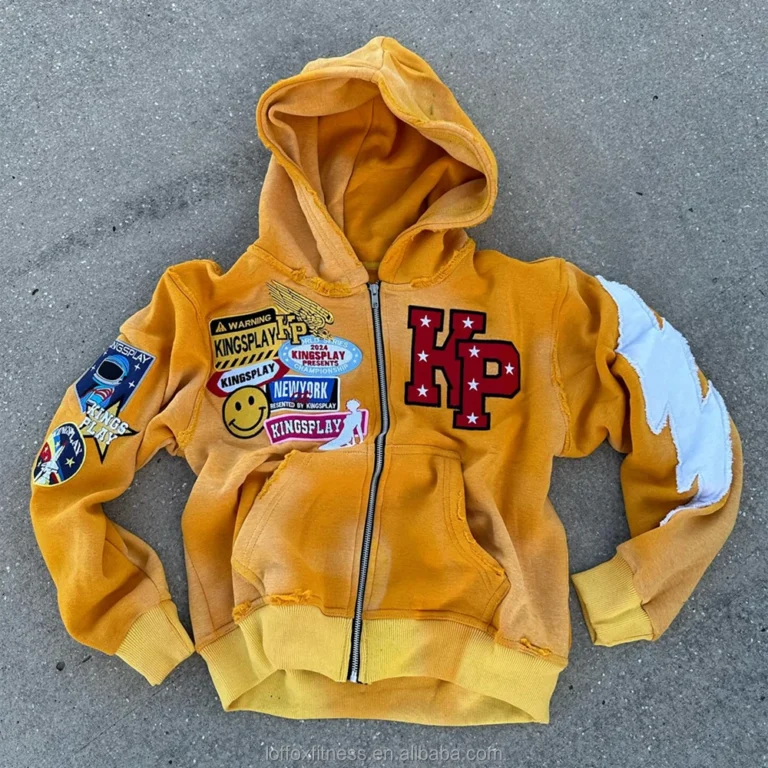
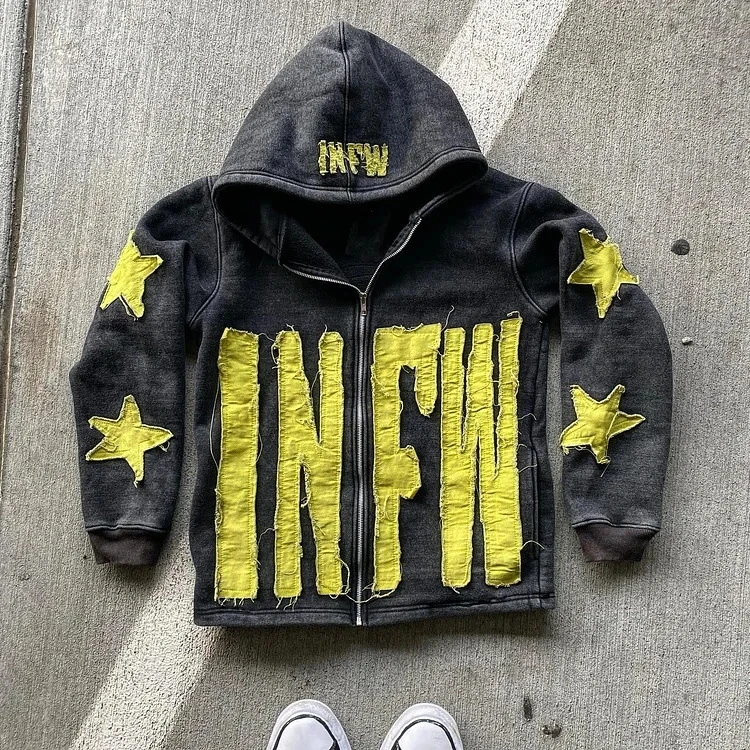
Advanced appliqué and fabric inlay techniques enable structural textile modification beyond surface-level graphic customization. Creators cut custom fabric panels, vintage textile fragments, and patterned material to form layered patchwork compositions on hoodie torso, sleeve, and hood panels. Textile adhesive and precision topstitching secure inlay panels, creating dimensional mixed-media garment designs. This methodology allows full silhouette aesthetic reimagining, transforming standard blank hoodies into completely unique wearable art pieces. Patchwork customization embodies circular fashion principles by repurposing remnant textiles and vintage materials.
7.2 3D Puff Ink and Raised Textile Finishing
3D puff ink application delivers tactile raised graphics that elevate DIY hoodies to luxury fashion-grade quality. Specialty expandable puff inks are applied in thin, controlled layers via screen printing or stencil methods. Thermal curing activates ink expansion, creating volumetric, textured graphics with tangible depth. Raised finishes resist cracking and peeling better than standard flat prints while adding premium visual and tactile differentiation. This advanced technique replicates high-end streetwear embellishment styles entirely within residential DIY workflows.
7.3 Full Garment Upcycling and Silhouette Modification
Full silhouette modification represents the pinnacle of DIY custom hoodie creation, involving structural garment alteration rather than surface decoration. Advanced creators execute sleeve cropping, hood reshaping, hem tapering, and side slit modification to transform standard retail silhouettes into custom bespoke fits. Seam reinforcement, custom drawstring replacement, and hardware upgrading further refine garment construction. Full upcycling redefines the fundamental form of base hoodies, producing completely original sartorial pieces unavailable in commercial markets.
8. Post-Production Curing, Quality Assurance, and Maintenance
8.1 Thermal Curing and Ink/ Vinyl Bonding Stabilization
Post-production curing is critical for establishing molecular adhesion between custom embellishments and fleece substrates. HTV graphics require sustained thermal pressure to activate adhesive cross-linking with textile fibers. Water-based inks require extended heat setting to evaporate moisture and lock pigment into fabric weaves. Embroidery and patchwork modifications require no thermal curing but benefit from steam pressing to standardize fabric tension. Proper curing eliminates premature degradation, ensuring DIY custom hoodies retain visual integrity through dozens of laundering cycles.
8.2 Defect Mitigation and Post-Correction Refinement
Post-production quality assessment identifies minor aesthetic imperfections for targeted refinement. Small vinyl bubbles can be punctured and re-pressed for seamless adhesion. Faint ink bleeds are corrected with precision fabric paint touch-ups. Uneven stitchwork can be trimmed and reinforced for uniform texture. Systematic defect mitigation transforms imperfect amateur creations into polished professional-grade garments. Rigorous post-production refinement separates casual hobbyist work from gallery-quality artisanal apparel.
8.3 Long-Term Care Protocols for DIY Custom Hoodie Longevity
Specialized care protocols preserve the integrity of DIY custom hoodie embellishments long-term. Reverse-cycle cold-water washing prevents graphic abrasion and pigment fading. Low-heat tumble drying or air drying avoids thermal stress on cured inks and vinyl. Harsh detergent formulas and fabric softeners degrade custom finishes over time and should be avoided. Consistent adherence to textile-specific care guidelines extends the wearable lifespan of handcrafted custom hoodies indefinitely.
9. Pro Tips for Professional-Grade DIY Custom Hoodie Results
9.1 Common Amateur Pitfalls and Preventative Best Practices
Most DIY customization errors stem from avoidable procedural oversights: insufficient pre-wash treatment, inaccurate thermal calibration, poor artwork resolution, and misaligned design placement. Creators should always conduct small test patches on hidden garment areas prior to full-scale application. Temperature and pressure calibration should be verified for every unique consumable substrate. Artwork should always be vectorized and scaled to garment proportions. These preventative practices eliminate 90% of common amateur customization defects and elevate consistent project quality.
9.2 Scaling DIY Techniques for Small-Batch Consistent Production
DIY customization workflows can be scaled for uniform small-batch hoodie production with systematic process standardization. Reusable stencils, calibrated heat press settings, and standardized design templates ensure graphic consistency across multiple garments. Batch pre-washing and unified curing protocols eliminate unit-to-unit variability. Documented procedural checklists streamline repetitive production while maintaining artisanal quality. Scaled DIY creation enables independent creators to produce cohesive custom apparel lines without industrial manufacturing infrastructure.