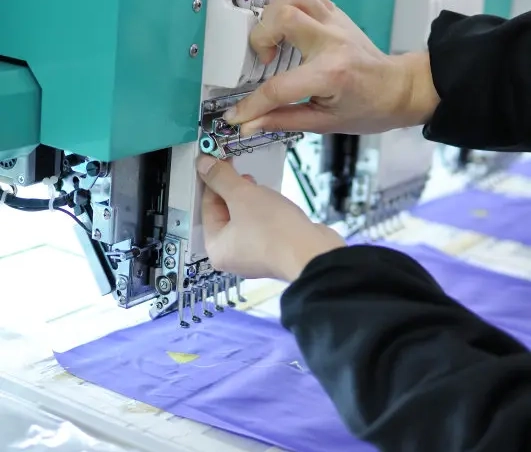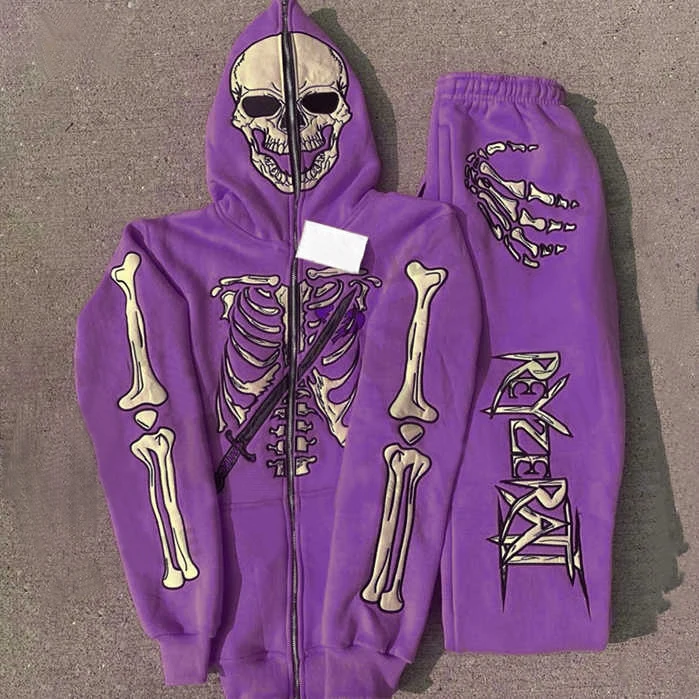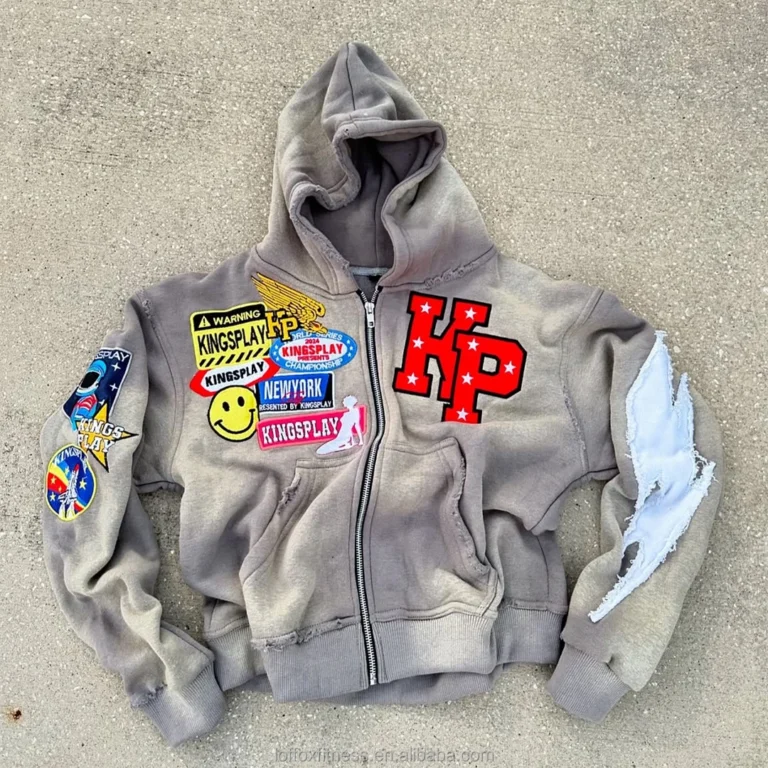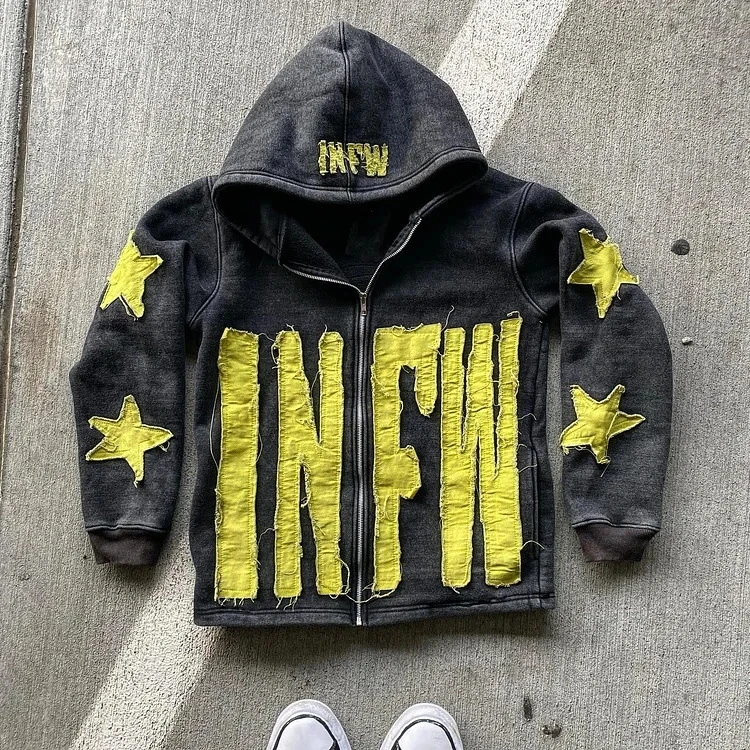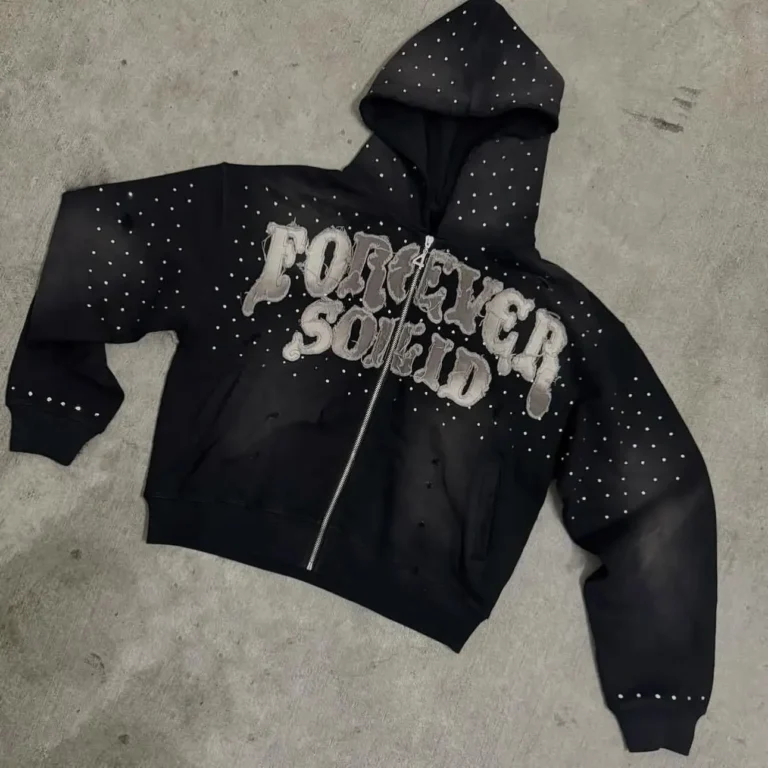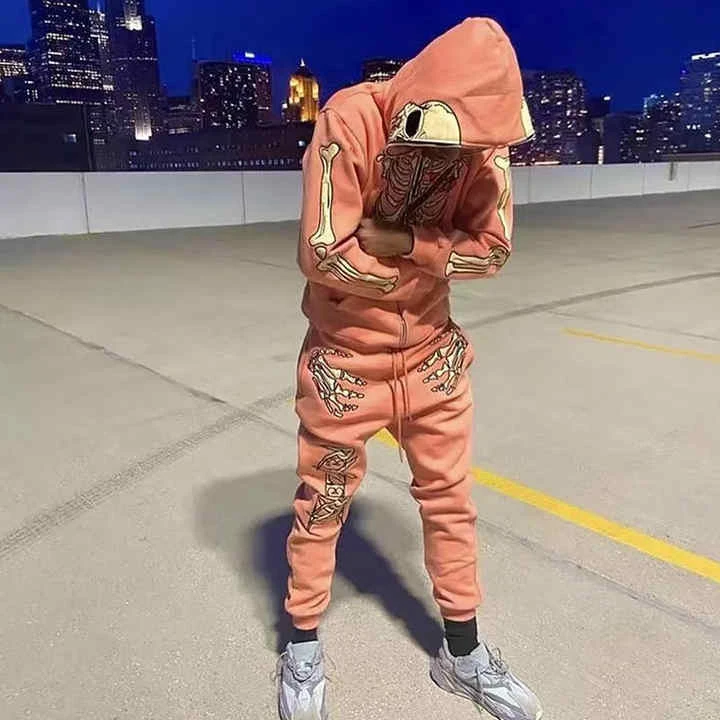
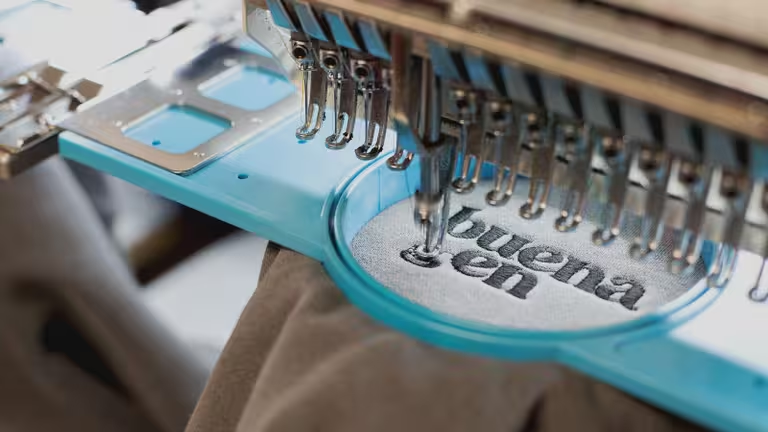
Many clothing brands encounter typical pitfalls when launching custom embroidery apparel lines, which can easily damage brand reputation, cause customer complaints and lead to unnecessary cost losses.
One frequent issue is inferior embroidery craftsmanship, such as loose threads, uneven stitching, thread breakage, messy back lining or offset pattern positioning. Substandard embroidery threads also result in fading, shrinking or pilling after repeated washing, greatly shortening the service life of garments.
Another common failure lies in unreasonable design matching. Some brands ignore fabric characteristics and blindly adopt overly thick embroidery or complicated patterns, leading to fabric wrinkling, hard wearing experience and deformation of clothes. In addition, unclear pre-order communication, unavailable sample confirmation, delayed delivery and inconsistent bulk production quality are also major problems plaguing many custom embroidery clothing brands.
Without strict process control, standardized sample inspection and professional technical guidance, these common failures will continuously affect product sales, customer loyalty and the long-term development of clothing brands.
Embroidery looks amazing when designs are digitized correctly, but even small mistakes can create big problems. Many beginners and even businesses face embroidery design issues that lead to wasted fabric, broken threads, or poor branding. With help from embroidery digitizing services, vector art services, and 3D embroidery digitizing, you can solve these problems before they affect your final product.
Why Do Embroidery Design Issues Matter?
- Poor planning in design leads to wasted time and materials
- Customers notice tiny flaws in logos and patterns
- Consistency suffers when design rules are ignored
- Professional digitizing ensures quality results across multiple projects
Issue 1: What Happens When Artwork is Too Complicated?
Causes of Complexity
- Designs with too many small elements fail in embroidery
- Fonts smaller than 4mm lose readability
- Extra shading or gradients blur in stitching
How It Affects Embroidery
- Threads overlap, creating bulky spots
- Letters or logos become unreadable
- Machines slow down, increasing costs
Fix for Complicated Artwork
- Simplify artwork before digitizing
- Remove unnecessary shading or very fine details
- Convert images using vector art services for clean outlines
- Test designs at realistic stitch sizes
Issue 2: Why Do Poor Stitch Directions Cause Problems?
How Stitch Direction Impacts Quality
- Wrong angles lead to puckering on fabric
- Stitches lay unevenly, creating rough texture
- Outlines don’t align, making logos look crooked
Consequences of Ignoring Stitch Path
- Inconsistent coverage ruins overall appearance
- Customers see designs as low-quality
- Machines may jam from bad flow
Fix for Stitch Direction Issues
- Plan stitch paths during digitizing
- Use correct underlay for smooth foundation
- Pay extra attention in 3D embroidery digitizing where raised effects demand accuracy
- Partner with skilled digitizers who know advanced stitch mapping
Issue 3: Are You Choosing the Wrong Fabric for Embroidery?
Problems with Fabric Mismatch
- Stretchy fabrics distort designs
- Thin materials pucker when density is high
- Heavy or textured fabrics swallow details
Why Fabric Matters for Design Success
- Every fabric reacts differently under thread tension
- Wrong stabilizer choice worsens embroidery design issues
- Scaling designs without fabric consideration ruins results
Fix for Fabric-Related Issues
- Match fabric with correct stabilizer and stitch density
- Test embroidery on fabric swatches before full production
- Share fabric details when working with embroidery digitizing services
- Learn more about choosing the right fabrics for embroidery projects
Issue 4: How Does Wrong Stitch Density Affect the Outcome?
What is Stitch Density?
- The number of stitches in a given design area
- Balanced density keeps designs clean and flexible
Problems from Wrong Density
- Too high: stiff fabric, thread breaks, needle jams
- Too low: gaps in coverage, faded look
- Uneven density: patchy and unprofessional results
Fix for Stitch Density Problems
- Balance density with fabric type and design size
- Adjust density when resizing logos
- Use embroidery digitizing services that optimize density for production
- Review best practices in Why Choose Quality Care Digitizing
Issue 5: Are You Ignoring File Preparation and Formats?
Common File Preparation Mistakes
- Sending low-resolution raster images for digitizing
- Submitting logos without layers or clear outlines
- Forgetting to specify fabric type, size, and placement
How Bad Files Cause Embroidery Design Issues
- Delays in production because files must be corrected
- Poor digitizing accuracy due to unclear input
- Extra costs for file cleanup
Fix for File Preparation Mistakes
- Always provide vector files for clarity
- Share complete project details with digitizers
- Follow steps outlined in Artwork Submission to Final File for smooth processing
- Explore real-world common challenges in embroidery digitizing
How to Avoid Recurring Embroidery Design Issues
Best Practices
- Simplify designs and use vector art services for cleaner files
- Match fabrics and stabilizers carefully
- Always balance stitch density and direction
- Test designs before mass production
- Rely on affordable digitizing solutions without compromising quality.
Why Invest in Professional Digitizing Services?
- Saves time and reduces costly mistakes
- Guarantees brand consistency across all embroidered products
- Ensures better results in 2D and 3D embroidery digitizing
- Provides expert solutions for both design and technical embroidery challenges
Final Takeaway on Embroidery Design Issues
Embroidery design issues are common, but they don’t have to ruin your work. By simplifying artwork, choosing the right stitch density, preparing proper files, and matching fabric with the design, you can achieve flawless embroidery every time. With the support of embroidery digitizing services, vector art services, and skilled 3D embroidery digitizing experts, your designs can move from concept to stitch with precision and style.