Learn how to make custom hoodies at home or for small‑batch production. Explore printing, embroidery, fabric selection & step‑by‑step tips for unique personalized hoodie designs.
Introduction: The Democratization of Apparel Design
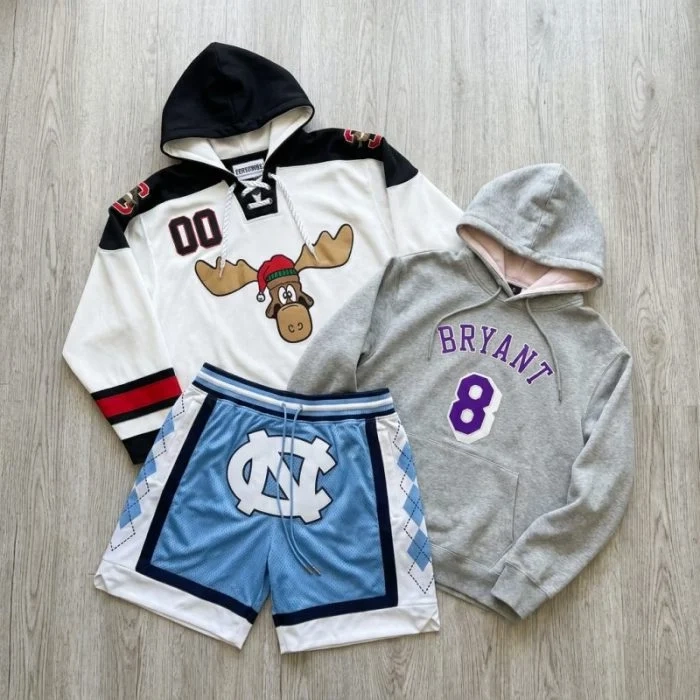
The humble hoodie has evolved from a utilitarian garment to a potent canvas for personal expression and commercial ambition. Whether the goal is a single, handcrafted artifact or a small-scale capsule collection for an emerging brand, the journey from concept to creation is navigable with the right knowledge. This guide provides a comprehensive exploration of the methodologies, materials, and workflows required to build a custom hoodie collection, catering to both the solo artisan and the entrepreneur taking their first steps into production.
The Foundational Decision: Sourcing Your Base Garment
The integrity of any custom hoodie project is predicated upon the selection of its substrate. A good-quality, comfortable base garment makes a significant difference in the final product . This foundation dictates not only the garment’s comfort and longevity but also how it will interact with various decoration techniques. The choice of fabric weight, measured in ounces per square yard, is the single biggest predictor of whether a hoodie will remain in regular rotation .
Fabric Weights and Their Implications
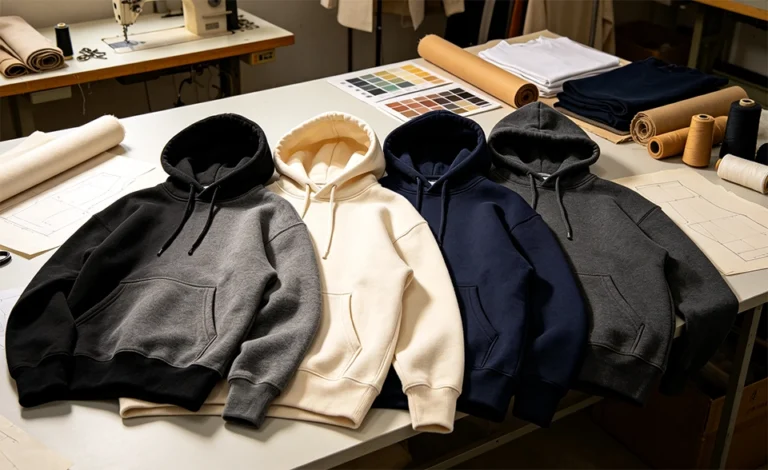
Fabric weight determines the hoodie’s warmth, drape, and durability. Standard 50/50 cotton-polyester fleece, often weighing 7.5 to 8.0 ounces, is a budget-friendly option suitable for group orders and school spirit wear . Cotton-rich fleece, such as an 80/20 cotton-poly blend, offers a softer interior and a superior surface for screen printing, making it a better choice for corporate swag and premium collections . For a structured, retail-quality feel that holds its shape over time, heavyweight fleece (8.0 to 10.0 ounces) is the preferred choice .
The Criticality of Fabric Composition for Printing
The fiber blend is crucial when planning a decoration method. For screen printing and Direct-to-Garment (DTG) printing, a high-cotton content is essential. Cotton fibers absorb ink effectively, resulting in vibrant colors and sharp details . A 100% cotton face provides the best surface for ink adhesion . Polyester-heavy blends may require specialized inks for sublimation printing to prevent bleeding and ensure a durable result . A popular and versatile option is a cotton-polyester blend, with the softness of cotton complementing the durability and wrinkle-resistance of polyester .
Material Picks: Decoding the Fabric Lexicon
Beyond weight, the construction and fiber type are paramount. Fleece, the looped-back fabric common to most hoodies, has a smooth outer face and a soft, brushed interior . French terry offers a similar structure but without the brushed interior, making it a lighter, more breathable option. Denim is a heavier, durable alternative suited for a statement piece . For those seeking premium, sustainable options, bamboo offers a soft, silky feel with antimicrobial properties, and recycled polyester reduces environmental impact without sacrificing performance .
Decoration Methods: A Comprehensive Comparison
The choice of decoration method is a critical strategic decision, impacting cost, durability, and aesthetic. Each technique possesses distinct strengths and limitations that must be aligned with the project’s goals.
Screen Printing: The Volume Champion
Screen printing is the most-used decoration method, handling the majority of hoodie orders well . It involves forcing ink through a stenciled mesh screen onto the fabric. This technique excels for bold, solid-color designs on larger orders, as it is extremely fast and allows for the use of special inks . It is also more forgiving regarding fabric composition, adhering well to both cotton and polyester blends . The main limitation is that each color in a design requires a separate screen, making multi-color, intricate designs more expensive and less practical for small batches. A minimum order of approximately 12 to 24 pieces is often required .
Direct-to-Garment (DTG): The Digital Artisan
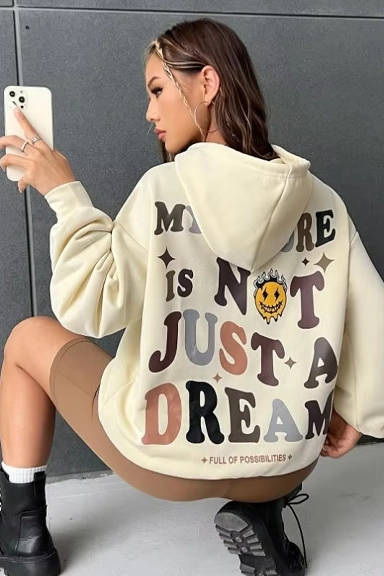
Direct-to-Garment printing is a digital process that operates much like a giant inkjet printer, applying ink directly to the fabric . This method is ideal for small orders, photorealistic art, and designs with unlimited colors . There are no color count surcharges, making it perfect for one-off or personalized pieces . However, the best results are achieved on 100% cotton fabrics, where the ink can soak into the fibers for a soft hand-feel . On dark hoodies, a white underbase is required, which can add production time and slightly affect the hand-feel . The ink is less durable than a screen print over many washes .
Direct-to-Film (DTF): The Versatile Alternative
Direct-to-Film printing involves printing a design onto a transfer film with a white adhesive base, which is then heat-pressed onto the hoodie . It is fabric-agnostic, meaning it works effectively on cotton, polyester blends, and everything in between . For dark-colored hoodies with full-color artwork, DTF is a stronger option than DTG because the white base makes colors read true and vibrant on dark fleece . While the hand-feel is slightly stiffer than DTG because the transfer sits on top of the fabric, the difference is often minimal on heavyweight fleece .
Embroidery: The Premium Stitched Signature
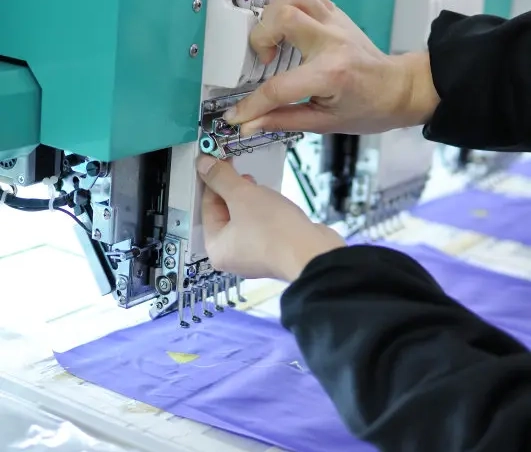
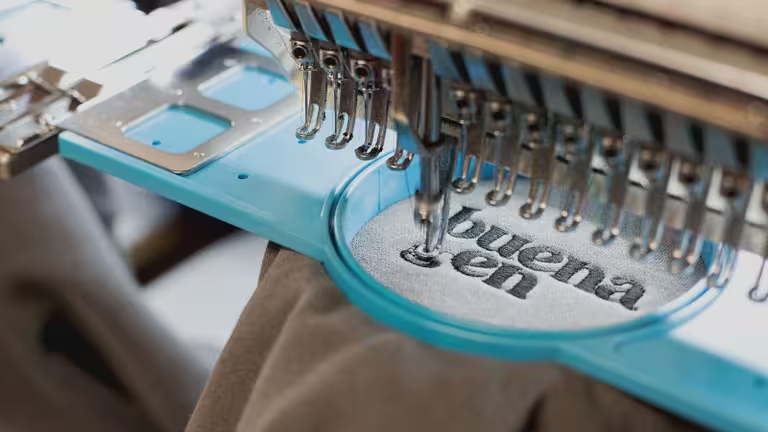
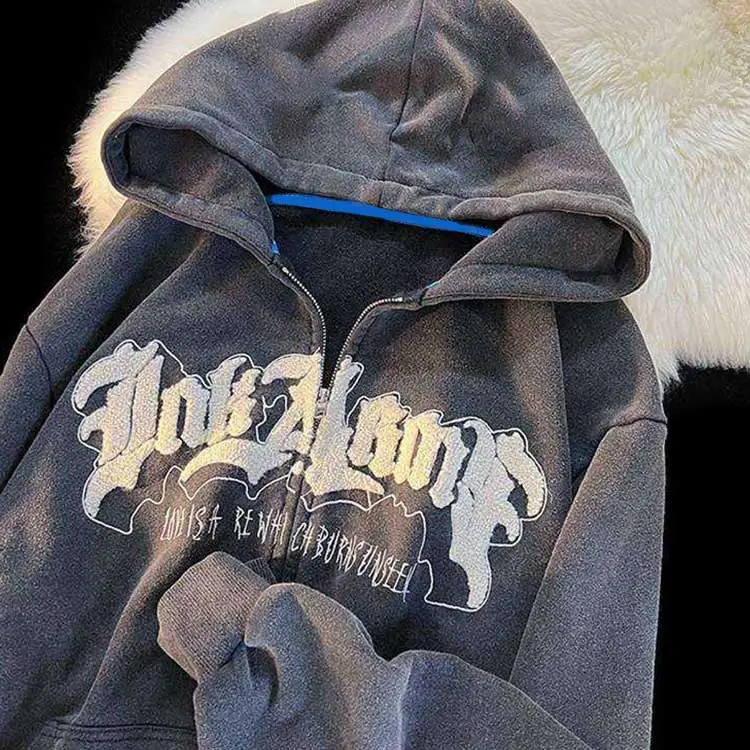
Embroidery stitches a design directly into the fabric using thread, creating a textured, three-dimensional finish . It is the decoration standard for professional and corporate apparel because it doesn’t crack, fade, or peel, outlasting the garment itself . A significant majority of buyers are interested in premium methods like embroidery because the tactile quality signals a high level of care . It is a popular choice for logos, text, and simple shapes . Lettering should be kept relatively large (over 0.25 to 0.5 inches) to maintain definition on fleece . It is ideal for left chest and sleeve placements.
Navigating the Small-Run Workflow
For those looking to produce a small collection, the process involves several key stages that differ significantly from mass production. A 100-piece order is a market test; it can validate a color, size curve, and decoration without requiring a massive financial commitment .
The Low MOQ Landscape
Many manufacturers now cater to startups and small brands by offering low Minimum Order Quantities. Starting with 100 pieces per design and color is a practical benchmark, allowing you to test styles without significant financial risk . For DIY or ultra-small runs, some manufacturers offer MOQs as low as a single piece, though this is more common for one-off projects . It is important to confirm how the minimum can be split across colors and sizes before ordering .
Sampling: The Crucible of Refinement
The sampling phase is essential. This is the process of creating physical prototypes of your design to evaluate fit, fabric behavior, and, most importantly, the decoration. Never commit to a large run without a pre-production sample. A sample allows you to check if the chosen print method works on the specific fabric and that the art translates well to a three-dimensional garment . On a small-batch order of 50-300 pieces, the sample phase is often integrated into a short lead time of 18 to 21 days, with some manufacturers offering rush services .
The Economics of the Small Order
The unit cost is higher for small orders because fixed costs like fabric setup, cutting, sewing, decoration setup, and quality checks cannot be spread across as many pieces . It is wise to ask for an itemized quote to understand exactly what drives the cost. A quote that simply provides a blended price may hide costs that will appear later as add-ons . Negotiation is often possible on variables like color count, size mix, and decoration complexity .
Quality Control Protocols
Even small-batch orders deserve rigorous quality control. Reputable manufacturers apply the same checks to a 50-piece order as to a 5,000-piece order, with inspectors checking stitching, pocket alignment, and attachments every two hours . A final random inspection covers a percentage of the total pieces, assessing dimensions, print adhesion, colorfastness, and overall appearance . For printed hoodies, a wash test is the best evidence of quality. Wash a decorated sample to check for adhesion, cracking, fading, and hand-feel after repeated washes .
Workflow to Build Your Collection
- Conceptualize: Define your target audience, the vibe of your collection, and the purpose of the hoodies (e.g., team apparel, personal gifts, a retail line).
- Source the Blank: Choose the hoodie style, fabric weight, and composition that best suits your design and budget .
- Design the Art: Create your design, keeping in mind the limitations of your chosen print method (e.g., color count for screen printing, line thickness for embroidery) .
- Select Decoration Method: Decide between screen printing, DTG, DTF, or embroidery based on order size, design complexity, and fabric type .
- Order a Sample: Request a single pre-production sample to approve the design, color, and placement on the actual hoodie .
- Place the Order: Confirm the MOQ, final price, and lead time with the supplier.
- Quality Control: Upon receiving your bulk order, inspect the garments to ensure they match the approved sample.
- Launch and Market: Set your pricing and launch your collection, using the small order to gather sales data before scaling .
Conclusion: From Vision to Wearable Art
Creating a custom hoodie, whether as a one-off DIY project or as the first step for a burgeoning brand, is a rewarding and increasingly accessible endeavor. Success lies in understanding the interplay of fabric, print method, and production workflow. By making informed choices at each stage—from selecting a high-quality blank to rigorously testing a sample—you can ensure that the final garment is not only a piece of clothing but a true expression of your vision. The journey from a simple sketch to a finished, wearable piece of art is the essence of the maker’s spirit.