Introduction: The Ubiquity and Adaptability of the Nike Hoodie
The Nike hoodie occupies a singular position in the contemporary wardrobe. It is at once a utilitarian garment, a status symbol, and a blank canvas. The humble fleece pullover—whether the ubiquitous Club Fleece or the more esoteric Tech Fleece—has become the substrate of choice for personal and corporate expression. The question is not whether one can customize a Nike hoodie, but rather which path, method, and provider best suit the intended application. The following treatise provides a methodical examination of the available pathways, technical considerations, and logistical realities.
The Philosophical Premise: Why Customize a Mass-Market Artifact?
Individualization within Uniformity
The Nike hoodie is a mass-produced artifact. Millions of identical units emerge from factories each year. Customization disrupts this homogeneity. The addition of a monogram, a logo, or a graphic transforms a generic commodity into a personal possession. It is a gesture of ownership, an assertion of identity within the anonymous expanse of the global apparel market.
Brand Synergy and Personal Expression
The Nike swoosh carries immense cultural capital. To customize a Nike hoodie is to harness that capital for one’s own purposes. A startup might emblazon its logo on the left chest, borrowing the sneaker giant’s associations with athleticism, aspiration, and durability. An individual might add a personal motto or a family crest. The result is a garment that speaks in two voices simultaneously: the corporate and the personal.
Pathway One: The Official Nike By You Route
The Studio Experience: In-Person Customization
Nike operates physical customization studios in select metropolitan locations. In New York City, for example, the Nike Soho store offers a “Studio Fleece Customization” experience where patrons can add Nike Sportswear graphics, charms, and a bespoke grommet service to personal pieces . This is personalization as retail theater. The experience is first-come, first-served, and all sales on customized product are final . It is an exercise in immediate gratification, requiring no minimum order and no digital back-and-forth.
Digital Offerings and Regional Availability
The digital Nike By You platform, however, is more restricted for fleece than for footwear. While certain markets and timeframes have offered online customization for hoodies, the offering fluctuates. The most reliable official avenue remains the physical studio. For those outside such metropolitan centers, the official pathway may be inaccessible, necessitating the exploration of third-party alternatives.
Pathway Two: Third-Party Decorators and the B2B Ecosystem
The Role of Authorized Wholesale Partners
Nike does not sell blank hoodies directly to the public for decoration. Instead, it operates through a network of authorized wholesale distributors and decorators. Companies such as Custom Ink, Broken Arrow Wear, and ColorCoded Workwear serve as intermediaries . These entities purchase Nike blanks at wholesale, apply the customer’s design, and ship the finished product. They are the practical gateway for individuals and businesses seeking custom Nike fleece.
Navigating Nike’s Restrictions on Wholesale Blanks
Nike deliberately restricts the wholesale market for its blanks. The selection available through authorized decorators is narrower than what one finds at retail . This is a strategic decision designed to prevent decorators from undercutting Nike’s own retail partners. The prospective customizer must therefore accept a curated catalog of hoodie styles rather than the full breadth of Nike’s retail line.
The Substrate Spectrum: Understanding Nike Hoodie Architecture
Club Fleece: The Ubiquitous 80/20 Standard
The Nike Club Fleece hoodie is the archetypal blank for customization. It is constructed from an 80% cotton, 20% polyester blend, weighing approximately 8.2 to 8.3 ounces . This midweight fabric balances warmth, breathability, and printability. The three-panel hood, pouch pocket, and rib-knit cuffs are the standard features. The contrast Swoosh on the left sleeve is embroidered at the factory, a permanent mark that coexists with any user-applied decoration. It is a midweight garment that will shrink approximately 2% upon washing .
Therma-FIT and Tech Fleece: The Performance Tier
Beyond Club Fleece, Nike offers performance-oriented substrates. Therma-FIT hoodies are engineered for thermal retention and moisture management. Tech Fleece, a more premium fabrication, features a smooth face and a bonded, sculpted interior. These garments are available through some decorators, though their higher cost and more complex surface may influence decoration choices. They are designed for the wearer who demands function alongside expression.
Specialized Silhouettes: Sleeve Swoosh, Vintage, and Full-Zip
The Nike hoodie is not a monolithic category. The Women’s Club Fleece Sleeve Swoosh Pullover features an elongated embroidered Swoosh running down the arm . The Gym Vintage hoodie offers a lighter, heathered aesthetic. Full-zip variants provide different canvas proportions than pullovers. Each silhouette imposes its own constraints on logo placement and design scale.
The Application Arsenal: Decoration Methods Dissected
Embroidery: The Standard for Chest and Sleeve Marks
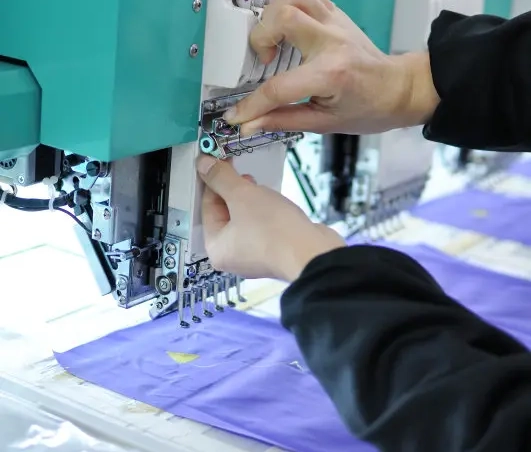
Embroidery is the preferred decoration method for Nike fleece and outerwear . The process involves stitching a design into the fabric using thread. It produces a raised, tactile finish that reads as premium and professional. Embroidery is particularly suited to left-chest logos and sleeve marks, where its durability and dimensional quality shine. The typical left-chest embroidery area accommodates designs up to approximately 10 centimeters wide .
Screen Printing: For Graphic Saturation and Breadth
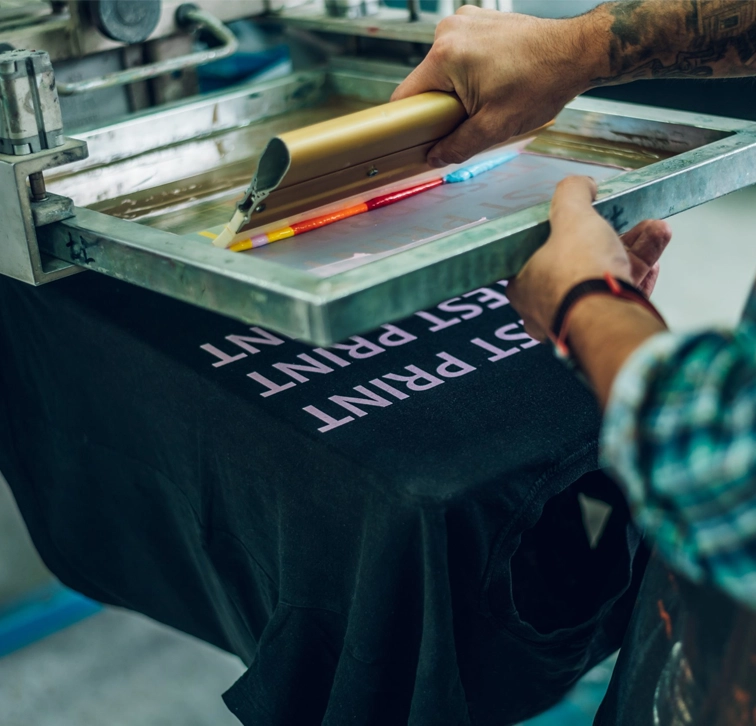
Screen printing is the method of choice for larger, multi-color graphics. It involves pressing ink through a mesh screen onto the fabric. For Nike hoodies, screen printing is commonly used for designs spanning the full chest, back, or sleeves . The imprint area for a full front or back design can be as large as 12 inches wide by 15 inches high . Screen printing offers vibrant color and cost efficiency at volume.
Direct-to-Garment: The Digitally Native Alternative
Direct-to-garment (DTG) printing is a digital process that applies ink directly to the fabric. It is best suited for complex, multi-colored designs with gradients or photographic detail. Some decorators offer DTG on Nike hoodies with no minimum order quantity, making it the most accessible method for single-piece customization . The trade-off is that DTG prints may lack the longevity and vibrancy of screen printing or embroidery on darker fabrics.
The Design Process: From Concept to Confirmation
Artwork Preparation and File Format Orthodoxy
The quality of the finished product is contingent upon the quality of the input artwork. Decorators universally request vector files—AI, EPS, PDF—for logos and designs . High-resolution raster files (PNG, JPG) may be accepted, but low-resolution images are unsuitable for either embroidery or printing . The prospective customizer should ensure their artwork is prepared to professional standards before approaching a decorator.
Proofing Protocols and the Perils of Misplaced Logos
Every reputable decorator provides a digital proof before production begins. This proof is a visual representation of how the logo will appear on the garment. Production does not commence until the customer approves the proof . This is a critical safeguard. Once the proof is approved, changes are no longer possible without incurring additional setup costs and delays . The customer must scrutinize the proof with precision. The decorator is not responsible for logo placements chosen by the customer once proofs are approved .
Logistical Imperatives: Minimums, Timelines, and Costs
The Minimum Order Quantity Conundrum
Minimum order quantities (MOQs) vary widely across the decoration landscape. Many Nike styles offered by Custom Ink have no minimum order requirement, allowing a single customized hoodie . Other styles—particularly those decorated with embroidery—may require a minimum of six pieces . The MOQ is typically lower for DTG and higher for embroidery and screen printing. The prospective buyer should filter by “no minimum” if single-piece orders are desired.
Production Calendars and Rush Realities
The standard production timeline for custom Nike apparel is approximately 10 to 14 working days after design approval . This timeline begins only after the customer has confirmed the digital proof. For those with urgent deadlines, many Nike styles offer 3-day super rush delivery . Embroidered hats and structured outerwear typically have a slower rush option, often 10 days. Rush availability must be verified on a style-by-style basis.
Conclusion: The Custom Nike Hoodie as a Strategic Artifact
The customization of a Nike hoodie is an exercise in strategic decision-making. One must choose a substrate, a decoration method, a provider, and a timeline. The result, however, justifies the deliberation. A Nike hoodie bearing one’s own logo or design is a garment of dual lineage. It carries the weight of a global brand and the intimacy of personal expression. It is at once anonymous and singular. In the crowded landscape of branded apparel, it remains a potent and perennial choice.