Introduction: The Home Atelier as a Crucible of Individuality
The domicile, that most intimate of domains, may be readily transmuted into a fecund atelier for the customization of apparel. To customize a hoodie at home is to reclaim the means of production, to wrest the garment from the anonymity of the assembly line and imbue it with the idiosyncratic imprimatur of its wearer. Such an endeavor requires neither vast wealth nor industrial machinery; it demands only a modicum of patience and a willingness to engage in methodical experimentation. This treatise shall serve as a comprehensive vade mecum, guiding the aspirant artisan through every conceivable technique that may be executed within the confines of a domestic workshop.
The Paradigm of Domestic Customization: Advantages and Constraints
Before embarking upon any creative undertaking, one must appraise both the opportunities and the limitations inherent to the chosen venue. The home presents a peculiar admixture of freedom and restriction, and the sagacious artisan will calibrate ambitions accordingly.
The Economic Expediency of In-Home Modification
The pecuniary advantages of domestic customization are manifest. Commercial alteration services and bespoke design houses levy substantial fees for their expertise. By undertaking the work oneself, one circumvents these costs entirely, directing resources instead toward the procurement of quality materials and tools. Furthermore, the home artisan avoids the markups inherent to retail customization, rendering the pursuit not merely creative but economically prudent.
Spatial and Infrastructural Requisites for the Home Workshop
A dedicated workspace, however modest, is conducive to sustained productivity. An unused dining table, a corner of a bedroom, or even a cleared section of floor may suffice. Essential infrastructure includes adequate lighting—preferably adjustable task lighting—and access to electrical outlets for sewing machines and irons. Ventilation is paramount when working with dyes, adhesives, and aerosol products; a window that opens or a portable fan is indispensable.
Mitigating Risk: Working Within Domestic Limitations
The home workshop is not without its perils. Chemical agents must be stored safely away from food preparation areas. Irons and heat presses present burn hazards. The absence of industrial ventilation necessitates the use of respirators when sanding or applying solvent-based products. One must also accept that certain techniques—large-format screen printing, industrial embroidery, or commercial dye vats—are simply beyond the domestic ambit. The prudent artisan designs projects that capitalize on available resources rather than lamenting their absence.
Selecting the Substrate: The Quintessential Base Hoodie
The foundation garment determines the trajectory of all subsequent interventions. Selection must be deliberate, informed by an understanding of fiber science and garment construction.
Fiber Taxonomy and Its Bearing on Domestic Techniques
Cellulosic fibers—cotton, linen, hemp, and rayon—are the most amenable to domestic customization. They accept fiber-reactive dyes with alacrity, tolerate high heat during ironing, and respond predictably to structural alteration. Protein fibers, such as wool and silk, require gentler handling and acid-based dyes. Synthetic fibers—polyester, nylon, acrylic—resist aqueous dyes entirely, though they may be embellished with heat-transfer vinyl or painted with specialized acrylic mediums. Blended fabrics present a hybrid challenge, often absorbing dye unevenly and exhibiting disparate shrinkage rates.
The Imperative of Fit, Drape, and Seam Allowance
The initial fit of the hoodie dictates the scope of possible alteration. A garment that is excessively snug offers little material for tapering or cropping, while an oversized hoodie provides generous latitude. One must also assess the drape—the manner in which the fabric falls and folds. A stiff, heavy fleece will behave differently from a lightweight French terry. Finally, the seam allowance, or the distance between the stitched seam and the raw edge of the fabric, determines how much material is available for letting out or re-stitching.
Procuring the Garment: Thrift, Retail, and Deadstock Avenues
The acquisition of a base hoodie need not be an expensive proposition. Thrift stores and charity shops frequently yield quality garments at negligible cost, and the pre-worn condition may even enhance the aesthetic of certain deconstructionist designs. Retail sales and outlet stores offer new garments at reduced prices. For the more ambitious, deadstock—surplus inventory from defunct brands or closed factories—may be procured through online marketplaces, offering unique colors and cuts unavailable in current retail channels.
The Domestic Armamentarium: Assembling Essential Implements
The efficacy of one’s craft is contingent upon the quality and suitability of one’s tools. A considered investment in implements yields dividends in precision and durability.
The Sewing Machine and Its Indispensable Accessories
A reliable sewing machine is the cornerstone of structural customization. While a basic model suffices for straight seams and simple zigzag stitches, a machine with adjustable stitch length and width, a walking foot for bulky fabrics, and a zipper foot for hardware installation expands the repertoire considerably. Essential accessories include a supply of universal and ballpoint needles in varying sizes, bobbins wound with matching thread, and a seam ripper for the inevitable corrections.
Hand Tools for the Intimate Artisan
Not all tasks require mechanization. A pair of sharp fabric shears, reserved exclusively for textiles, is indispensable. Small embroidery scissors facilitate detailed work. A rotary cutter and self-healing mat enable precise, linear cuts. Hand-sewing needles in assorted sizes, a thimble, and a measuring tape complete the fundamental kit.
Consumables, Notions, and Chemical Agents
The consumable inventory encompasses threads of various fibers and colors, fusible interfacing, and an array of notions: buttons, snaps, rivets, eyelets, and zippers. For dyeing, one must procure fiber-reactive or acid dyes, soda ash, and synthrapol. For painting, textile medium and acrylic paints are required. Heat transfer vinyl necessitates a cutting machine or a steady hand with a craft knife, while printable iron-on paper requires only a standard inkjet printer.
Preparatory Rites: The Disciplines of Pre-Washing and Patterning
The impulse to commence immediately must be tempered by preparatory discipline. These initial steps, though seemingly mundane, forestall catastrophe and ensure a more predictable outcome.
The Pre-Shrinking Imperative and Fiber-Specific Protocols
Natural fiber garments are prone to shrinkage upon their first laundering. To preempt the tragedy of a perfectly customized hoodie contracting to an unwearable size, one must pre-wash and dry the garment according to its care label before any alterations are undertaken. Cotton should be washed in hot water and dried on high heat to maximize shrinkage. Blends require more moderate temperatures. This process also removes sizing and finishes that might impede dye absorption or paint adhesion.
Drafting Patterns and Executing Mock-Ups with Household Materials
For structural alterations, the creation of a pattern is a sagacious investment of time. One may draft patterns directly from the garment itself, tracing the existing seams onto paper or muslin. Alternatively, one may drape the garment on a dress form or a willing model, pinning the intended design and marking the new seam lines with tailor’s chalk. A mock-up, executed in inexpensive muslin or a sacrificial garment, allows one to test the proposed cuts and seams before committing to the final fabric.
Establishing a Dedicated Workspace for Sustained Endeavor
A dedicated workspace, however modest, fosters focus and efficiency. The area should be well-lit, with a sturdy table at a comfortable height. Tools should be organized within easy reach. A cutting mat protects the table surface, while a magnetic pin cushion prevents the scatter of pins. A waste bin for thread snips and fabric scraps maintains order. The workspace need not be permanent; a folding table and a storage bin allow for easy assembly and disassembly.
Domestic Chromatics: Dyeing Within the Confines of the Home
The alteration of a garment’s color is among the most dramatic of transformations. The home environment, with its kitchen stoves and utility sinks, is surprisingly well-suited to this alchemical pursuit.
Stovetop and Bucket Immersion Dyeing for Novices
The simplest method of dyeing involves immersing the garment in a bath of dye solution. For cotton and other cellulose fibers, fiber-reactive dyes are preferred, as they form a covalent bond with the material. The process entails dissolving the dye in warm water, adding a mordant such as soda ash, and submerging the pre-wetted garment. Continuous agitation ensures even penetration. The stovetop method, which maintains a constant temperature, yields the most saturated results. Bucket dyeing, conducted at room temperature, requires longer immersion but demands less equipment.
The Alchemy of Tie-Dye, Shibori, and Bound Resist
By strategically binding, folding, or stitching the fabric before immersion, one can create intricate patterns of resist. The Japanese art of Shibori encompasses a multitude of these techniques, from the bound-resist of kanoko to the pole-wrapping of arashi. The American tie-dye tradition, with its spirals and bullseyes, offers a more spontaneous aesthetic. The home artisan may experiment with rubber bands, sinew, clamps, and PVC pipe to achieve an infinite variety of effects.
Bleach Discharge and the Aesthetics of Deconstruction
For garments that are already dyed, the removal of color can be as impactful as its addition. A dilute solution of chlorine bleach, applied via spray bottle, brush, or sponge, creates ethereal, cloud-like patterns. Discharge paste, a more controllable alternative, is a chemical agent that removes dye when activated by heat. This process is inherently unpredictable, yielding a uniquely distressed aesthetic that celebrates imperfection.
Structural Reconfiguration: Alterations for a Bespoke Silhouette
To alter the structure of a hoodie is to redefine its very essence, tailoring it to the contours of the individual form.
The Art of Tapering and Slimming the Torso
A voluminous hoodie can be refined by removing excess fabric from the side seams. This involves turning the garment inside out, pinning along the desired new seam line—often a gentle curve from the armpit to the hem—and stitching. The excess fabric is then trimmed, and the raw edges are finished with a serger or a zigzag stitch to prevent fraying. The process may be iterative, with successive fittings refining the fit.
Cropping, Raw Hems, and Asymmetrical Interventions
The crop is a decisive alteration, excising the lower portion of the garment to create a shorter, more contemporary silhouette. A raw, unhemmed edge offers a nonchalant, deconstructed vibe, while a folded and stitched hem provides a more polished finish. An asymmetrical hem, cut at a diagonal or with a dramatic high-low profile, introduces a dynamic, avant-garde element.
Sleeve Amputations, Shortenings, and Cuff Substitutions
Sleeves may be shortened, widened, or entirely removed to create a vest. The existing cuffs can be replaced with a contrasting fabric, such as ribbed knit in a different color or a sleek leather. The addition of thumbholes, elbow patches, or a contrasting stripe running the length of the sleeve are all viable avenues for personalization.
Surface Embellishment: Techniques for Graphic and Textural Adornment
The surface of the hoodie is a tabula rasa, awaiting the imposition of imagery and texture.
Appliqué and Patchwork as Domestic Collage
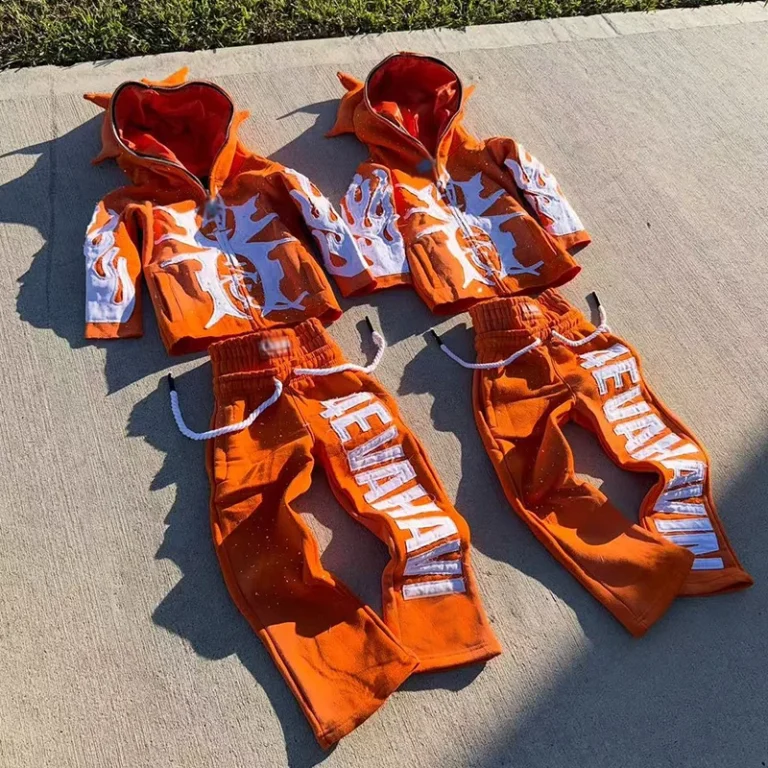
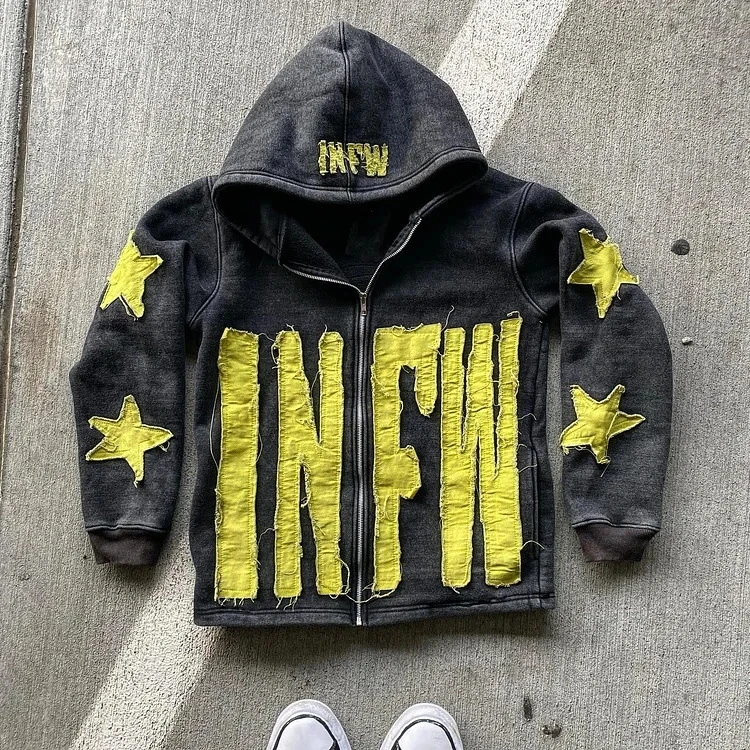
Appliqué involves stitching a piece of fabric onto the surface of the hoodie to create a design. This can be as simple as a monogram or as complex as a multi-layered pictorial scene. Patchwork, the joining of disparate fabric pieces to form a larger whole, can be used to construct entire panels or to create a collaged effect. Fusible web, such as Heat-n-Bond, simplifies the process by adhering the appliqué to the base fabric before stitching.
Hand Embroidery and the Revival of Slow Craft
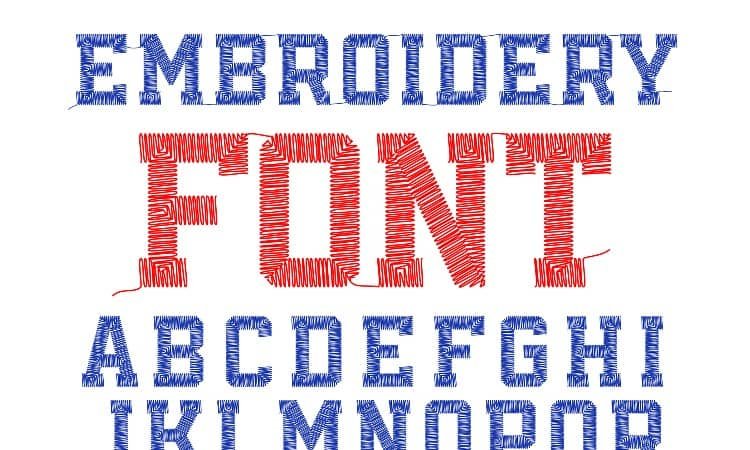
Embroidery imparts a level of craftsmanship and dimensionality that is unparalleled. Hand embroidery, with its myriad of stitches—from the humble running stitch to the intricate French knot—allows for organic, freeform expression. The domestic artisan may work without a hoop, using the garment itself as the support, or employ a hoop for more structured designs. Embroidery floss, available in an expansive spectrum of colors, is the medium of choice.
Stenciling and Fabric Painting Without a Screen-Printing Studio
The absence of a screen-printing studio need not preclude the creation of graphic imagery. Stencils may be cut from acetate sheets or freezer paper, then applied to the fabric with a sponge or stencil brush. Fabric paints, thickened with a medium, adhere to the textile and cure with heat. Freehand painting with brushes or markers offers an even more immediate means of expression.
Heat Transfer Vinyl and Printable Iron-On Media
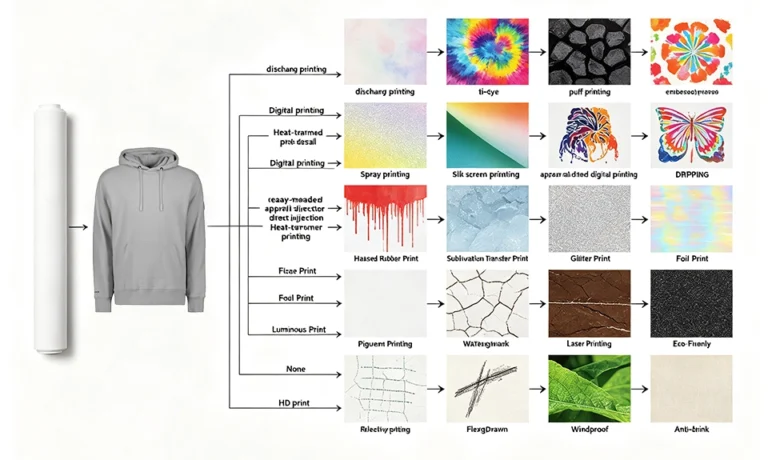
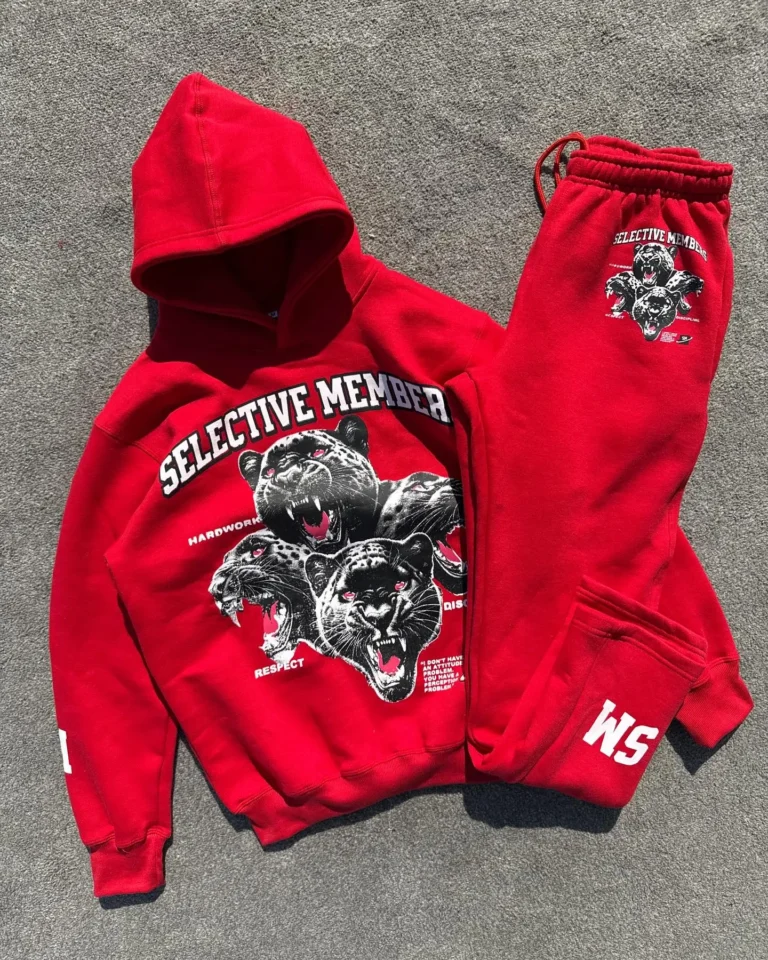
Heat transfer vinyl (HTV) offers a precise and durable method for applying graphics. The design is cut from a sheet of vinyl using a cutting machine or a craft knife, then transferred to the garment with a heat press or iron. Printable iron-on paper, compatible with standard inkjet printers, allows for the reproduction of photographs and complex multicolor designs.
Hardware and Notions: The Integration of Functional Adornments
The integration of metal and plastic hardware can elevate a hoodie from a simple garment to a piece of functional art.
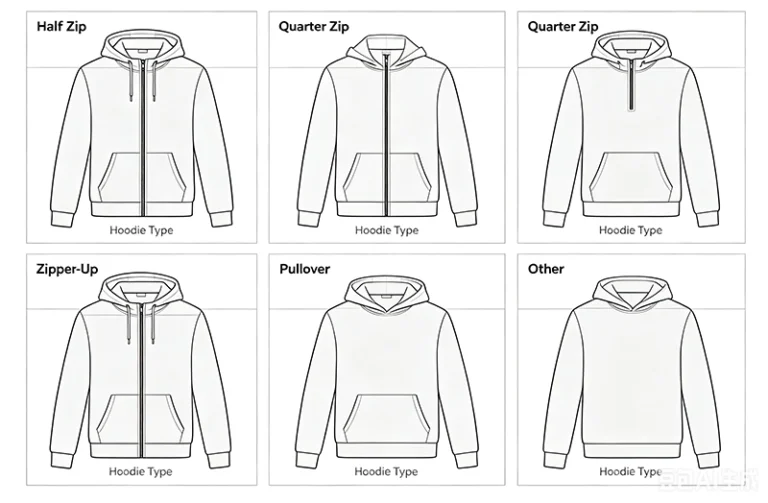
Zipper Installation and the Conversion of Pullover to Zip-Up
The addition of a full-length zipper can transform a pullover hoodie into a zip-up. This is a complex alteration requiring precision and a zipper foot for the sewing machine. The front of the hoodie must be cut open, the edges stabilized with interfacing, and the zipper carefully basted before final stitching. The result is a garment of enhanced utility and contemporary appeal.
Rivets, Studs, and Eyelets: Domestic Metalwork
The application of studs and rivets imparts a punk or moto-inspired edge. These are typically affixed by creating a small hole in the fabric and then securing the two halves of the stud with a setting tool and a hammer. Eyelets, installed with a similar tool, provide both decorative and functional apertures for lacing or cording.
Drawstring Substitutions and Custom Aglets
The humble drawstring is a prime opportunity for customization. One may replace the standard cord with a length of leather, paracord, or a metallic chain. The ends can be finished with custom aglets—the small sheaths at the tip—made of metal or shrink tubing. Cord locks, in various shapes and colors, add a functional, technical detail.
Textural Interventions: Manipulating the Hand of the Fabric
The creation of texture adds a tactile dimension to the hoodie, inviting touch and adding visual complexity.
Distressing, Fraying, and the Cultivation of Wear
Intentional distressing can be achieved through a variety of means: sanding with coarse-grit sandpaper, slicing with a razor blade, or grinding with a rotary tool. The resulting frayed edges can be left raw or sealed with a dab of fabric glue to prevent excessive unraveling. This technique lends a garment a sense of history and wear.
Quilting, Padding, and Dimensional Appliqué
Quilting involves stitching through two or more layers of fabric, often with a layer of batting in between, to create a raised, textured surface. This technique can be used to create geometric patterns, or to add warmth and structure to specific areas, such as the hood or the chest. Dimensional appliqué, in which the applied fabric is stuffed with batting before stitching, creates a sculptural, three-dimensional effect.
The Incorporation of Lace, Mesh, and Contrast Textiles
The juxtaposition of disparate materials can create a visually arresting composition. The insertion of a panel of delicate lace into the back of a rugged cotton hoodie creates a striking contrast. Similarly, the addition of a mesh pocket or a leather elbow patch introduces a new textural element.
Finishing and Aftercare: Ensuring Longevity of the Creation
The final phase of the customization process is dedicated to ensuring the longevity and integrity of the work.
Seam Reinforcement and the Securing of Loose Threads
Upon completion of all alterations and embellishments, a meticulous inspection is required. All loose threads must be trimmed. Seams that bear significant stress—such as those on the shoulders or the crotch—should be reinforced with a second line of stitching. Any applied hardware must be checked for security.
Fiber-Appropriate Washing and Storage Protocols
A customized hoodie demands a bespoke approach to care. Generally, it should be washed inside out in cold water on a gentle cycle to protect the embellishments. It is often advisable to hand-wash garments with delicate appliqués or hand-painted elements. Tumble drying should be avoided, as heat can damage prints, dyes, and adhesives; line drying in the shade is the preferred method. Storage should be in a cool, dry place, folded rather than hung to prevent distortion of the shoulders.
Conclusion: The Home-Customized Hoodie as a Singular Testament
The transformation of a hoodie within the domestic sphere is a journey of creative emancipation. It is a process that weds technical skill with personal vision, resulting in a garment that is not merely worn, but expressed. The customized hoodie ceases to be a mere commodity; it becomes a testament to the wearer’s ingenuity, a wearable manifesto of individual style. In an age of mass production, the act of personalization is a quiet, yet powerful, rebellion. The finished piece is not just a hoodie; it is a singular artifact, imbued with intention, narrative, and the unmistakable hallmark of its creator.