1. Foundational Pre-Production Planning for Custom Playboy Hoodies
1.1 Defining Aesthetic Intent and Design Paradigm
The genesis of a bespoke Playboy hoodie resides in deliberate aesthetic framing, which delineates the thematic tone, visual hierarchy, and stylistic narrative of the final garment. Creators must distinguish between retro vintage iterations, contemporary minimalist renditions, and avant-garde hybrid designs to anchor all subsequent technical decisions. This preliminary ideation eliminates arbitrary design choices and fosters cohesive visual storytelling aligned with Playboy’s iconic brand lexicon.
Every custom variant requires a curated mood board of color palettes, motif placements, and textural finishes. This foundational step transforms abstract creative vision into actionable technical specifications.
1.2 Copyright Compliance and Brand Usage Protocols for Playboy Iconography
Responsible custom garment creation necessitates rigorous adherence to intellectual property governance surrounding Playboy’s trademarked bunny logo, script typography, and archival graphic assets. Personal non-commercial customization falls within permissible fair-use boundaries for individual wear, while commercial replication requires formal brand licensing authorization to mitigate legal infringement liability. Unauthorized alteration or misrepresentation of trademarked iconography risks brand dilution and regulatory penalty.
Ethical custom design prioritizes unmodified trademark core elements for personal use. It avoids distorted iterations that compromise brand visual integrity.
1.3 Functional and Stylistic Specification Calibration
Precision specification mapping reconciles stylistic ambition with wearable functionality, documenting critical variables including intended fit silhouette, seasonal wearability, graphic density, and finish treatment intensity. Creators must define whether the hoodie serves casual everyday utility, streetwear statement styling, or limited-edition collectible status, as each classification dictates distinct material and construction parameters.
Detailed specification checklists standardize production outcomes. They eliminate inconsistent craftsmanship across custom iterations.
2. Material Sourcing and Textile Substrate Selection
2.1 Premium Fleece Fabric GSM Grading and Fiber Composition
Custom Playboy hoodie fabrication relies on calibrated GSM (grams per square meter) fleece grading to balance structural rigidity, tactile softness, and print receptiveness. Optimal substrates range from 280GSM mid-weight ring-spun cotton fleece for versatile year-round wear to 320GSM heavyweight brushed fleece for premium cold-weather durability. Ring-spun fiber construction delivers uniform surface planarization critical for crisp graphic rendering, avoiding the fuzzy irregularities of carded fleece alternatives.
High-quality fleece enhances print adhesion and wash fastness. It preserves garment shape retention through repeated wear cycles.
2.2 Rib Knit Trim, Drawcord, and Hardware Component Selection
Auxiliary component curation defines the premium finish of custom Playboy hoodies, with 1×1 or 2×2 stretch rib knit trim selected for cuff, hem, and neckline structuring. Elasticated rib formulations deliver tensile flexibility while preventing sagging and shape distortion. Complementary hardware includes metallic aglets, cord locks, and precision-machined eyelets, available in matte silver, antique brass, and black oxide finishes to align with custom thematic grading.
Coordinated hardware and trim detailing elevates artisanal quality. It creates harmonious visual continuity across the entire garment.
2.3 Color Substrate Matching for Cohesive Playboy Theming
Base fabric color selection undergoes chromatic calibration to complement classic Playboy tonal identities, including jet black, vintage heather gray, classic white, and muted neutral palettes. Advanced creators integrate custom pigment-dyed substrates such as washed burgundy, midnight navy, and vintage cream to craft exclusive thematic iterations. Substrate hue directly influences graphic contrast, requiring intentional color theory alignment to ensure logo visibility and aesthetic balance.
Strategic color pairing amplifies iconic brand recognition. It delivers bespoke differentiation from mass-produced retail variants.
3. Playboy Iconography Customization and Digital Rendering
3.1 Vectorization of Signature Playboy Bunny Logos and Brand Motifs
High-fidelity custom graphic development begins with raster-to-vector conversion of authentic Playboy bunny insignias and script logos. Vector digitization eliminates pixelation artifacts, delivering infinitely scalable graphic files with crisp edge definition suitable for all print methodologies. Technicians refine anchor point precision and curve smoothness to preserve the trademark silhouette’s iconic proportionality, avoiding distorted or amateurish reinterpretations.
Pure vector asset formation ensures flawless rendering across all garment panel dimensions. It supports consistent print fidelity during production scaling.
3.2 Bespoke Graphic Layering, Typography, and Accent Detailing
Advanced customization integrates multi-layered graphic architecture, pairing core Playboy iconography with curated typography, archival magazine motifs, minimalist border flourishes, and thematic accent graphics. Layer hierarchy prioritizes the primary bunny logo as the focal point, with secondary elements providing contextual depth without visual clutter. Custom kerning, font pairing, and opacity modulation create dimensional graphic storytelling unique to each bespoke hoodie.
Strategic layering avoids over-saturation. It balances brand recognition with individualized creative expression.
3.3 Proportional Scaling and Placement Grid Calibration
Graphic placement utilizes standardized garment grid mapping to ensure symmetrical, visually balanced motif positioning across chest, back, sleeve, and hood panels. Technicians calibrate graphic scaling relative to torso surface area, avoiding oversized overwhelming prints or undersized insignificant detailing. Grid alignment accounts for ergonomic garment shaping, ensuring graphics maintain proportional integrity when worn and stretched.
Precision grid calibration eliminates misaligned or off-center printing errors. It delivers professional boutique-level aesthetic symmetry.
4. Custom Print and Embellishment Methodology Selection
4.1 DTG Direct-to-Garment Printing for High-Fidelity Icon Rendering
Direct-to-garment printing excels for intricate multi-tone Playboy graphics, fine script typography, and gradient layered designs. This digital printing methodology deposits water-based pigment directly into fleece fiber substrates, producing ultra-soft print texture with zero surface rigidity. DTG technology preserves fabric breathability while rendering subtle tonal gradients and fine detail unachievable through traditional screen printing.
DTG printing delivers photorealistic graphic fidelity. It is ideal for low-quantity bespoke custom hoodie iterations.
4.2 Screen Printing for Vibrant, High-Volume Playboy Graphic Application
Traditional screen printing utilizes mesh stencil frames and plastisol or water-based inks to deposit opaque, high-contrast Playboy motifs ideal for bold statement designs. This method produces exceptional color saturation and long-duration print fastness, resisting fading and cracking through extensive wear and laundering. Multiple screen layers enable spot color customization and specialty ink finishes including metallic, neon, and matte pigmentation.
Screen printing delivers superior vibrancy for solid logo rendering. It supports scalable batch production for custom collections.
4.3 Embroidery and Foam Heat Transfer for Tactile Premium Detailing
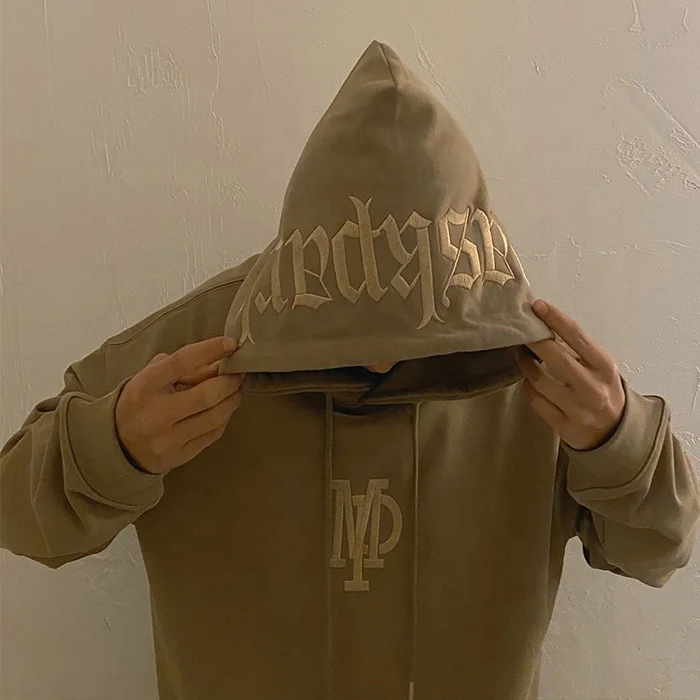
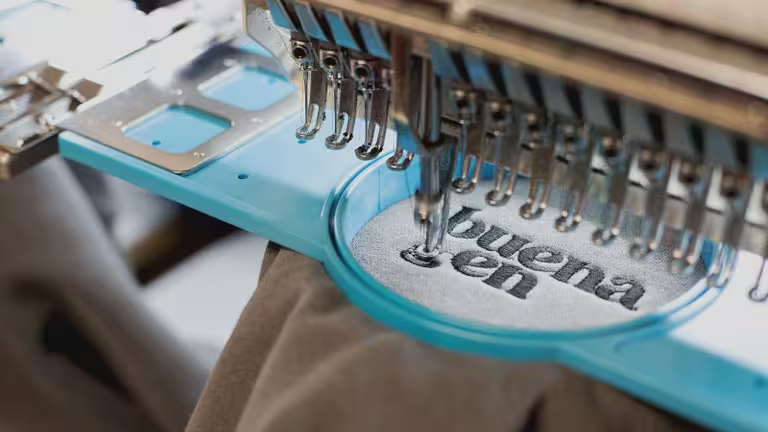
Tactile embellishment techniques elevate custom Playboy hoodies beyond standard printed iterations. Flat and 3D puff embroidery stitches trademark bunny logos into fleece substrates, creating textured, dimensional branding with exceptional durability. Foam heat transfer vinyl adds raised matte or glossy motif detailing that delivers tactile contrast without the labor intensity of full embroidery. These premium methods accent focal graphics for luxury custom finishes.
Tactile embellishment enhances perceived garment value. It distinguishes bespoke pieces from mass-produced printed apparel.
5. Pattern Drafting and Silhouette Customization
5.1 Standard Hoodie Pattern Grading for Custom Sizing
Precision pattern grading standardizes torso, sleeve, and hood proportions across custom size spectrums, from petite sizing to oversized extended frames. Grading mathematics recalibrate chest girth, shoulder span, inseam, and hood depth proportionally to avoid distorted silhouette geometry. Base pattern adherence ensures structural consistency while enabling individualized dimensional modification.
Accurate grading eliminates ill-fitting proportional anomalies. It delivers tailored wearability for all body types.
5.2 Silhouette Modification: Oversized, Cropped, and Relaxed Tailoring
Bespoke silhouette modification transforms generic hoodie patterns into stylized custom iterations. Oversized structuring amplifies contemporary streetwear aesthetics through expanded torso volume and dropped shoulder profiling. Cropped hem modification creates modern truncated silhouettes ideal for layered styling. Relaxed athletic tapering balances comfort and structural definition for versatile everyday wear.
Targeted silhouette adjustment defines the garment’s stylistic identity. It aligns construction with current fashion paradigms.
5.3 Panel Segmentation for Optimized Graphic Placement
Strategic panel segmentation reorganizes garment cutting layouts to eliminate seam disruption of primary Playboy graphics. Pattern technicians adjust front and back panel splits to centralize logo placement on unified fabric surfaces, preventing graphic truncation or misalignment across stitching junctions. Modified panel engineering prioritizes aesthetic graphic integrity without compromising structural garment stability.
Optimized panel layout ensures uninterrupted motif presentation. It enhances the polished custom aesthetic finish.
6. Precision Fabric Cutting and Pre-Assembly Preparation
6.1 Grainline Alignment and Symmetrical Panel Cutting
Fabric cutting commences with strict grainline parallel alignment to preserve fleece structural stretch and drape characteristics. Manual or laser-guided cutting systems execute symmetrical panel segmentation for sleeves, hood sections, torso frames, and pocket components. Precision blade calibration eliminates jagged edges and asymmetric panel dimensions that compromise final garment symmetry.
Grainline adherence prevents post-construction warping. It maintains consistent fabric tension across all panels.
6.2 Pre-Wash Fabric Stabilization to Mitigate Post-Production Shrinkage
Raw fleece substrates undergo pre-production thermal and aqueous stabilization to eliminate residual shrinkage potential. Industrial pre-wash cycles remove fabric sizing, relax fiber tension, and pre-compensate for natural cotton shrinkage differentials. This critical pre-assembly step prevents graphic distortion, seam puckering, and dimensional shortening after final garment construction.
Fabric stabilization locks in final garment dimensions. It preserves custom graphic placement integrity long-term.
6.3 Pre-Print Panel Priming for Enhanced Adhesion Fidelity
High-end custom production incorporates micro-fabric priming to optimize print pigment bonding. Light mechanical texturization opens fleece fiber cuticles, increasing ink absorption depth and molecular adhesion. Priming eliminates surface repellency issues common on dense ring-spun fleece, delivering sharper graphic definition and superior wash fastness for Playboy motif detailing.
Controlled priming elevates print durability significantly. It prevents premature graphic fading and peeling.
7. Core Garment Assembly Workflow
7.1 Shoulder Seam Unification and Structural Stitching
Assembly initiation unites anterior and posterior torso panels via reinforced shoulder seam stitching. Precision notch alignment ensures symmetrical shoulder span geometry, while stretch-optimized lockstitch threading accommodates fleece elasticity without seam popping. Topstitch reinforcement flattens seam allowances for streamlined shoulder contouring and enhanced structural durability.
Shoulder seam integrity establishes foundational garment structure. It supports consistent sleeve and hood alignment.
7.2 Sleeve Armscye Alignment and Continuous Seam Construction
Sleeve installation requires meticulous armscye curve matching to eliminate gathering or tension irregularities. Technicians ease excess sleeve fabric uniformly across the curved shoulder junction for smooth contoured shaping. Continuous seam stitching extends from sleeve cap to cuff and down torso side panels, reducing seam junctions and minimizing structural failure points.
Fluid sleeve integration delivers tailored structural flow. It creates professional-grade garment ergonomics.
7.3 Hood Panel Synthesis and Neckline Integration
Two-piece or three-piece hood panels are stitched along curved crown seams to form volumetric hood architecture. Front hood opening edges undergo clean finished hemming prior to neckline attachment. Precision quarter-marking aligns hood center points with torso neckline centers, preventing asymmetric hood tilting and misaligned drawchannel positioning.
Accurate hood integration ensures balanced drape and functional mobility. It completes primary upper garment structuring.
8. Secondary Structural and Functional Detailing
8.1 Kangaroo Pocket Precision Installation
Bespoke kangaroo pocket fabrication utilizes single-panel unified construction for seamless front integration. Pocket placement is calibrated to torso proportional grids, positioned symmetrically below the primary chest Playboy graphic to avoid visual overlap. Reinforced edge stitching prevents pocket stretching and sagging during repeated utility use, preserving front panel aesthetic uniformity.
Strategic pocket placement balances functionality and graphic clarity. It maintains unobstructed brand motif visibility.
8.2 Ribbed Cuff and Hem Tension Balancing
Stretch rib trim application requires controlled tension modulation to prevent restrictive tightness or baggy excess fabric. Technicians slightly stretch rib knit during stitching to match fleece panel dimensions, creating uniform snug closure at sleeve openings and bottom hem. Balanced tension preserves garment silhouette shape while enabling natural fabric movement.
Precision tension balancing delivers polished tailored finishes. It eliminates amateurish gathering or loose trim slack.
8.3 Drawcord Channel Fabrication and Hardware Fitting
Internal drawcord channels are folded and topstitched along the hood opening to create smooth cord passageways. Precision-punched eyelets reinforce cord entry points to prevent fabric fraying. Custom cut drawcords are threaded and fitted with metal aglets and adjustable cord locks for functional hood volumetric regulation.
Clean channel construction ensures fluid cord movement. Premium hardware elevates functional aesthetic detailing.
9. Post-Assembly Playboy Graphic Application
9.1 Precision Graphic Registration and Heat Press Calibration
Post-construction graphic application utilizes laser-aligned registration guides to lock Playboy motif positioning within pre-calibrated grid parameters. Heat press machinery is calibrated to substrate-specific temperature, pressure, and time thresholds to optimize ink or vinyl bonding. Uniform heat distribution eliminates partial adhesion, bubbling, or misaligned graphic transfer.
Meticulous calibration guarantees flawless graphic transfer. It ensures pixel-perfect motif placement.
9.2 Layered Embellishment Curing and Bonding Stabilization
Multi-layer graphics undergo sequential curing cycles to set individual ink or vinyl strata without disturbing underlying layers. Extended post-press cooling periods stabilize molecular bonding, preventing layer delamination or color bleeding. Embroidery embellishments undergo final tension tightening to secure stitch integrity across fleece substrates.
Graduated curing preserves layered graphic depth. It delivers long-term embellishment durability.
9.3 Secondary Detailing: Accent Prints and Minimalist Brand Flourishes
Complementary secondary detailing includes miniature sleeve logos, hemline script accents, and interior neck label graphics that enhance custom exclusivity without overwhelming primary iconography. These subtle flourishes reinforce bespoke craftsmanship and differentiate custom pieces from generic retail alternatives.
Targeted secondary detailing adds dimensional complexity. It elevates overall garment sophistication.
10. Specialty Custom Finishing Techniques
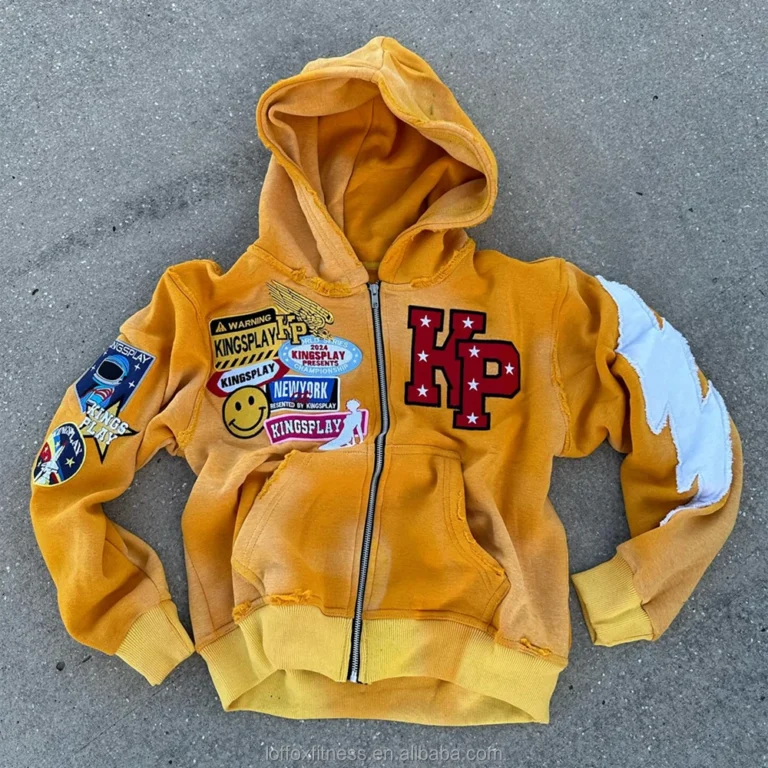
10.1 Vintage Acid Washing and Pigment Distressing for Retro Playboy Aesthetics
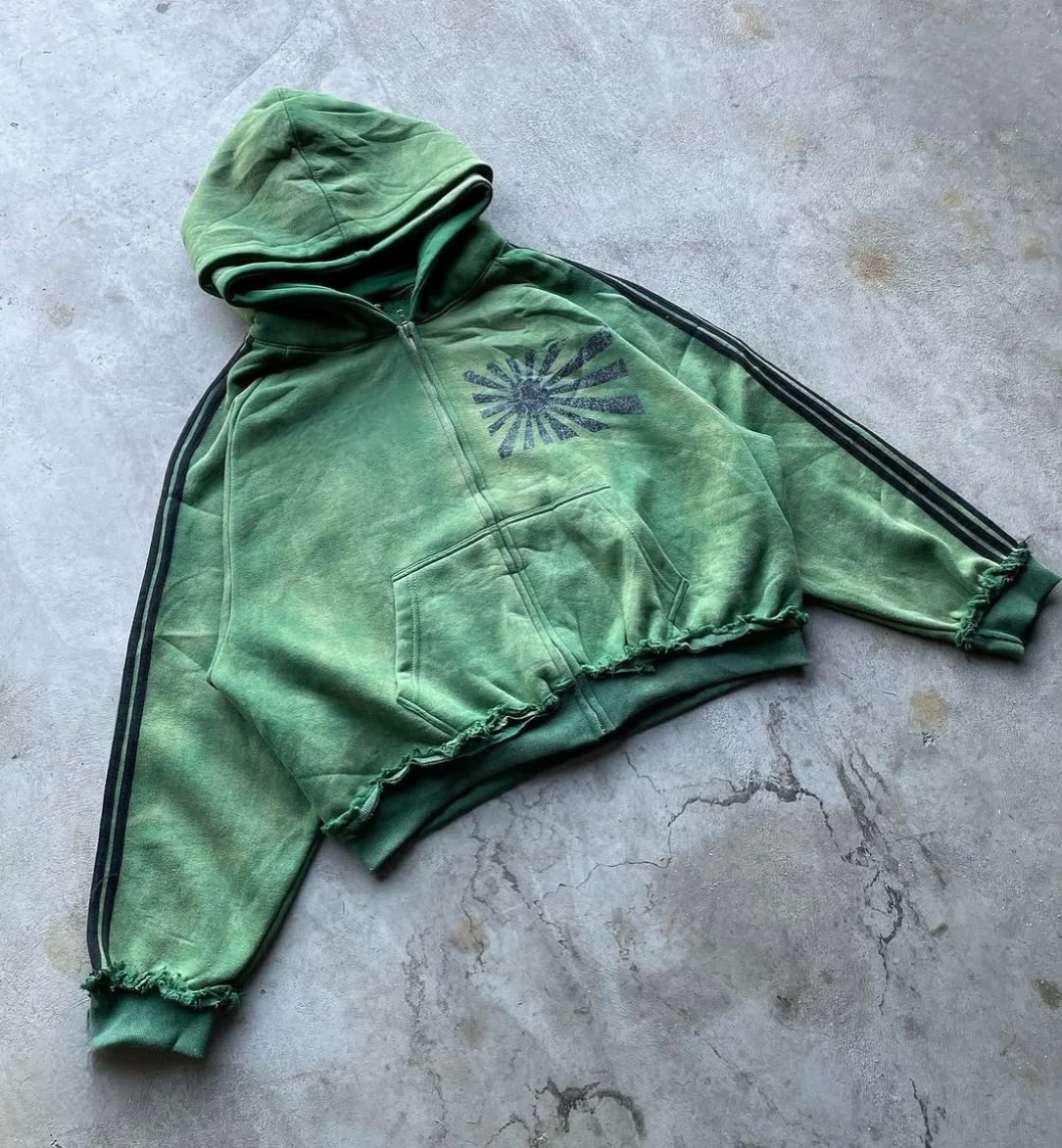
Controlled acid wash processing modifies base fleece tonality to create faded retro vintage patinas synonymous with classic Playboy archival aesthetics. Diluted acid solutions generate irregular mottled fading across torso and sleeve panels, mimicking decades of natural wear without structural fabric degradation. Post-wash pigment neutralization locks in tonal uniformity.
Artisanal acid finishing delivers unique vintage character. It creates exclusive retro-styled custom iterations.
10.2 Garment Stone Tumble and Mechanical Texturization
Pumice stone tumbling mechanically softens fleece surface texture and creates subtle surface abrasion for broken-in casual tactility. Controlled tumble duration prevents excessive pilling or fabric thinning while generating authentic worn-in texture. Mechanical texturization adds tactile depth that elevates standard fleece substrates.
Precision tumble finishing balances texture and structural integrity. It enhances premium garment tactility.
10.3 Custom Color Over-Dye and Tonal Grade Modification
Post-construction pigment over-dye treatments modify base fabric hues to create exclusive custom colorways, including vintage ash washes, muted pastels, and deep saturated jewel tones. Semi-transparent dye application preserves underlying graphic visibility while unifying garment tonal character. Tonal grading adjustments create subtle shading gradients for dimensional color complexity.
Custom over-dyeing delivers one-of-a-kind color profiles. It ensures complete aesthetic exclusivity.
11. Quality Assurance and Defect Remediation
11.1 Graphic Fastness and Bond Integrity Testing
Quality verification includes abrasion resistance testing and wash cycle simulation to validate Playboy graphic fastness. Inspectors assess for ink cracking, vinyl lifting, stitch loosening, and color migration under stress. Substandard bonding triggers targeted re-curing or touch-up correction to meet premium custom garment standards.
Rigorous fastness testing guarantees long-term graphic stability. It validates production craftsmanship quality.
11.2 Structural Seam and Hardware Durability Verification
Full structural auditing evaluates seam tension uniformity, stitch consistency, and hardware fastening security. High-tension zones including shoulder seams, pocket edges, and cuff junctions undergo stress testing to identify weak points. Loose threads, misaligned stitching, and unstable hardware are corrected prior to final finishing.
Structural validation eliminates premature garment failure. It ensures robust wearable durability.
11.3 Aesthetic Symmetry and Tonal Uniformity Auditing
Visual quality control verifies graphic centering, panel symmetry, color tonal consistency, and finish uniformity across the entire garment. Technicians identify subtle asymmetric fading, misaligned motifs, or inconsistent distressing patterns and execute precision balancing corrections.
Aesthetic auditing ensures flawless visual cohesion. It delivers gallery-grade custom presentation.
12. Final Garment Pressing and Professional Presentation
12.1 Steam Press Seam Flattening and Fabric Draping Calibration
Professional steam pressing flattens all seam allowances, eliminates fabric creasing, and calibrates fleece draping for uniform silhouette definition. Temperature-regulated steam avoids graphic heat damage while refreshing fabric texture and restoring natural fiber loft. Strategic pressing accentuates garment structural lines for tailored polish.
Precision pressing elevates finished garment professionalism. It removes production-induced creasing irregularities.
12.2 Thread Trimming and Micro-Finish Refinement
Micro-level finishing includes comprehensive loose thread trimming, seam flush alignment, and minor fabric pill removal. Technicians inspect every panel junction, hardware interface, and graphic perimeter for residual production artifacts, refining minute imperfections to achieve pristine finished quality.
Micro-refinements distinguish boutique custom craftsmanship. They deliver immaculate final presentation.
12.3 Packaging and Preservation for Long-Term Finish Retention
Final custom Playboy hoodies are packaged in breathable protective polybags with acid-free tissue wrapping to prevent finish abrasion, graphic scuffing, and fabric creasing during storage and transit. Proper packaging preserves freshly cured print bonding and textured finishing integrity.
Preservative packaging safeguards artisanal finishing quality. It maintains garment mint condition status.
13. Customization Variations for Unique Playboy Hoodie Iterations
13.1 All-Over Playboy Motif Repeat Printing
All-over repeat printing utilizes seamless vector pattern tiling to cover entire fleece panels with miniature staggered Playboy bunny motifs. Continuous pattern rendering creates immersive branded texture while maintaining tonal balance and visual sophistication. This high-impact customization delivers maximal aesthetic differentiation.
Full-substrate patterning creates exclusive statement styling. It transcends standard single-graphic custom designs.
13.2 Contrast Panel Color Blocking and Hybrid Material Construction
Color block customization merges contrasting fleece substrates to create segmented panel styling, pairing neutral base tones with accent colored hoods, sleeves, or pocket panels. Hybrid material integration combines fleece with French terry or lightweight jersey for textured panel contrast, amplifying bespoke structural uniqueness.
Strategic color blocking adds dimensional structural style. It creates visually dynamic custom iterations.
13.3 Limited-Edition Typographic and Collage Graphic Customization
Premium limited-run custom designs integrate archival Playboy magazine collage layouts, vintage script typography, and curated date-specific motif branding. Layered collage graphics deliver narrative-rich visual storytelling unavailable in standard logo-only custom hoodies, creating collectible wearable art pieces.
Collage customization delivers unparalleled exclusivity. It caters to premium streetwear collector markets.
14. Long-Term Care and Finish Preservation Protocols
14.1 Laundering Parameters for Printed and Embellished Fleece
Preservative laundering requires cold-water gentle cycle washing, inside-out garment inversion, and mild pH-neutral detergent utilization. High-heat machine drying is prohibited to prevent print cracking, fabric shrinkage, and embellishment delamination. Air-drying preserves fleece loft and graphic bond integrity indefinitely.
Controlled laundering extends garment lifespan significantly. It sustains custom finish vibrancy.
14.2 Storage Practices to Prevent Fabric Degradation and Print Cracking
Long-term storage requires flat folding or wide-shouldered hanging to avoid fabric crease memory and graphic stress fracturing. Cool, low-humidity storage environments prevent mildew formation, fiber degradation, and pigment oxidation. Avoidance of tight compression packaging preserves fleece structural softness.
Strategic storage maintains garment structural and aesthetic integrity. It prevents premature aging.
14.3 Touch-Up Remediation for Minor Wear-Related Imperfections
Minor wear imperfections including small print cracks, loose threads, and slight pilling can be remediated through targeted heat re-curing, precision thread trimming, and fabric depilling. Proactive minor maintenance preserves the custom hoodie’s premium finish across years of regular wear.
Simple remedial practices extend bespoke garment usability. It protects custom craftsmanship investment.
15. Final Custom Playboy Hoodie Craftsmanship Conclusion
Crafting a custom Playboy hoodie represents a sophisticated synthesis of technical textile engineering, digital graphic artistry, and artisanal garment finishing. Every procedural stage—from compliant icon vectorization and precision fleece substrate selection to calibrated print application, structural assembly, and specialty tonal finishing—contributes to a bespoke garment that transcends mass-produced retail alternatives. The multi-tiered customization framework balances iconic Playboy brand identity with individualized creative expression, delivering wearable apparel with exclusive aesthetic value and professional structural durability.
Whether engineered for personal casual wear, limited-edition streetwear collections, or curated bespoke merchandising, the custom Playboy hoodie process exemplifies modern apparel personalization at its finest. By adhering to rigorous technical standards, ethical brand usage protocols, and premium finishing methodologies, creators produce timeless, high-quality hoodies that merge cultural iconography with individualized sartorial craftsmanship.