The Custom Hoodie Sourcing Landscape
The question of where to get custom hoodies made is fundamentally a question of scale. The answer diverges sharply depending on whether you need one piece, fifty pieces, or five hundred.
For individual orders or ultra-small batches, print-on-demand platforms and low-MOQ suppliers offer the most accessible entry point. For brands building a proprietary identity, direct engagement with a manufacturing partner provides control over fabric, fit, and branding that POD platforms cannot match.
Print-on-Demand: The Zero-Inventory Pathway
Print-on-demand (POD) services remain the most frictionless route for one-off pieces or testing a design concept. The model requires no upfront inventory investment; the platform prints and ships each order individually as it comes in.
The trade-off is limited control. You select from the platform’s catalog of blank hoodies, so fabric weight, composition, and construction are predetermined. Decoration is typically restricted to DTG or heat transfer. For a personal gift or a first market test, this is sufficient. For a brand seeking a distinctive hand-feel or proprietary silhouette, it is a constraint.
Low-MOQ Manufacturers: The Startup Pathway
A significant segment of Chinese manufacturers has recalibrated operations to serve smaller clients. MOQs now routinely start at 50 to 100 pieces per style and color, a dramatic reduction from the 1,000-piece thresholds that once defined the industry.
QYOURECLO, based in China, offers an MOQ of 100 pieces per design and color, with sampling in 7–10 days and bulk production in 15–20 days. Their service is explicitly positioned for brands prepared to approve fabric, fit, and decoration details before production—not for one-off pieces or immediate stock delivery.
Qianshiwear, based in Guangzhou, operates with an MOQ of 50 pieces per color per design. They offer full OEM and private label services, including custom neck labels, washed labels, and packaging customization. Their sampling cycle runs 5–7 working days, with bulk production of 4–6 weeks.
Tosinfashion, a women’s apparel factory in Dongguan with nearly 18 years of experience, sets its MOQ at 50 pieces per single style and supports mixed orders combining different colors, sizes, and simple styles in one batch. Their sampling cycle is notably fast at 3–5 working days, and they provide two free detail revision services based on client feedback.
Ninghow, based in Shenzhen, offers no strict MOQ for stock patterns, accepting orders as few as 10 pieces. For custom camo or private label styles, their tiers begin at 50–99 pieces. Their sample lead time is 5–7 business days, with bulk production of 15–20 days for orders under 300 pieces.
What to Prepare Before Contacting a Manufacturer
Manufacturers consistently report that projects move faster when the buyer arrives with a clear brief. The essential elements include:
- Design or reference: Front and back sketches, reference images, or a physical sample. A tech pack is preferred but not mandatory.
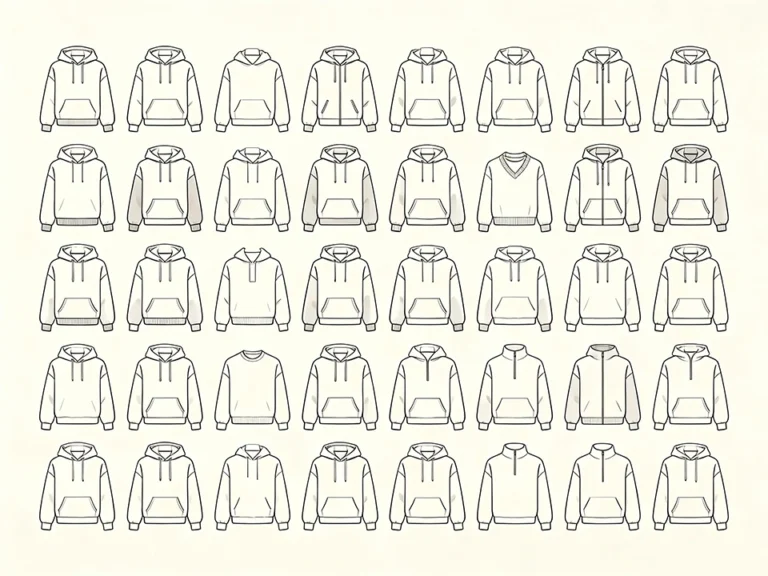
- Target fit and sizes: Crop length, width, sleeve shape, and grading direction. Size range from XS to 5XL is commonly supported.
- Fabric and GSM: Cotton, CVC, fleece, or French terry, with weight ranging from 200 to 550 GSM depending on the manufacturer.
- Artwork and branding: Print or embroidery files, label requirements, hang tags, and packaging specifications.
- Quantity and color plan: Total units, color breakdown, and expected reorder volume.
- Target date and destination: Launch timing and shipping country, which influence production scheduling and logistics.
Decoration Methods Available
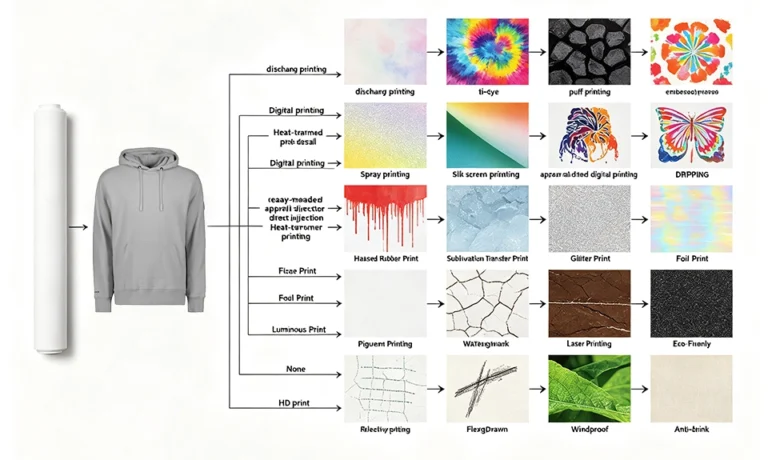
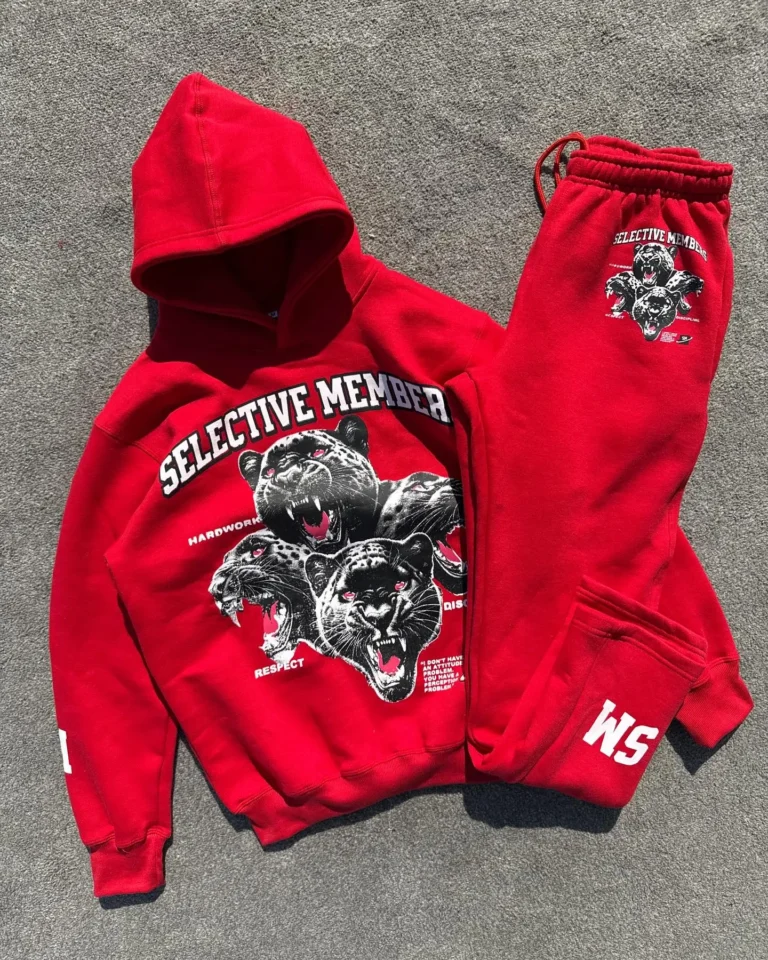
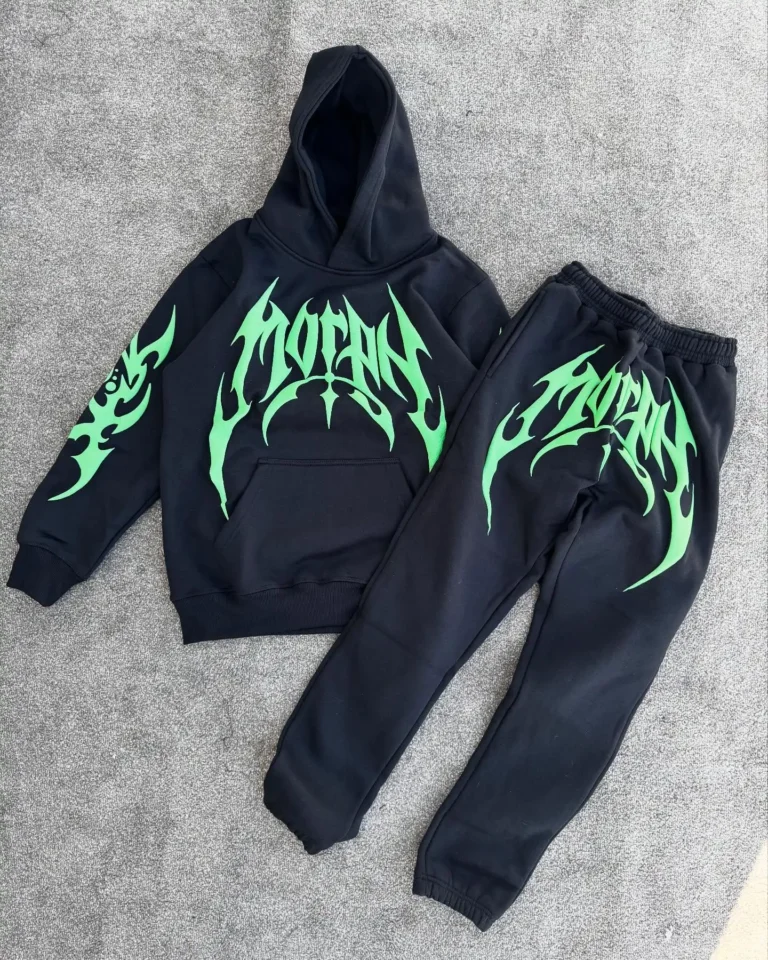
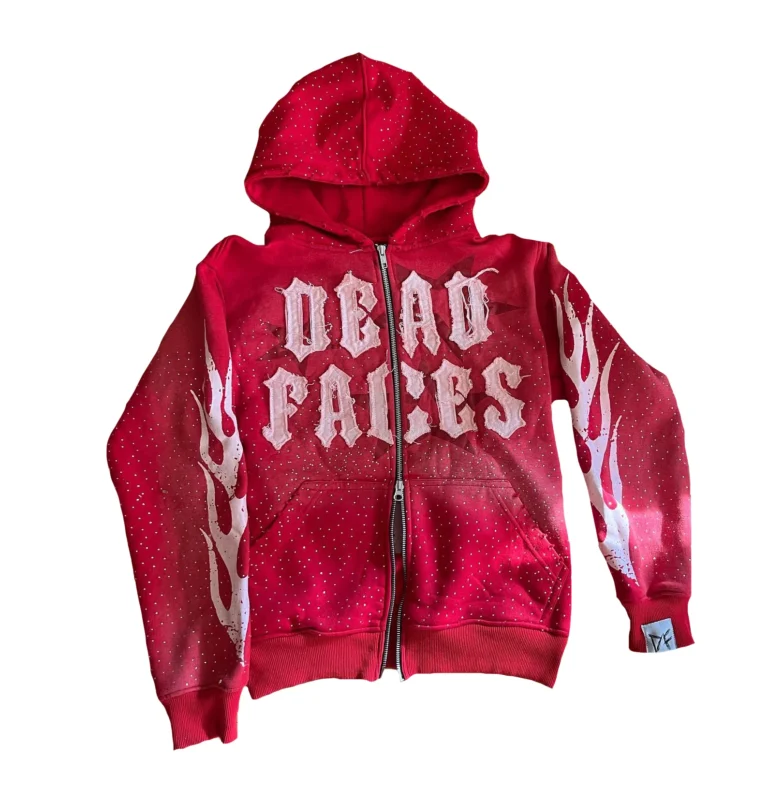
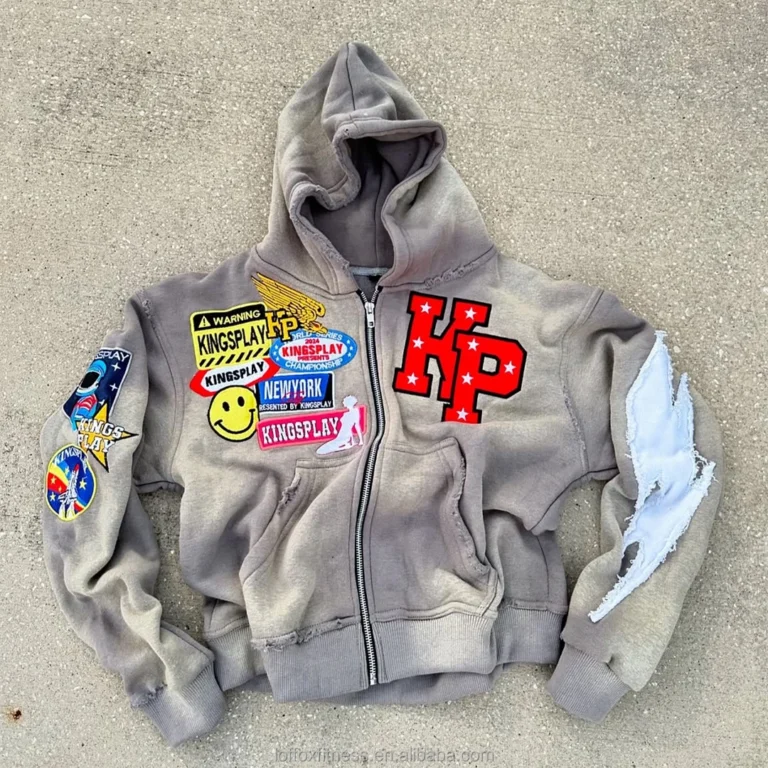
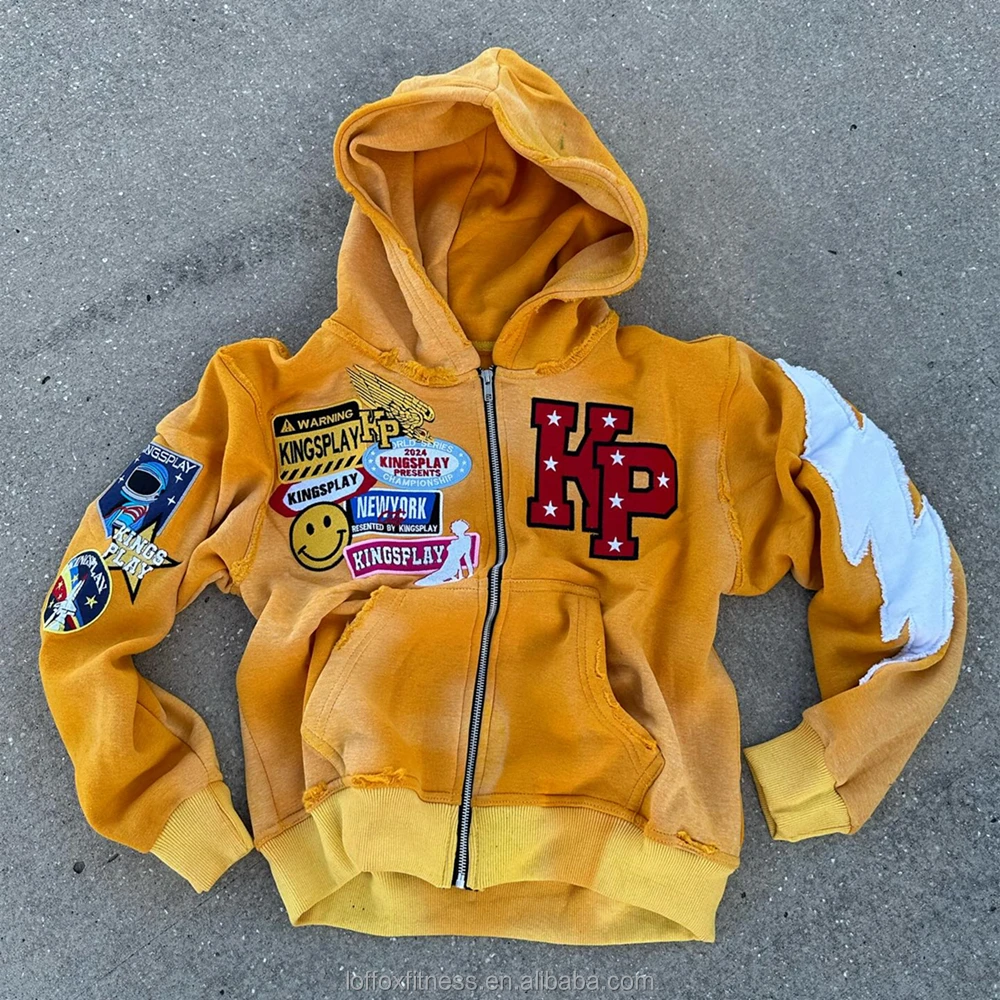
Manufacturers offer a spectrum of decoration techniques. Screen printing remains the most cost-effective for larger runs with simple designs. DTG (Direct-to-Garment) excels for photorealistic, full-color artwork on cotton substrates. Embroidery provides a premium, textured finish for logos. Puff printing, heat transfer, rhinestone application, and patchwork are also widely available depending on the manufacturer’s in-house capabilities.
The selection of decoration method should be confirmed during sampling, as fabric composition affects adhesion and durability. Requesting a wash test on the sample is the most reliable way to verify print longevity.
Key Operational Metrics for Evaluating a Supplier
Beyond price, several metrics provide objective signals of a manufacturer’s reliability:
- Response time: Under 4 hours indicates proactive communication. Some suppliers respond within 2 hours.
- On-time delivery rate: Aim for ≥95%. Some established suppliers maintain 100% records.
- Reorder rate: Above 25% reflects customer satisfaction. Rates above 40% suggest exceptional performance.
- Online revenue: Suppliers earning over $100,000 annually typically maintain stable operations and quality consistency.
For new partnerships, a phased approach is recommended: begin with a sample batch, use escrow or third-party inspection services for the first bulk order, and confirm defect resolution protocols in writing before production commences.
The Sampling Imperative
Regardless of the manufacturer selected, the sampling phase is non-negotiable. A physical prototype allows evaluation of fabric hand-feel, fit accuracy, decoration placement, and construction quality. The sample serves as the contractual benchmark against which the bulk order is measured. Reputable manufacturers provide pre-production samples for approval and retain pattern data and fabric sources for future reorders, ensuring consistency across production cycles.
The custom hoodie supply chain has become remarkably accessible. The barrier is no longer finding a manufacturer willing to work at small scale, but rather selecting the partner whose capabilities align with the specific demands of your product and market.