Preamble: The Cultural Currency of Coordinated Style
In the contemporary fashion landscape, the matching couple hoodie has transcended its status as a mere novelty garment to become a potent symbol of shared identity and cultural affiliation. This phenomenon represents a confluence of streetwear aesthetics, social media visibility, and a consumer desire for garments that broadcast personal narratives. The act of wearing coordinated apparel is a public declaration of a bond, an act of sartorial symbology that resonates strongly across demographics. For the discerning brand, entering the custom couple hoodie market presents a distinct commercial opportunity—a chance to offer not just clothing, but a tangible representation of connection, crafted through a sophisticated manufacturing process that demands technical precision and aesthetic sensitivity.
The Matching Hoodie Phenomenon: A Market Analysis
The ascent of the matching hoodie from niche novelty to mainstream staple is a testament to its cultural resonance. Fueled by the rise of social media platforms that encourage shareable, visual storytelling, coordinated outfits have become a communicative tool for couples . This is not a trend confined to the young; it spans demographics, finding expression in casual wear, streetwear, and even sportswear. The garment’s inherent comfort and versatility make it a practical choice for daily wear, yet its symbolic weight elevates it beyond mere utility. The market demands garments that are both aesthetically cohesive and individually flattering, representing a significant opportunity for brands to curate products that capture this zeitgeist.
The OEM and ODM Modalities: Defining the Manufacturing Partnership
The collaboration between a brand and a manufacturer is defined by two primary service models, each with distinct advantages. Original Equipment Manufacturing (OEM) is a comprehensive service where a brand provides complete design specifications, including a detailed tech pack and patterns, and the factory executes production to these precise instructions. This model offers maximal control over the product’s identity and is ideal for brands with robust in-house design capabilities . Conversely, Original Design Manufacturing (ODM) involves a more collaborative approach, where the brand selects from the manufacturer’s existing silhouettes and customises them with their own fabrics, colours, and detailing. This model can significantly expedite the development cycle, making it a viable option for brands seeking to launch a collection with greater speed and reduced upfront design investment . Both models can accommodate the private label requirements necessary for creating a distinct brand identity .
Establishing the Foundation: Fabric Selection for Comfort and Durability
The selection of fabric is the foundational decision upon which a garment’s quality and appeal are predicated. For a custom couple hoodie, the fabric choice directly influences comfort, drape, and durability—attributes of paramount importance for a garment intended for frequent, co-ordinated wear. The most prevalent and versatile fabric is cotton fleece, prized for its brushed interior, which provides exceptional warmth and a soft hand-feel, making it ideal for cold-weather garments . For a lighter, more transitional garment, French terry is an excellent alternative; its looped interior offers breathability and a less substantial weight, suitable for year-round wear . The incorporation of polyester blends enhances the fabric’s resilience, providing shrink resistance and maintaining shape through repeated washes . The fabric weight, measured in GSM (grams per square metre), is another critical parameter. Options typically range from the lighter 220gsm to the substantial 600gsm for heavyweight premium hoodies, with 280-400gsm being a versatile mid-range for most projects .
Navigating the Silhouette Spectrum: From Oversized to Cropped
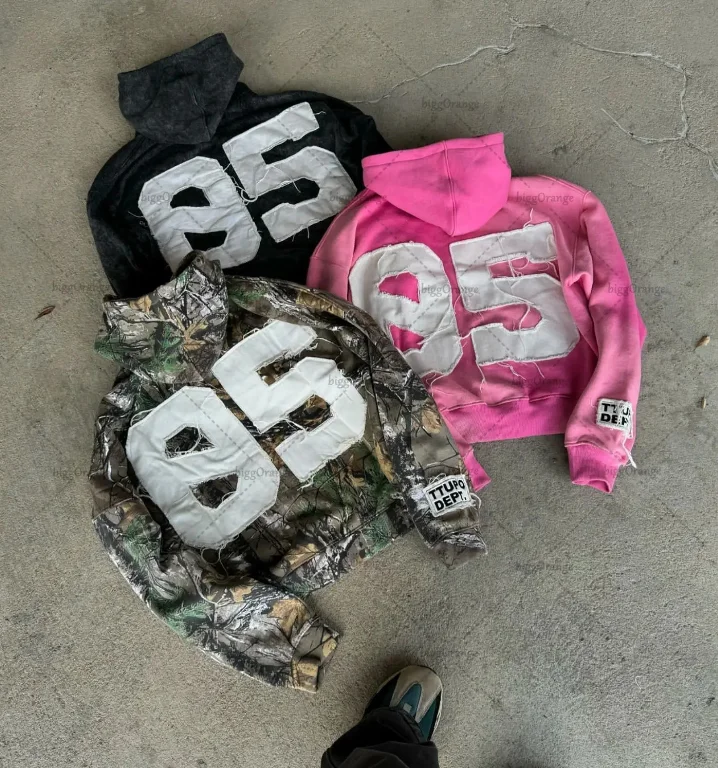
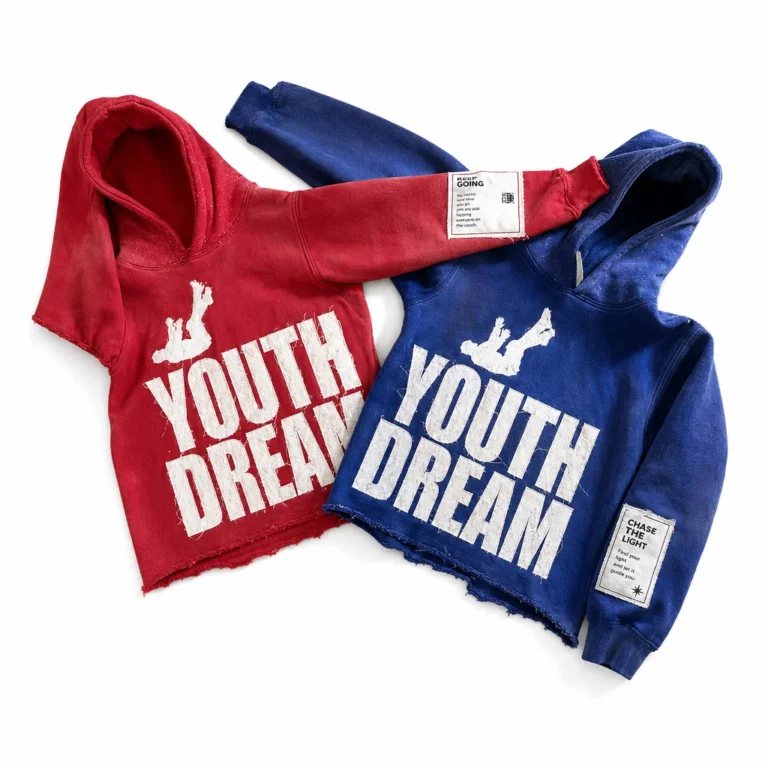
The silhouette of a couple hoodie is a primary vehicle for its stylistic identity, with contemporary trends favouring a spectrum of fits that cater to varied tastes. The oversized fit, a hallmark of streetwear culture, offers a relaxed, voluminous aesthetic that is both comfortable and visually striking, often characterised by dropped shoulders and a boxy cut . In contrast, the classic fit provides a more traditional, universally flattering proportion. The cropped silhouette, with its raw or finished hem ending above the hip, has become a significant trend, particularly appealing to a youth-oriented, fashion-forward demographic . Many manufacturers offer the capacity to grade patterns across a wide size range—from XS to 5XL—ensuring that the coordinated look can be achieved across different body types for an authentic “his and hers” aesthetic .
The Branding Lexicon: Embroidery, Printing, and Personalisation Techniques
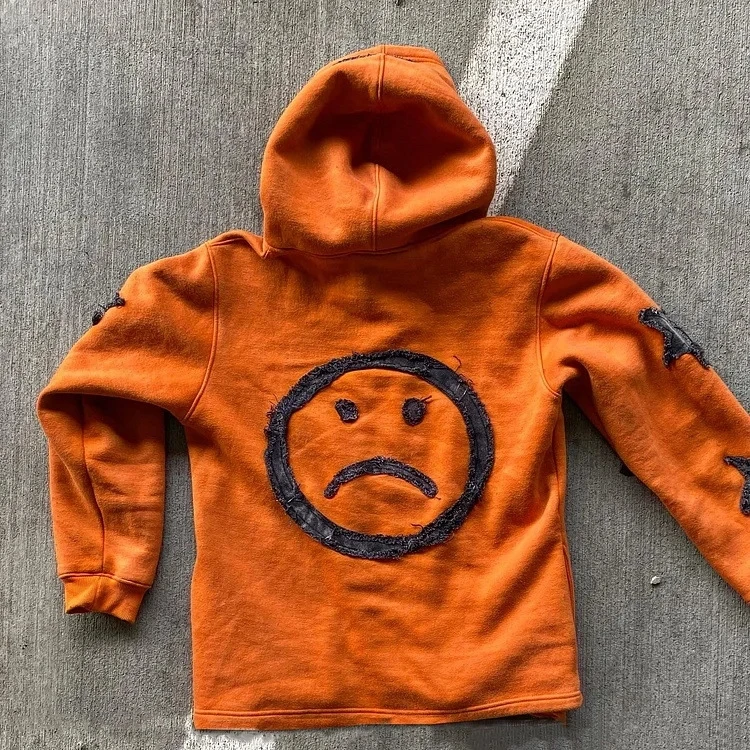
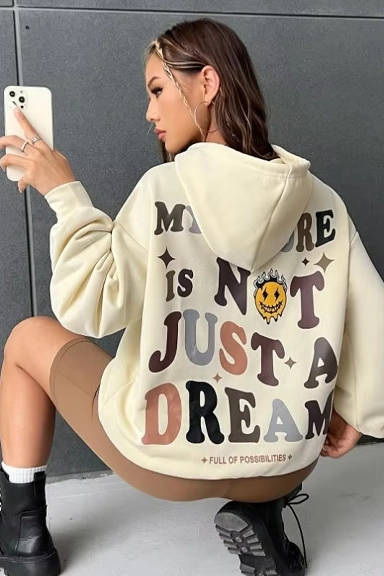
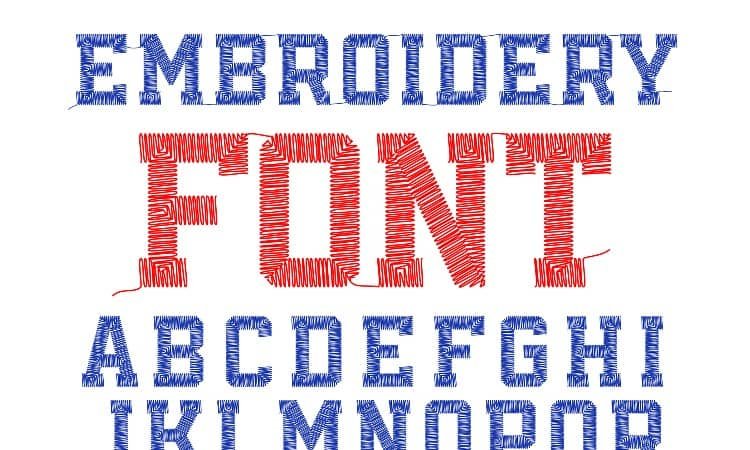
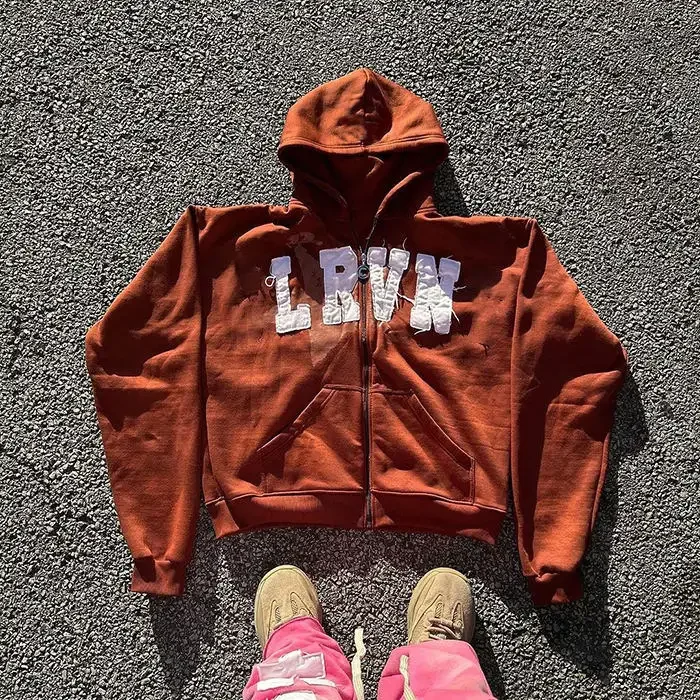
The application of a brand’s identity onto the garment is the crucible of its customisation. The methods available are diverse, each conferring a distinct aesthetic. Embroidery is a premium technique that adds a textured, dimensional element, imbuing the garment with a sense of craftsmanship and durability. This can range from flat embroidery to 3D puff embroidery, a technique that creates a raised, tactile logo . For graphic designs, screen printing and digital printing are effective for reproducing detailed artwork and vibrant colours, with options including foil printing and discharge printing for specialized effects . A key element of the ‘couple’ concept is the option for personalisation, where initials, names, or significant dates can be integrated into the design, transforming a garment into a personalised, emotionally resonant piece .
Design Symmetry: Crafting “His and Hers” Aesthetic Cohesion
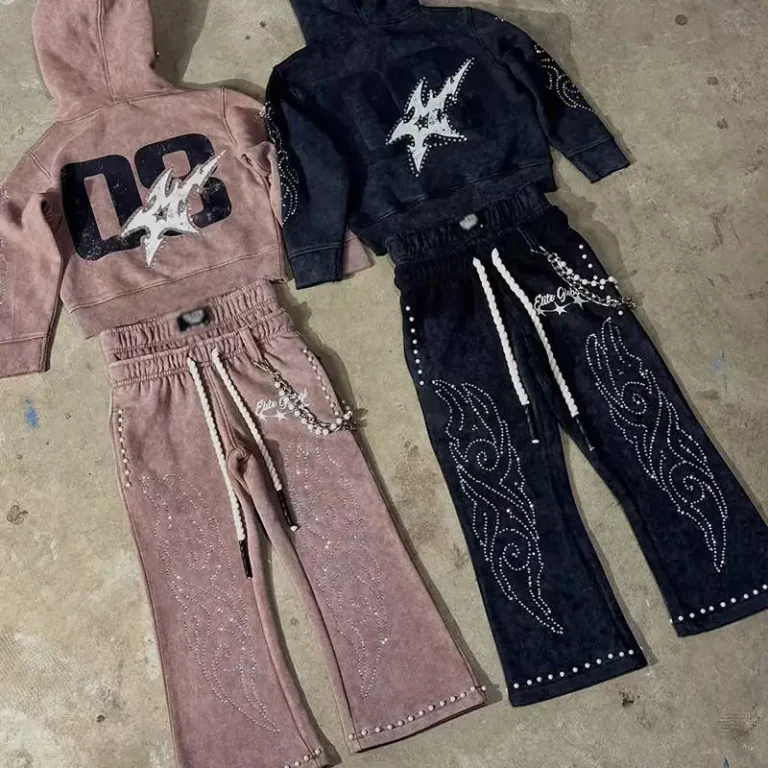
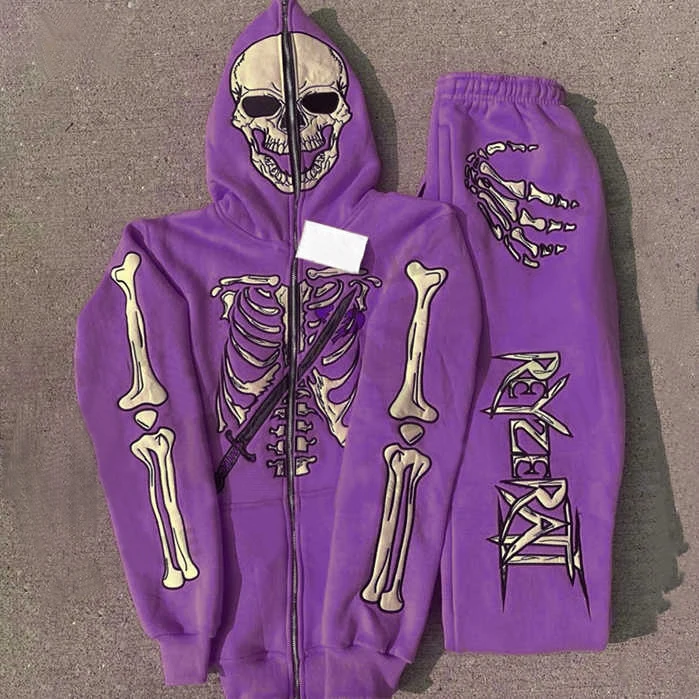
The essence of a successful couple hoodie lies in its design cohesion—the garments must visually communicate their paired nature without being identical. This is achieved through subtle yet deliberate design strategies. A common approach is the use of a shared graphic or typographic element that is consistently applied across both garments . This could manifest as a logo split across the two hoodies or a matching slogan. Alternatively, colour reciprocity is a powerful tool, using complementary or inversely placed colours (e.g., black with white text for one, white with black text for the other) to create balance. A more sophisticated approach involves thematic symmetry, where the designs share a narrative concept, such as one reading “His” and the other “Hers,” or a set of symbols that are individually complete but contextually linked .
Private Label Infrastructure: Labels, Packaging, and Brand Presentation
The distinction between a generic garment and a proprietary brand product lies in the details of its presentation. A comprehensive private label service extends beyond the garment itself to encompass a complete brand experience. This includes the integration of custom neck labels, woven size labels, and care labels that are specific to the brand . The application of branded hang tags and custom-printed polybags elevates the unboxing experience and reinforces brand recognition. Packaging can also be customised, with manufacturers offering services ranging from simple polybags to more elaborate custom boxes for retail or e-commerce fulfillment . This complete ecosystem of branding transforms a co-created garment into a polished, market-ready product that commands a premium.
The Technical Blueprint: The Indispensable Tech Pack
The tech pack is the absolute foundation of a successful manufacturing relationship, serving as the singular source of truth for the factory. For a custom couple hoodie, a comprehensive tech pack must contain a detailed specification sheet with all garment measurements for each size, a construction page illustrating seam types, stitch density, and ribbing details, and a graphic page providing artwork and Pantone colour references . It should also include a bill of materials listing every component, from the main fabric to thread, zippers, and labels. A meticulously prepared tech pack is the most effective tool for mitigating errors and ensuring that the factory perfectly executes the design vision, reducing the need for numerous sampling revisions.
Navigating the Thresholds: Minimum Order Quantities and Bulk Pricing
The financial entry point for a custom manufacturing project is often defined by the Minimum Order Quantity (MOQ). While traditional bulk manufacturing may require high volumes, the landscape for custom hoodies has evolved to offer considerable flexibility. Standard MOQs are now frequently set at 50 to 100 pieces per style and colour, making customisation accessible to emerging brands and startups . Some manufacturers even offer remarkably low MOQs of 10 to 30 pieces, though these are less common and may come with a higher per-unit cost . The price per unit is inversely proportional to the order volume. For instance, a garment might be priced at US$14 for 2-499 pieces, dropping to US$13.40 for orders exceeding 2,000 pieces, reflecting the economies of scale inherent in bulk production . Sample costs are typically separate, often ranging from US$50 to US$60 per sample .
The Temporal Equation: Lead Times and the Sampling Cadence
A thorough comprehension of production timelines is essential for effective seasonal planning. The process commences with the development of a prototype or fit sample to assess proportions and construction, a stage that typically requires 5 to 10 working days . Upon approval of this “Golden Sample,” the bulk production phase—from cutting to quality control—generally requires a further 15 to 40 working days, with the total lead time from sample approval to shipment falling between 4 to 8 weeks . This timeline is contingent on order complexity, fabric availability, and the intricacy of the embroidery or printing. The sampling cadence is a critical phase, allowing brands to iterate on fit and design before committing to a full production run .
Quality Assurance Protocols: Ensuring Consistency in Bulk Production
Consistency in bulk production is the hallmark of a reliable manufacturer and is achieved through a rigorous, multi-stage quality control (QC) architecture. This protocol commences with fabric inspection before cutting to ensure raw materials are free from defects. It proceeds to in-line checks during the sewing and printing phases to identify and rectify issues in real-time. The process culminates in a final pre-shipment inspection, where each garment is meticulously compared against the approved “Golden Sample” for measurements, print placement, embroidery quality, and colour consistency . A reputable manufacturer will be transparent about their QC processes, often providing third-party inspection reports to validate the quality of the goods before they are shipped .
Compliance and Certifications: Ethical Sourcing and Textile Standards
In the contemporary apparel landscape, regulatory compliance and social accountability are non-negotiable prerequisites. Certifications such as OEKO-TEX Standard 100 confirm that textiles are free from harmful substances, a critical requirement for markets in the EU and North America . ISO 9001 is an indicator of robust quality management systems, while BSCI (Business Social Compliance Initiative) audits report on fair labour practices and ethical manufacturing . Brands should verify that their manufacturing partner holds these credentials, as they enhance brand credibility and mitigate supply chain risk.
The Vendor Vetting Process: Capabilities, Certifications, and Communication
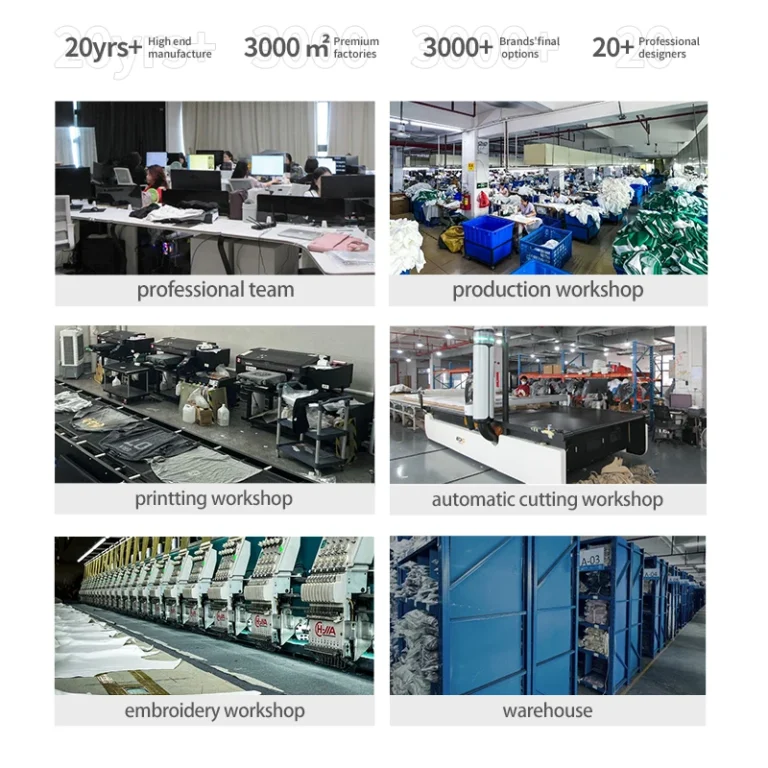
Selecting a manufacturing partner is a strategic decision of immense consequence. The due diligence process must extend beyond a review of a factory’s portfolio. A brand should assess their technical capabilities, including their in-house facilities for embroidery, printing, and washing . Evaluating their production capacity—including the size of their facility and workforce—provides insight into their ability to scale with the brand’s growth . The intangibles of communication—responsiveness, transparency in quotation, and a collaborative approach to problem-solving—are often the differentiating factors that forge a durable and prosperous partnership. A supplier with a high review score and fast response time is frequently a reliable indicator of good customer service .
Coda: Forging a Symbolic Connection Through Premium Manufacturing
The custom couple hoodie is more than a garment; it is a medium for emotional expression and a symbol of shared identity. Its production demands a sophisticated command of material science, design principles, and manufacturing logistics. By navigating the complexities of fabric selection, customisation techniques, and private-label infrastructure, a brand can offer more than a mere product—it can offer a curated experience that resonates with consumers on a deeply personal level. This endeavour, facilitated through a transparent and capable manufacturing partnership, represents a significant opportunity to forge not just apparel, but a tangible connection between the wearer and the brand.