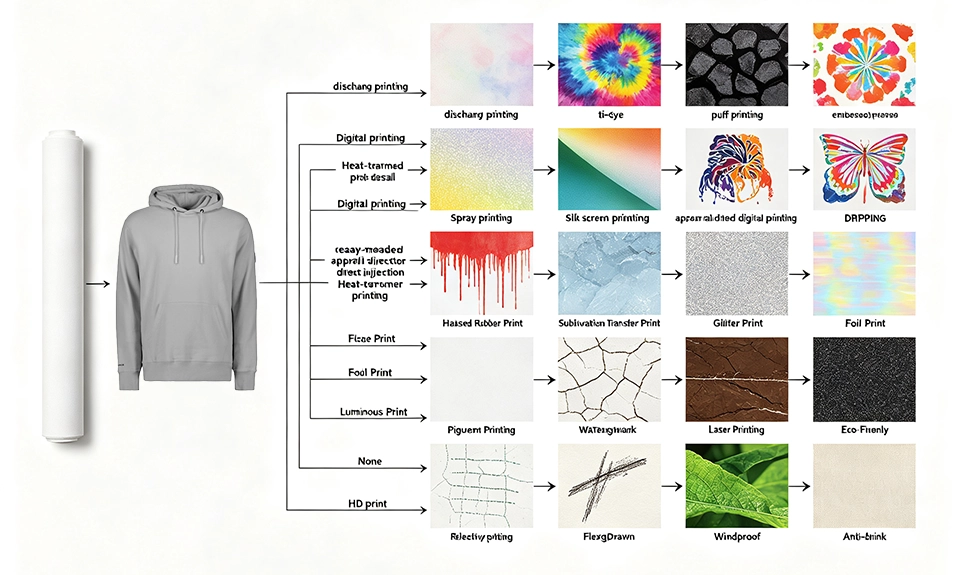
In the world of streetwear and custom apparel, the design is only half the story. The execution—how that design is physically applied to the garment—determines the texture, durability, and overall vibe of the final product. From ancient manual techniques to cutting-edge digital innovations, the printing method you choose is a direct reflection of your brand’s identity.
Whether you are aiming for vintage nostalgia, high-fashion texture, or industrial durability, this ultimate guide covers 30 distinct printing and embellishment methods for custom hoodies and clothing. Master these, and you will never look at a blank garment the same way again.
1. Discharge Printing
Discharge printing is a sophisticated technique that removes the existing dye from a garment rather than laying ink on top of it. Using a discharge agent (often formaldehyde-free these days), the process bleaches out the fabric’s color in specific areas, leaving a soft, pigment-dyed print that feels like part of the fabric itself. It is the holy grail for printing on dark garments without the heavy, plastic-like hand-feel of traditional screen printing.
2. Tie-Dye
Tie-dye is the ultimate expression of manual, one-of-one artistry. This method involves folding, twisting, pleating, or crumpling the fabric and binding it with string or rubber bands before applying reactive dyes. The bound areas resist the dye, creating iconic patterns like spirals, stripes, and mandalas. In modern streetwear, tie-dye is used for its psychedelic, nostalgic, and completely unpredictable aesthetic—every piece is a unique statement.
3. Puff Printing
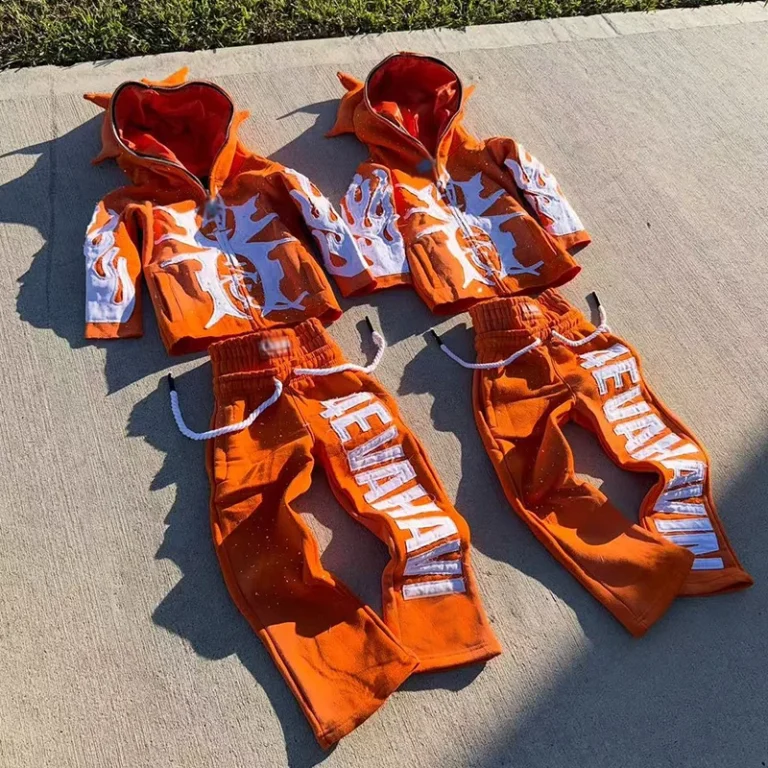
Puff printing is a specialty screen-printing technique that uses an expanding additive in the plastisol ink. When heat-cured, the ink rises and “puffs” up, creating a raised, three-dimensional texture that is soft to the touch but visually striking. This method adds a tactile, almost foam-like quality to graphics, making logos and motifs pop off the garment with a playful, retro 90s appeal.
4. Embossed
Embossing is a finishing technique that creates a raised, three-dimensional impression on the fabric without adding a separate layer of material. Using heat and pressure, a die stamps the design into the fabric, permanently deforming the fibers to create a relief effect. It is an elegant, tonal approach to branding—ideal for minimalistic designs where texture and shadow do the heavy lifting without introducing additional colors.
5. Heat-Transfer Printing
Heat-transfer printing involves printing a design onto a special release paper or film using solvent-based inks, then transferring that design onto the garment using a heat press. The heat activates the adhesive layer, bonding the ink to the fabric. This method is highly versatile, allowing for full-color, photographic prints with no color limitations, and it is particularly popular for short-run custom orders and complex, multi-colored graphics.
6. Digital Printing
Digital printing—also known as direct-to-garment (DTG)—functions much like a standard inkjet printer but uses specialized textile inks. It sprays microscopic droplets of ink directly onto the fabric, allowing for photographic-quality, full-color designs with infinite detail. There are no screens, no setup fees, and no color restrictions. It is the gold standard for on-demand, highly intricate designs with gradient blends and subtle shading.
7. Spray Printing
Spray printing uses airbrush or HVLP (High Volume Low Pressure) spray guns to apply dye or pigment directly onto the fabric. This method allows for seamless gradients, ethereal fades, and soft, painterly effects that are impossible to achieve with screens or heat transfers. It is often used in haute couture and high-end streetwear for its fluid, hand-crafted appearance and the unique variation it brings to each garment.
8. Silk Screen Printing
Silk screen printing (also known as serigraphy) is the undisputed king of commercial apparel decoration. It involves pushing ink through a mesh screen—stretched over a frame—onto the fabric, with a stencil blocking the areas where ink should not pass. Each color requires a separate screen, making it ideal for bold, high-volume runs with limited colors. It delivers thick, vibrant, and incredibly durable prints that can withstand hundreds of washes.
9. Ready-Made Apparel Direct Injection Heat-Transfer Printing
This sophisticated method uses a specialized plotter to cut and weed heat-transfer vinyl (HTV) designs, which are then heat-pressed onto the finished garment. The “direct injection” refers to the precision of the cutting, allowing for incredibly detailed, multi-color layered vinyl applications. It is perfect for small to medium runs requiring sharp edges, solid colors, and a sleek, professional finish.
10. Ready-Made Apparel Direct Digital Printing
Similar to standard DTG but specifically applied to finished, sewn garments, this method uses industrial direct-to-garment printers that accommodate the thickness of hoodies and the presence of seams and zippers. It allows for edge-to-edge, all-over-print capabilities on pre-constructed apparel, making it the go-to choice for complex all-over designs that wrap around the entire hoodie.
11. Dripping
Dripping is an artistic printing technique where ink or dye is intentionally allowed to drip, run, or splatter across the garment before being heat-set. This can be achieved through controlled inkjet manipulation, manual pouring, or specialized screen-printing techniques with “runny” ink formulations. The result is a raw, graffiti-inspired aesthetic that captures the chaotic energy of street art and punk subcultures.
12. Raised Rubber Print
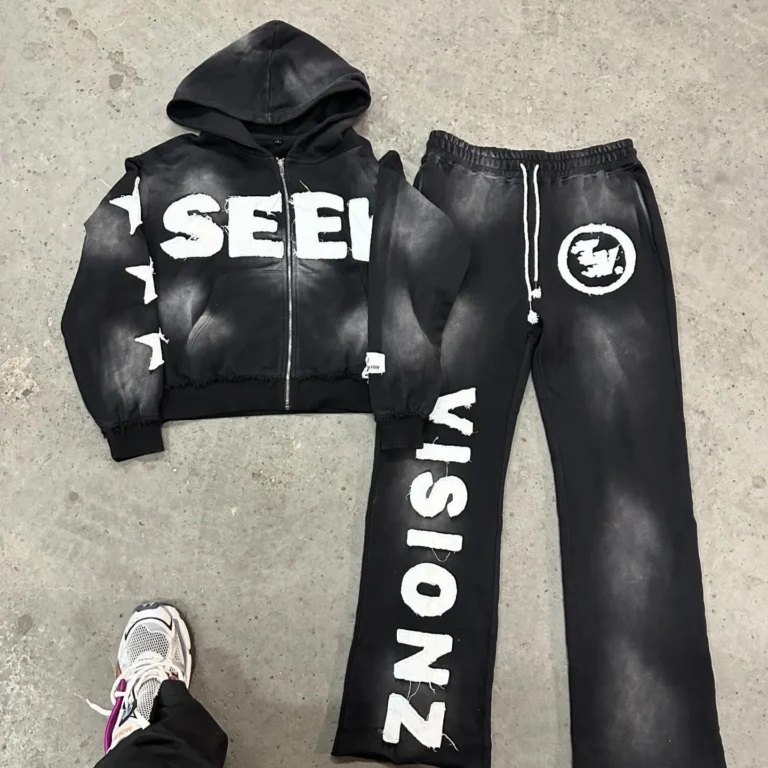
Raised rubber printing uses a thick, heavy-bodied ink applied through multiple screen passes to build up a substantial, rubbery layer on the surface of the fabric. Once cured, this print has a significant tactile presence—it feels like a rubber patch fused to the garment. It is extremely durable, weather-resistant, and provides a chunky, industrial look that works exceptionally well for bold logotypes and utilitarian graphics.
13. Sublimation Transfer Print
Sublimation printing uses heat to turn solid dye particles into a gas, which then bonds directly with the polyester fibers of the garment. The dye penetrates the fabric rather than sitting on top of it, resulting in a permanent, crack-proof, and ultra-soft print that never fades. Because the print becomes part of the fabric, it is ideal for all-over designs, vibrant photorealistic prints, and athletic streetwear.
14. Glitter Print
Glitter printing incorporates fine, reflective glitter particles into a clear or pigmented adhesive base, which is applied via screen printing and heat-cured. The result is a sparkling, eye-catching finish that catches light from every angle. This method adds a festive, celebratory, or femme-fatale energy to any design and is incredibly popular in festival-wear and bold, statement streetwear pieces.
15. Foil Print
Foil printing uses a heat-activated adhesive screen-printed onto the fabric, followed by a heat press application of a metallic foil sheet (gold, silver, rose gold, or holographic). The foil bonds only to the adhesive areas, creating a highly reflective, mirror-like finish. It is a premium, attention-grabbing detail that adds a luxury, almost trophy-like quality to logos and accent graphics.
16. Luminous Print
Luminous printing, also known as glow-in-the-dark printing, uses phosphorescent pigments that absorb light energy and release it slowly over time in dark environments. Typically applied via screen printing, this method transforms a seemingly ordinary graphic into a hidden, interactive element that reveals itself at night or in low-light settings—perfect for rave culture and edgy, futuristic streetwear.
17. Flock Print
Flock printing involves applying a specialized adhesive to the fabric via screen printing, then using an electrostatic process to affix millions of tiny synthetic fibers (flock) to that adhesive. The result is a velvety, suede-like texture that is incredibly soft to the touch and visually matte. It adds a luxurious, premium feel to logos and creates a stark contrast against smooth cotton or fleece.
18. None (The Raw Blank)
Sometimes the most powerful statement is no print at all. The “None” approach celebrates the raw, unadulterated beauty of the fabric itself—the heavyweight fleece, the perfect stitch, the drape of the cut. In a market saturated with graphics, an unprinted hoodie communicates confidence in the garment’s construction and fabric quality. Often, a tonal brand tag or a small woven label is the only concession to branding.
19. Pigment Printing
Pigment printing uses insoluble pigment particles held together by a binder, applied directly to the fabric surface. Unlike reactive dyes, pigments do not chemically bond with the fibers—they sit on top, creating a slightly stiff but highly colorfast print. It is one of the most versatile and cost-effective methods, working equally well on cotton, poly, and blends, and it offers excellent color reproduction with minimal setup complexity.
20. Silicone Printing
Silicone printing replaces traditional plastisol inks with a silicone-based compound. This method is completely PVC-free, phthalate-free, and highly resistant to extreme temperatures. The ink is exceptionally soft, stretchy, and wash-fast, making it ideal for activewear and performance streetwear. It offers a premium, rubbery texture that is both tactile and environmentally responsible.
21. Crack Printing
Crack printing is an intentional distressed effect achieved by using specialized inks formulated to create a cracked, weathered surface once cured. This is sometimes called “distressed printing” or “vintage crackle.” The effect mimics the natural wear and tear of a decades-old garment, giving new hoodies an authentic, retro, garage-rock aesthetic that appeals to the grunge and vintage-enthusiast demographics.
22. Watermark
A watermark print is an ultra-subtle, tonal effect created by using a transparent or slightly opaque ink that is barely visible against the base fabric color. It creates a ghost-like, faded image that is only detectable upon close inspection or when the light hits it at the right angle. This technique is the epitome of “quiet luxury” in streetwear—understated, sophisticated, and reserved for minimalists.
23. Tatami Stitches
While not a print per se, tatami stitches are a specialized form of machine embroidery that uses dense, parallel running stitches to “fill” large areas of a design. This technique allows for intricate, geometric, and highly textured surface embroidery that mimics the appearance of woven Japanese tatami mats. It is exceptionally durable and adds a luxurious, artisanal dimension to hoodie designs.
24. Ink Print
Ink printing is a broad term encompassing any method using liquid ink rather than paste-like plastisol. This typically includes water-based inks, which penetrate the fabric fibers, leaving an ultra-soft, “no-hand” feel that is virtually indistinguishable from the base material. It is the preferred choice for a vintage, worn-in look where the design feels like part of the fabric rather than a layer on top.
25. Laser Printing
Laser printing on textiles uses a high-powered CO2 laser to literally burn or ablate the surface of the fabric. Rather than adding ink, it removes the top layer of dye from darker fabrics to reveal the lighter interior fibers, creating a permanent, high-contrast design. This method is incredibly precise, environmentally friendly (no chemicals or water), and produces a soft, breathable finish with a unique, slightly singed-edge texture.
26. HD Print
HD (High-Definition) Printing refers to digital or sublimation printing with an exceptionally high resolution—often 1200 DPI or higher. Combined with specialized, ultra-fine ink droplets and precise color calibration, HD printing produces photorealistic images with sharp details, smooth gradients, and vibrant color saturation. It is the go-to method for photo-based graphics, intricate illustrations, and complex character designs.
27. Reflective Printing
Reflective printing uses ink or film embedded with microscopic glass beads that reflect light directly back to its source. When illuminated—by car headlights, flash photography, or stage lights—the print lights up with a brilliant, silvery glow. Essential for safety-wear and techwear, this method also adds a futuristic, cyberpunk edge to streetwear designs, creating a dramatic day-to-night transformation.
28. Plastisol Print
Plastisol printing is the industry standard for commercial screen printing. It uses PVC-based ink that sits on top of the fabric and requires heat curing to set. Plastisol is thick, opaque, and incredibly vibrant, offering excellent coverage even on dark garments. It is highly durable, flexible, and cost-effective for large runs, and it remains the backbone of the promotional apparel and merchandise industry.
29. Flexography
Flexography is a high-speed, rotary relief printing method typically used for large-scale production of labels, tags, and packaging. However, in custom clothing, it is increasingly used for direct printing on textile substrates where volume and speed are critical. It uses flexible raised plates and fast-drying inks, making it an efficient, cost-effective solution for large orders of simple, repetitive designs.
30. Hand Drawn
The “Hand Drawn” method is the ultimate rejection of mass production. This involves directly painting, drawing, or sketching on the garment using textile paints, fabric markers, or paint pens. Each piece is an original work of art—no screens, no transfers, no machines. This method is beloved by niche boutique brands for its authenticity, artistic value, and the deeply personal connection it creates between the maker and the wearer.
Final Thoughts: Choosing Your Weapons
The 30 methods listed above represent a universe of creative possibility. As a brand, you do not need to master them all. Instead, consider the following:
- For durability and volume: Lean towards Plastisol Screen Printing or Discharge Printing.
- For complex art and photography: Choose Digital (DTG) or Sublimation.
- For texture and tactile branding: Explore Puff, Flock, Silicone, or Embossing.
- For sustainability and ethics: Opt for Pigment, Water-Based Ink, or Laser Printing.
- For one-of-a-kind exclusivity: Invest in Hand Drawn or Spray Printing.
The right method elevates your design from a mere image to a sensory experience. Choose wisely, test rigorously, and let your printing technique become part of your brand’s signature language.