1. Introduction: The Hoodie as a Tabula Rasa
1.1 The ubiquitous garment and its journey from utility to canvas
The hoodie began its existence as a utilitarian garment, conceived for laborers in frigid warehouses and athletes in unheated gymnasiums. Its trajectory since then has been remarkable. It has traversed the terrain from countercultural uniform to high-fashion statement, from the margins to the mainstream. Today, the hoodie is a tabula rasa. It is a blank slate upon which the wearer may inscribe any identity, any message, any aesthetic. Its simplicity is its greatest asset.
1.2 The psychological imperative of sartorial self-expression
The urge to customize one’s clothing is not a modern affectation. It is a psychological imperative. The garments we choose constitute a silent language, a lexicon of selfhood. To customize a hoodie is to seize control of that language. It is to refuse the predetermined and to embrace the particular. The act is small in scale but immense in significance.
1.3 The democratization of garment customization
What was once the province of skilled artisans and well-funded ateliers has been democratized. Digital printing technologies, accessible embroidery machines, and a proliferation of online platforms have placed the means of production into the hands of the individual. The barriers to entry have collapsed. The only remaining prerequisite is imagination.
2. Defining the Design Intent
2.1 Clarifying the purpose: Personal wear, gift, or brand merchandise
Before any creative impulse is translated into action, the purpose of the garment must be articulated. Is this a personal garment, destined for the wearer’s own rotation? Is it a gift, freighted with sentimental significance? Or is it merchandise, intended for sale and subject to the exigencies of the market? Each purpose dictates a distinct set of design parameters, production methods, and quality thresholds.
2.2 Establishing a cohesive aesthetic vocabulary
A successful design is not a random assemblage of elements. It possesses a cohesive aesthetic vocabulary. This vocabulary comprises the color palette, the typography, the imagery, and the overall mood. A hoodie adorned with gothic script, distressed patches, and muted earth tones speaks a different language than one bearing minimalist geometric linework in primary colors. The two vocabularies should not be mixed haphazardly.
2.3 The role of mood boards and visual references
The mood board is an indispensable tool in the ideation phase. It is a collage of visual references—photographs, fabric swatches, typographic specimens, and color chips—that crystallizes the desired aesthetic. The mood board serves as a compass, guiding decisions and preventing drift. It is a tangible manifestation of an intangible vision.
3. Selecting the Foundation Garment
3.1 The blank canvas: Choosing a base hoodie
The foundation of any customization project is the blank garment. This is not a decision to be made casually. The quality of the base hoodie determines the ceiling of the final product. A flimsy, poorly constructed blank will betray even the most brilliant design. Heavier, well-stitched blanks from reputable manufacturers provide a superior substrate for embellishment.
3.2 Fabric weight and its relationship to drape and printability
Fabric weight, typically measured in grams per square meter (GSM), is a critical variable. A lightweight hoodie (around 250 GSM) drapes softly and lends itself to fitted silhouettes. A heavyweight hoodie (400 GSM and above) is structured, durable, and commands a premium aesthetic. Printability is also affected: heavy fleece can obscure fine print details, while smooth, tightly woven surfaces yield crisper results.
3.3 Fit configurations: Oversized, cropped, boxy, and tailored
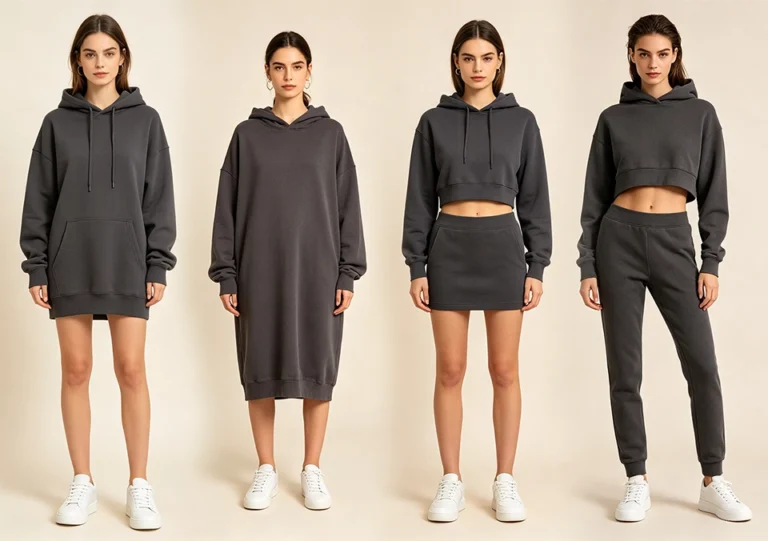
The silhouette of the hoodie is a statement in itself. The oversized hoodie conveys a studied nonchalance. The cropped hoodie is an exercise in proportion and modernity. The boxy fit is architectural and gender-neutral. The tailored hoodie is a rarity, demanding precise pattern-making. The choice of fit must align with the intended aesthetic and the wearer’s proportions.
3.4 Color selection as the first act of customization
The selection of the base color is the first and most consequential customization decision. A white or light grey hoodie offers maximum contrast for dark graphics. A black hoodie provides a moody, sophisticated backdrop. A bold color—cobalt, ochre, or emerald—is itself a design statement, requiring graphics that complement rather than compete. The color palette of the blank and the embellishment must be considered in concert.
4. The Art of Graphic Application
4.1 Screen printing: The enduring standard for bold imagery
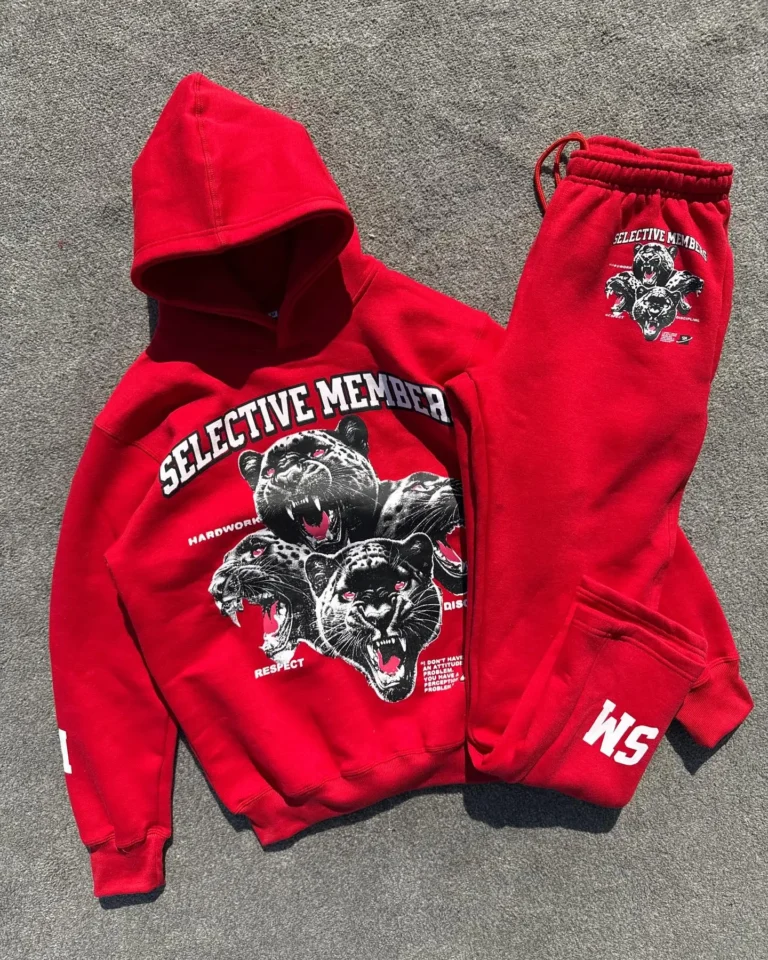
Screen printing remains the gold standard for producing vivid, opaque graphics on hoodies. The process involves pushing ink through a mesh screen onto the fabric. It excels at bold, flat-color designs and can achieve a tactile, rubbery texture if desired. Water-based inks offer a softer hand, while plastisol inks provide greater opacity and durability. Screen printing is cost-effective for bulk orders but carries setup costs that make single-piece production prohibitive.
4.2 Direct-to-garment printing: The digital frontier
Direct-to-garment (DTG) printing is the digital disruptor of the customization world. It functions akin to an inkjet printer for fabric, depositing water-based inks directly onto the garment. DTG is ideal for complex, full-color photographic imagery and for small-batch or one-off production, as it requires no screens or setup. However, DTG on dark fabrics requires a white underbase, which can impart a slightly stiff hand and may not achieve the opacity of screen printing.
4.3 Heat transfer vinyl: Precision and versatility
Heat transfer vinyl (HTV) involves cutting a design from a colored film, weeding away the excess, and applying it to the garment with a heat press. HTV is exceptionally versatile, capable of reproducing fine details, thin lines, and even metallic or glitter finishes. It is a popular choice for personalization—names, numbers, and small logos—and is accessible to the home crafter with a cutting machine and a heat press.
4.4 Sublimation: The limitation of polyester
Sublimation is a printing process wherein dyes are transferred onto fabric via heat and pressure. The dyes bond with the polymer molecules in synthetic fibers, meaning sublimation is only viable on polyester or high-polyester-blend garments. On cotton hoodies, the result is faint and impermanent. For polyester hoodies, however, sublimation offers unmatched durability and an unlimited color gamut. The process is all-over-print capable, enabling seamless, edge-to-edge designs.
5. Embroidery as a Mark of Distinction
5.1 The tactile superiority of stitched embellishment
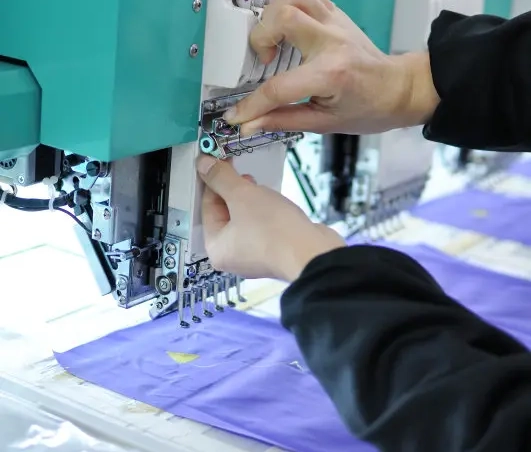
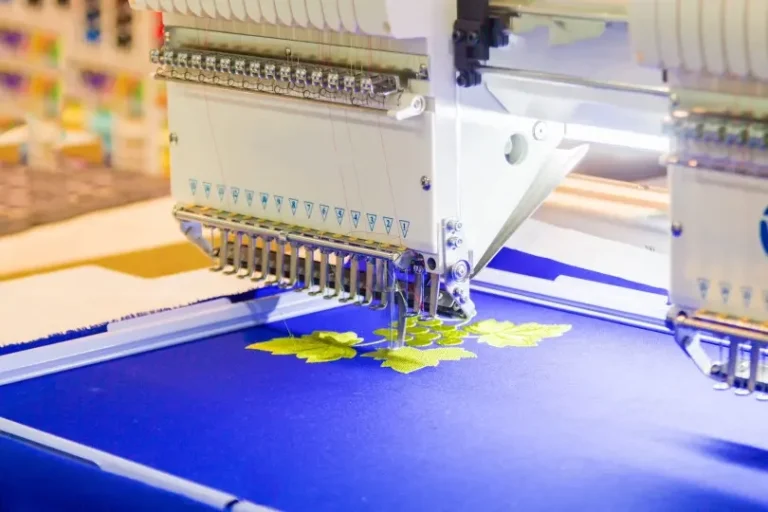
Embroidery elevates a garment from the merely decorated to the truly crafted. The raised texture of thread against fabric is a tactile pleasure. It signals durability and permanence. Unlike a printed graphic, which sits upon the surface, embroidery becomes part of the garment’s structural integrity. It is an embellishment that ages with the garment, acquiring a subtle patina.
5.2 Flat embroidery versus 3D puff embroidery
Flat embroidery is the standard, producing a smooth, flush stitch surface. 3D puff embroidery, achieved by placing a layer of foam beneath the stitching, creates a raised, sculptural effect. Puff embroidery is dramatic and eye-catching, but its application is limited to simple, bold shapes. Fine details are lost in the puffing process. The choice between the two is a choice between subtlety and spectacle.
5.3 Placement considerations: Chest, sleeve, and hood
The placement of embroidery is a study in visual balance. A left-chest logo is a classic, understated choice. A sleeve embroidery is a subtle signature, visible only upon closer inspection. A large design on the back of the hoodie transforms the garment into a wearable billboard. Embroidering the hood itself is a bold move, requiring careful digitization to accommodate the curve and the drawstring openings.
6. Beyond Print and Stitch: Alternative Embellishments
6.1 Appliqué and patchwork techniques
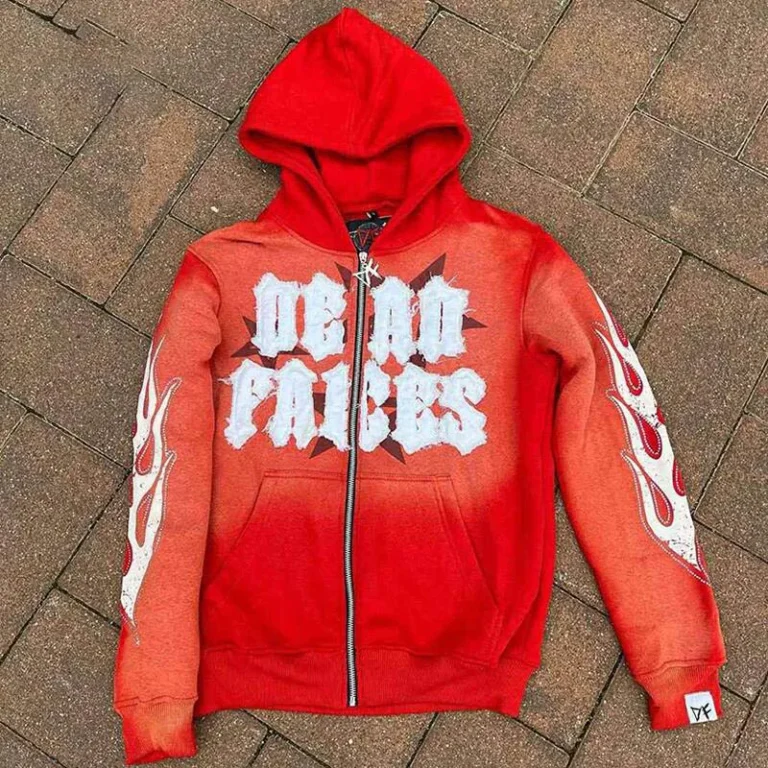
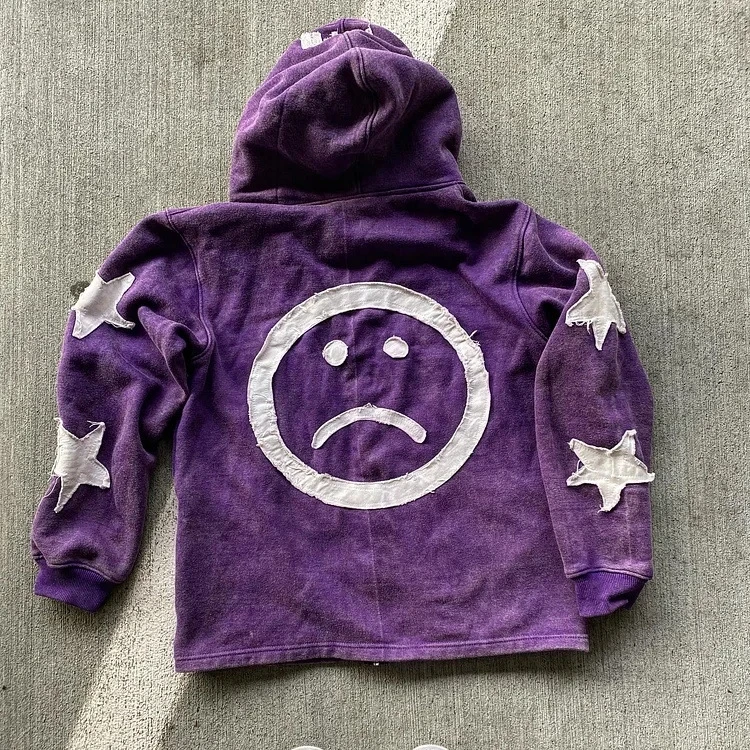
Appliqué involves stitching a piece of fabric onto the surface of the hoodie to create a design. It is a technique with a rich history in quilting and folk art. Modern appliqué can be laser-cut for precision or hand-stitched for a rustic, artisanal quality. Patchwork, the assembly of multiple fabric pieces into a unified whole, can transform a hoodie into a bohemian masterpiece or a geometric abstraction.
6.2 Rhinestones, studs, and the application of hardware
The application of rhinestones, metal studs, and grommets introduces a dimension of glamour or edge. These embellishments catch the light and add weight to the garment. They can be applied individually with a setting tool or in pre-made motifs. The juxtaposition of gleaming rhinestones against the casual texture of fleece is a study in contrast.
6.3 Fabric painting and hand-drawn artistry
For the artistically inclined, fabric painting offers direct, unfiltered control. Fabric markers, acrylic paints mixed with textile medium, and specialized fabric dyes allow for freehand expression. The result is a garment that is irreducibly unique, bearing the unmistakable signature of the human hand. The imperfection is the point.
7. The Alchemy of Dyeing and Distressing
7.1 Tie-dye, dip-dye, and gradient effects
Dyeing is a transformative process, an alchemy that turns a uniform garment into a chromatic spectacle. Tie-dye, with its spirals and mandalas, is a perennial favorite. Dip-dye creates a gradient, from saturated at the hem to pale at the shoulder. The variables—dye concentration, immersion time, and the method of binding—are infinite, and so are the results.
7.2 Bleach splatter and acid washing
Bleach is a destructive tool, and therein lies its power. A controlled application of bleach can create splatter patterns, lightning strikes, or an all-over acid-washed effect. The bleach strips the color from the fabric, leaving behind a lighter, distressed hue. The process is unpredictable, which is both its risk and its allure.
7.3 The intentional application of wear and tear
The deliberate distressing of a hoodie—sanding the cuffs, fraying the hem, cutting holes and darning them—is the creation of a fiction. It is the simulation of a life of hard use. This aesthetic of pre-worn authenticity is a staple of contemporary fashion. The key is intentionality: the wear must appear organic, not contrived.
8. Structural Modifications and Reconstruction
8.1 Adding, removing, or altering the hood
The hood is the defining feature of the garment. Its modification is a bold act. One might remove the hood entirely to create a crewneck. One might add a contrasting hood from another garment. One might line the hood with a patterned fabric, visible only when the hood is worn. These interventions alter the garment’s architecture and its character.
8.2 Pocket configurations: Kangaroo, zip, and hidden
The pocket is a site of both utility and design opportunity. The classic kangaroo pocket can be augmented with a zipper for security. It can be removed entirely for a cleaner silhouette. Hidden pockets—in the side seams or the lining—can be added for the carriage of valuables. The pocket configuration is a dialogue between form and function.
8.3 The addition of drawstrings, zippers, and ribbing
The accessories of the hoodie are its jewelry. The drawstring can be replaced with a contrasting color, a leather cord, or a chain. A full-length zipper can be added to transform the pullover into a zip-up. The ribbing at the cuffs and hem can be replaced with a different color or texture. These details, though small, are often what distinguish a bespoke garment from a mass-produced one.
9. Navigating DIY versus Professional Production
9.1 The home studio: Equipment and space requirements
The decision to customize at home is a commitment to acquiring equipment and dedicating space. A heat press, a cutting machine, a sewing machine, and an embroidery machine are the primary capital expenditures. Ventilation is essential for screen printing and dyeing. The home studio is a laboratory of self-expression, but it demands investment and organization.
9.2 Engaging a local screen printer or embroiderer
For those who lack the equipment or the inclination to produce in-house, local service providers are the solution. A screen printer or embroiderer can execute a design with professional precision. The trade-off is a loss of direct control and the imposition of minimum order quantities. The key is to find a provider who understands the vision and can communicate clearly.
9.3 Online custom clothing platforms: Capabilities and constraints
Online platforms have streamlined the customization process. A user uploads a design, selects a garment, and receives a finished product. The capabilities of these platforms have expanded, but they remain constrained by their standardized processes. Complex structural modifications or unconventional placements are usually beyond their scope. They are best suited for straightforward graphic application.
10. The Economics of Customization
10.1 Cost analysis: One-off versus bulk production
The economics of customization are governed by scale. A one-off hoodie, produced at home or via a DTG service, carries a high per-unit cost. Bulk production, whether through screen printing or professional embroidery, dramatically reduces the per-unit cost. The break-even point between DIY and outsourced production depends on the complexity of the design and the quantity required.
10.2 The hidden costs of trial and error
The learning curve of customization is steep, and its costs are often underestimated. Ruined blanks, misaligned prints, and failed experiments are part of the process. These hidden costs must be factored into any budget. The first attempt is rarely the final product. Iteration is expensive, but it is the price of excellence.
10.3 Pricing the final product for resale
For those embarking on a commercial venture, pricing is a delicate art. The price must cover materials, labor, overhead, and the hidden costs of trial and error, while remaining competitive in the market. The perceived value of a custom hoodie—its uniqueness, its craftsmanship, its story—justifies a premium. The challenge is to communicate that value to the buyer.
11. Legal and Ethical Considerations
11.1 Copyright and trademark infringement
The allure of adorning a hoodie with a beloved band logo or a corporate mascot is strong. The legal reality is sobering. Copyright and trademark law protect these intellectual properties. Unauthorized use for commercial purposes is infringement. For personal use, the risk is low, but for resale, the risk is substantial. Original designs are the only safe harbor.
11.2 Ethical sourcing of blank garments
The blank garment is not ethically neutral. Its production may have involved exploitative labor, environmental degradation, or both. The conscientious customizer seeks out blanks from manufacturers who prioritize fair labor practices and sustainable materials. The provenance of the canvas matters.
11.3 Sustainability in customization practices
Customization can be a sustainable practice. It extends the life of a garment, encourages repair over replacement, and allows for the use of recycled or deadstock materials. Water-based inks, natural dyes, and organic fabrics reduce the environmental footprint. The customized hoodie is a rebuke to the disposable ethos of fast fashion.
12. The Prototyping Process
12.1 The necessity of a test garment
The test garment is the crucible of the customization process. It is upon a sacrificial blank that the design is first executed. The test reveals the true colors of the ink, the drape of the appliqué, and the alignment of the embroidery. The test garment is not a failure; it is a necessary step toward success.
12.2 Conducting a wear test
The wear test is an exercise in empathy. The test garment is worn, washed, and worn again. It is subjected to the indignities of daily life. The wear test reveals the points of failure: a print that cracks, a stitch that unravels, a dye that bleeds. These revelations are invaluable.
12.3 Iteration and refinement
The final product is the product of iteration. Each test yields insights that inform the next iteration. The design is refined, the placement adjusted, the technique perfected. The process is not linear; it is a spiral, circling ever closer to the ideal.
13. Quality Control and Durability
13.1 Wash testing and colorfastness
The washing machine is the ultimate arbiter of quality. A customized hoodie must withstand repeated washing without fading, cracking, or peeling. Wash testing is the only way to verify colorfastness and adhesion. A garment that fails the wash test is a garment that will fail the customer.
13.2 Adhesion and stitch integrity
The durability of the embellishment is a function of adhesion and stitch integrity. Heat-transfer vinyl must be applied at the correct temperature and pressure to ensure a permanent bond. Embroidery must be digitized correctly to avoid puckering and thread breaks. These technical details determine the longevity of the garment.
13.3 The longevity of the customized garment
The ultimate measure of quality is longevity. A well-customized hoodie should endure for years, its embellishments remaining intact, its fabric softening with age. The customized hoodie is not a disposable item. It is a durable good, an investment in self-expression.
14. Packaging and Presentation
14.1 The role of packaging in perceived value
Packaging is the first physical interaction a customer has with the product. It sets the tone. A hoodie delivered in a flimsy poly mailer communicates a different value proposition than one presented in a branded box with tissue paper and a sticker. Packaging is a silent ambassador for the brand.
14.2 Custom tags, labels, and thank-you cards
The custom tag and label are the signature of the maker. They transform a garment into a branded artifact. A handwritten thank-you card adds a personal touch that is increasingly rare in the digital age. These small gestures of care are disproportionately impactful.
14.3 Photographing the finished product for documentation
The photograph of the finished product serves multiple purposes. It is a document of the maker’s work. It is a marketing asset. It is a source of pride. Good photography—natural light, a clean background, and a clear focus on the details—is an essential skill for the customizer.
15. Marketing a Custom Hoodie Collection
15.1 Leveraging social media for visual storytelling
Social media is the natural habitat of the custom hoodie. Platforms like Instagram and TikTok are visual and narrative-driven. The process—the blank canvas, the design, the application, the final reveal—is inherently compelling. The customization journey is the story.
15.2 The importance of lifestyle photography
The hoodie must be seen in context. Lifestyle photography places the garment on a body, in a setting, in a life. It allows the potential customer to imagine themselves wearing it. The hoodie is not an object; it is an experience.
15.3 Building a narrative around the customization process
The most successful custom hoodie brands do not merely sell garments. They sell narratives. The story of the design’s inspiration, the provenance of the materials, the craftsmanship of the application—these are the elements that differentiate a commodity from a brand. The narrative is the moat.
16. Conclusion: The Hoodie as Autobiography
16.1 The garment as a repository of memory
A customized hoodie is a repository of memory. It bears the marks of its making and its wearing. The faded print, the frayed cuff, the coffee stain—these are the stigmata of a life lived. The garment becomes an autobiography, written in cotton and thread.
16.2 The empowerment of self-manufacture
To customize one’s own hoodie is to seize the means of production. It is to reject the passive role of the consumer and to embrace the active role of the creator. This empowerment is not trivial. It is a small but meaningful act of autonomy in a world of mass-produced uniformity.
16.3 A final exhortation to create
The blank hoodie awaits. It is an invitation. The tools and techniques are within reach. The only remaining ingredient is the will to create. The first stitch is the hardest. After that, the possibilities are endless.